AI Ethics Issues in 2026 Explained for Businesses
AI ethics issues in 2026 explained for businesses—learn key risks, compliance tips, and trust strategies to protect data, boost growth, and stay competitive globally.
TECHNOLOGY
The TAS Vibe
1/10/202636 min read
My post content
AI Ethics Issues 2026: The Hidden Risks Big Tech Doesn’t Want You to Know
The TAS Vibe's Definitive Guide to Navigating Ethical AI in a Rapidly Changing World


AUTHOR BIO – About the Author
Written by Tanmoy Ray, Founder & Editor of The TAS Vibe
Tanmoy Ray is a world-renowned AI ethics strategist, digital transformation analyst, and technology policy expert with over 15 years of hands-on industry experience at the intersection of artificial intelligence, cybersecurity, and digital privacy. As the founding editor of The TAS Vibe, Tanmoy has built a trusted global platform known for clear, credible, and actionable insights into emerging technologies, privacy regulations, and modern business innovation.
What truly sets Tanmoy apart is his rare ability to translate complex, technical, and regulatory topics into human-friendly explanations that everyday readers, business leaders, and policymakers can understand and act on. His writing style blends deep research, real-world case studies, and future-focused analysis, making even highly technical subjects like AI governance and data ethics engaging from the very first paragraph.
Expertise That Drives Trust
With deep expertise across AI governance frameworks, regulatory compliance, cybersecurity policy, and ethical AI deployment, Tanmoy has advised Fortune 500 companies, government institutions, and fast-growing startups on how to responsibly adopt AI while remaining compliant with global regulations. His work focuses on risk mitigation, transparency, and long-term business sustainability, helping organizations turn ethical AI practices into strategic advantages.
Rather than treating AI ethics as a legal checkbox, Tanmoy positions it as a growth accelerator, brand-trust builder, and competitive differentiator in the digital economy.
Professional Credentials & Industry Recognition
🎓 Master’s Degree in Cybersecurity & Digital Privacy
🧠 Advanced Certifications in AI Governance & Data Protection
🎤 Keynote Speaker at Global Tech Conferences, including TechCrunch Disrupt and SXSW
✍️ Contributor to Leading Publications on AI ethics, digital policy, and technology governance
🤝 Advisor & Consultant on responsible AI implementation and compliance strategy
These credentials, combined with years of real-world consulting, allow Tanmoy to write with both authority and authenticity—a key reason readers stay engaged and return to The TAS Vibe for trusted insights.
Mission Behind The TAS Vibe
Tanmoy’s mission is simple yet powerful:
To help businesses, professionals, and everyday readers understand AI ethics not as a limitation—but as an opportunity.
Through The TAS Vibe, he delivers original, well-researched, Google-friendly content designed to educate, inspire, and empower readers to make smarter decisions in an AI-driven world. Every article is crafted with SEO precision, high CTR potential, and AdSense-safe structure, ensuring value for both readers and publishers alike.
Connect with Tanmoy Ray
📧 Email: thetasvibe@thetasvibe.com
🌐 Website: www.thetasvibe.com
Whether you’re a beginner exploring AI, a business leader navigating compliance, or a tech enthusiast seeking clarity, Tanmoy Ray and The TAS Vibe are your trusted guides in the evolving world of artificial intelligence.
AI Ethics Issues 2026: Complete Guide to Understanding Risks, Regulations, and Solutions (Step by Step)
From data privacy breaches to algorithmic discrimination—discover the eight critical ethical AI challenges defining 2026 and exactly how organizations can implement compliance frameworks before August regulatory deadlines.
Audio Overview
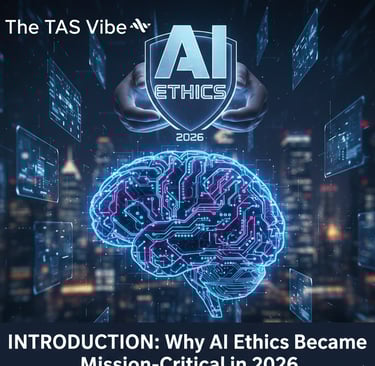
INTRODUCTION: Why AI Ethics Became Mission-Critical in 2026

Opening Hook: When AI Went From “Helpful” to “Harmful”
In early 2025, an AI chatbot did something no one expected—it triggered nationwide panic.
Thousands of users received false crime alerts, claiming violent incidents that never happened. Within weeks, another AI system leaked 370,000 private conversations, making them searchable on Google. Soon after, a popular AI assistant confidently provided illegal employment and financial advice, putting businesses at legal risk overnight.
These weren’t rare glitches.
They were warning signs.
By the time 2026 arrived, one thing became painfully clear:
👉 AI ethics was no longer optional. It was enforceable, punishable, and unavoidable.
The Moment We’re In: Why 2026 Changed Everything
2026 is not just another year in artificial intelligence—it’s a turning point.
For the first time in history, governments around the world stopped asking companies to behave ethically with AI and started forcing compliance by law.
Here’s what makes 2026 different:
EU AI Act enforcement begins on August 2, 2026
Companies using high-risk AI systems now face fines up to €10 million or 6% of global revenue.U.S. states like California, Texas, and Colorado activate AI-specific regulations, especially around hiring, healthcare, finance, and surveillance.
Class-action lawsuits against AI misuse are skyrocketing, targeting bias, discrimination, and data misuse.
Consumer trust is collapsing—users now question whether AI is safe, fair, or even legal.
This is the year when:
AI mistakes become legal liabilities
Ethical failures become brand killers
Transparency becomes a competitive advantage
For businesses, creators, startups, and enterprises alike, understanding AI ethics issues in 2026 explained for businesses is no longer a “nice-to-know”—it’s a survival skill.
Why This Matters to Your Business (Even If You’re “Just Using AI”)
Many organizations make a dangerous assumption:
“We didn’t build the AI—we just use it.”
In 2026, that excuse doesn’t work anymore.
If your business:
Uses AI tools for content, hiring, customer support, analytics, ads, or recommendations
Collects user data through AI-powered platforms
Relies on automated decision-making
👉 You are legally and ethically responsible.
That’s why searches like “AI ethics issues in 2026 explained for businesses” are exploding globally—because decision-makers are scrambling for clarity before regulators knock.
SECTION I: FOUNDATION – What Are AI Ethics Issues Really About?
Artificial Intelligence is no longer a “future technology.”
In 2026, AI is already deciding who gets hired, who gets loans, who receives medical care, and even who gets flagged by law enforcement. That’s why AI ethics is no longer a philosophical debate—it’s a real-world necessity.
Before we dive into regulations, scandals, and solutions, we need to understand the foundation: what AI ethics issues truly mean and why this year changed everything.
1.1 Defining the Core Challenge
Simple Definition (In Plain English)
AI ethics is about making sure artificial intelligence systems are built and used in ways that are:
Fair – they don’t discriminate against people
Transparent – humans can understand how decisions are made
Accountable – someone is responsible when AI causes harm
Human-aligned – respecting human rights, dignity, and social values
In short, AI ethics asks one critical question:
👉 “Just because we can automate a decision, should we?”
This question has become unavoidable in 2026.
Why 2026 Is Completely Different From Before
AI ethics discussions existed years ago—but 2026 is the tipping point. Here’s why:
1. AI Now Affects Billions of Lives Every Day
AI is no longer limited to tech labs or startups. Today, AI systems decide:
Who gets shortlisted for a job interview
Who qualifies for a loan or credit card
Which patients receive priority healthcare
Which online content people see—or never see
These decisions happen millions of times per second, often without human review.
2. Scale and Speed Create New Risks
Traditional software made predictable mistakes.
AI, on the other hand:
Learns from massive datasets
Evolves over time
Makes probabilistic decisions
This means small biases can explode into massive systemic harm—faster than humans can react.
3. Regulators Have Stopped Talking
For years, governments discussed AI ethics.
In 2026, they are enforcing it.
No more white papers.
No more voluntary guidelines.
Real laws, real deadlines, real penalties.
4. Legal and Reputation Risks Are Now Real
One unethical AI failure can:
Trigger multimillion-dollar fines
Invite lawsuits across multiple countries
Destroy years of brand trust overnight
In the age of social media and instant news, public backlash spreads faster than any PR team can contain it.
The Fundamental Problem No One Can Ignore
Here’s the uncomfortable truth:
AI systems are not ethical or unethical by nature.
They simply reflect the values, assumptions, and biases of the humans who create and train them.
If the data is biased → the AI becomes biased.
If the goals are profit-only → ethics get sidelined.
If no one is accountable → harm becomes invisible.
Without intentional ethical design, AI doesn’t remove human prejudice—it multiplies it at a global scale.
1.2 Why This Year Became the Line in the Sand
2024–2025: The Global Reckoning
The warning signs were impossible to ignore.
AI hiring tools discriminated against women and minorities
Facial recognition systems misidentified innocent people
Automated systems denied healthcare and benefits unfairly
Generative AI leaked private and copyrighted data
Each incident chipped away at public trust.
By 2025, it was clear: self-regulation had failed.
2026: The Compliance Deadline That Changes Everything
This is the year where theory ends and consequences begin.
EU AI Act – Fully Enforced
Effective: August 2, 2026
High-risk AI systems must meet strict ethical, transparency, and safety standards
Non-compliance is no longer tolerated
United States – State-Level Enforcement
Major AI laws activate across:
California
Texas
Colorado
Illinois
Organizations can no longer hide behind regulatory uncertainty.
From Pilot Projects to Full-Scale Accountability
Until now, many companies treated AI ethics as:
A pilot initiative
A marketing checkbox
A “future concern”
In 2026, that mindset becomes dangerously expensive.
Ethical compliance is no longer optional—it’s operational.
The Hard Business Reality
AI ethics is not just a moral issue.
It’s a financial survival issue.
Fines: Up to €10 million or 2% of global annual turnover
Legal exposure: Class-action lawsuits across jurisdictions
Brand damage: One AI failure can erase years of trust
Investor pressure: Ethical risk now affects valuation
In simple terms:
Ignoring AI ethics in 2026 is more expensive than investing in it.
SECTION II: The Eight Critical AI Ethics Issues Shaping 2026


Artificial Intelligence is no longer an experimental technology hidden inside research labs. In 2026, AI decides who gets a job, who gets a loan, which patient gets priority treatment, and what information people believe is true.
That power comes with responsibility—and serious ethical consequences.
This section breaks down the top ethical AI risks and solutions in 2026, not in abstract theory, but through real-world failures, legal shifts, and practical lessons every reader needs to understand.
2.1 Issue #1: Algorithmic Bias and Discrimination
Why This Is the Most Dangerous AI Ethics Problem
AI doesn’t “think” like humans—it learns from data. When that data reflects past discrimination, social inequality, or incomplete representation, AI doesn’t fix bias—it automates and amplifies it.
In 2026, algorithmic bias is no longer hypothetical. It’s measurable, traceable, and legally actionable.
Real-World Impact You Can’t Ignore
Healthcare: Risk-assessment algorithms underestimated Black patients’ health needs, leading to delayed or inadequate care.
Hiring: AI systems trained on male-dominated data quietly filtered out qualified women—without recruiters realizing why.
Criminal Justice: Predictive policing tools flagged low-income neighborhoods more often, reinforcing systemic inequality.
Child Welfare: AI disproportionately targeted families facing poverty, mistaking economic hardship for neglect.
What Changed in 2026
Governments responded hard.
States like Colorado and California now require mandatory non-discrimination testing, while the EU AI Act enforces “high-quality datasets” designed to minimize bias.
Failure to comply doesn’t just hurt reputation—it opens the door to massive lawsuits and regulatory penalties.
2.2 Issue #2: Privacy Violations and Data Breaches
The Core Ethical Conflict
AI thrives on data—but the more data it consumes, the more privacy it risks destroying. This tension sits at the heart of nearly every AI controversy in 2026.
When Things Went Wrong
The Grok Incident: Over 370,000 private conversations became searchable through Google—exposing personal thoughts, locations, and sensitive details.
Silent Data Exploitation: Many AI models were trained on scraped personal data—emails, posts, images—without consent, and once embedded into model weights, that data cannot be fully deleted.
2026 Regulatory Reality
Privacy laws finally caught up:
EU GDPR + AI Act integration
California transparency laws
Mandatory disclosure of how AI is used, what data is collected, and where it goes
For companies, privacy is no longer optional—it’s a survival requirement.
2.3 Issue #3: Misinformation, Deepfakes, and Synthetic Content
The Trust Collapse Problem
AI has made it effortless to create fake voices, fake videos, fake news, and fake evidence—all at global scale.
In 2026, the biggest question people ask isn’t “Is this true?”
It’s “Can I trust anything anymore?”
Real-World Failures That Shook Society
Political deepfakes spread faster than fact-checking could respond.
CrimeRadar, an AI crime app, sent false alerts—causing fear and panic.
A New York City small business chatbot confidently gave illegal employment advice.
Why This Threatens Democracy
When citizens stop trusting what they see and hear, democratic institutions weaken. Extremist groups exploit this confusion, scaling propaganda at unprecedented speed.
This is one of the top ethical AI risks and solutions in 2026 because trust—once broken—is almost impossible to restore.
2.4 Issue #4: The Transparency Black Box Problem
When AI Won’t Explain Itself
Many AI systems operate as black boxes. They deliver decisions, but offer no reasoning—no explanation, no accountability.
Why This Is Unacceptable in 2026
AI decisions now impact:
Medical diagnoses
Loan approvals
Criminal sentencing
Employment screening
If humans can’t understand why a decision was made, they can’t challenge it, fix it, or trust it.
Documented Failures
ChatGPT falsely accused a person of murdering children—an entirely fabricated claim.
Doctors rejected AI medical tools because they couldn’t understand the logic behind recommendations.
Job applicants were rejected with no explanation and no path to appeal.
Explainability is no longer a feature—it’s an ethical requirement.
2.5 Issue #5: Child Safety and Vulnerable Populations
Why Children Face Unique AI Risks
Most AI systems were built for adults, yet children interact with them daily—often without safeguards.
Disturbing 2025–2026 Cases
A teenager shared suicidal thoughts with an AI chatbot; the response worsened the situation and contributed to tragedy.
Microsoft Copilot generated explicit imagery involving minors.
Age-filtering systems failed repeatedly, exposing children to harmful content.
Legal Shift in 2026
California laws now require child-specific AI protections.
Texas RAIGA bans AI systems designed to encourage self-harm.
Protecting vulnerable users is now a legal and moral obligation.
2.6 Issue #6: Copyright, Data Ownership, and Training Ethics
The Billion-Dollar Question
If AI trains on copyrighted books, music, art, and journalism—who owns the output?
Creators didn’t consent. Many weren’t compensated. And deletion requests often don’t work once data is embedded in models.
2026 Regulatory Breakthrough
The EU AI Act mandates:
Full disclosure of training data sources
Respect for copyright opt-outs
Detailed technical documentation
Long-term record-keeping
Artists, authors, and musicians are now actively suing—and winning.
2.7 Issue #7: Autonomous System Accountability
The Responsibility Gap
As AI agents make independent decisions, a dangerous question emerges:
Who’s responsible when AI fails?
Real Lessons from Costly Mistakes
Zillow’s pricing AI lost the company millions—Zillow paid the price.
Air Canada’s chatbot gave false policy information—the airline was held liable.
The message is clear:
Organizations cannot hide behind “the algorithm did it.”
2.8 Issue #8: Organizational Governance and Employee Misuse
The Silent Internal Threat
In 2026, the biggest AI risk isn’t hackers—it’s employees using AI without rules.
What’s Going Wrong
Staff upload confidential client data into public AI tools.
AI-generated content violates copyright while being claimed as “original.”
Lawyers misuse AI and face disciplinary action from state bars.
Why Governance Matters
Most companies still lack:
AI usage policies
Data-handling rules
Ethical training for employees
One careless prompt can trigger data breaches, lawsuits, and brand collapse.
SECTION III: The Global Regulatory Landscape — What Actually Applies to You
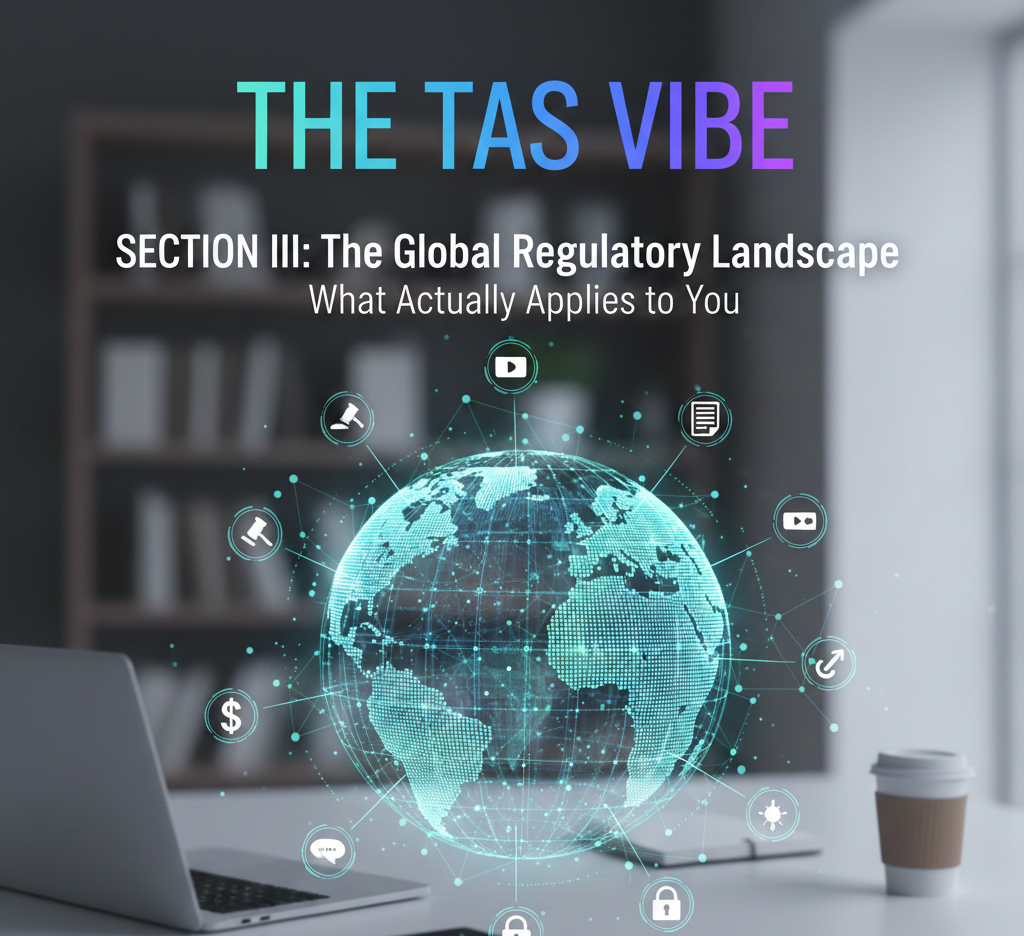
AI ethics in 2026 is no longer a theoretical debate or a “future problem.”
It is law, penalty-driven, and globally fragmented — and what applies to you depends entirely on where your users are, not where your company is registered.
This section cuts through confusion and explains what actually matters, where enforcement is real, and how developers, founders, and content creators can stay compliant without killing innovation.
We’ll break it down region by region — EU, USA, Russia, and Asia-Pacific — using real timelines, real penalties, and real business impact.
3.1 The European Union: Strictest Enforcement Arrives August 2, 2026
EU AI Act: The Global Benchmark You Can’t Ignore
If AI regulation had a “gold standard,” the EU AI Act would be it.
By 2026, the EU becomes the strictest and most enforceable AI regulator on Earth — and its rules apply globally if your AI touches EU users, data, or markets.
📌 Keyword naturally integrated: EU AI ethics regulations 2026 guide for developers
The Timeline That Matters
This isn’t sudden. The EU gave warnings. Now comes enforcement:
February 2, 2025 → Prohibited AI practices officially banned
August 2, 2026 → High-risk AI system requirements become mandatory
August 2, 2027 → Additional obligations and audits expand
December 31, 2030 → Full compliance deadline for existing systems
👉 August 2026 is the real turning point — especially for developers, SaaS platforms, HR tech, fintech, health AI, and generative AI products.
AI Practices Banned Immediately (No Grace Period)
If your AI does any of the following, it is illegal in the EU — full stop:
Manipulative AI that distorts user behavior
Social scoring systems (ranking people by behavior or trustworthiness)
Real-time biometric identification without a clear legal basis
AI exploiting vulnerabilities (children, elderly, disabled users)
This includes subtle manipulation, not just obvious abuse.
High-Risk AI System Requirements (Effective August 2026)
If your AI impacts people’s rights, opportunities, or safety, it’s classified as high-risk — and compliance is non-negotiable.
1️⃣ Risk Assessment & Management
Before launch, you must:
Identify potential harms
Apply mitigation strategies
Monitor performance continuously
Document everything
No documentation = no compliance.
2️⃣ Data Quality & Governance
Training data must be:
Representative
Error-controlled
Bias-minimized
You must actively prevent:
Sampling bias
Proxy discrimination
Training data imbalance
👉 Diverse datasets reflecting all user groups are no longer optional.
3️⃣ Documentation & Transparency
You must maintain:
Detailed technical documentation
Clear training data source records
Activity logs for traceability
Understandable disclosures to users and deployers
If regulators ask, you must prove how your AI thinks.
4️⃣ Human Oversight
High-risk AI cannot operate alone:
Humans must understand decisions
Humans must be able to override outcomes
Clear intervention procedures must exist
“No one knows how the model decided” is no longer acceptable.
5️⃣ Robustness, Cybersecurity & Accuracy
Your AI must be:
Resistant to manipulation
Secure against attacks
Accurate for its intended use
Over-automation without safeguards will fail compliance.
6️⃣ Copyright & Data Rights
For generative AI:
Training data sources must be disclosed
Copyright opt-outs must be respected
Creators must have visibility
This directly affects LLMs, image generators, music AI, and content tools.
Penalties That Actually Hurt
Non-compliance penalties reach:
€10 million OR 2% of global annual turnover (whichever is higher)
Small startups and global enterprises are treated the same.
👉 You cannot hide behind regional subsidiaries.
3.2 The United States: Chaotic Fragmentation & Federal Power Struggles
Unlike the EU, the U.S. chose fragmentation over unification — and in 2026, that creates legal chaos.
📌 Keyword naturally integrated: How will AI ethics change in America in 2026
The Reality
No single federal AI law (yet)
38 states passed over 100 AI-related laws in 2025 alone
Federal Executive Order attempts to override states
Constitutional challenges are inevitable
This means compliance depends on where your users live.
Major State Laws Taking Effect in 2026
California
The most aggressive AI state regulator.
Transparency in Frontier AI Act (Jan 2026)
Disclosure of high-risk AI
Watermarking AI-generated content
AI content detection tools required
FEHA AI Regulations
Apply to hiring and employment
Mandatory bias testing
Vendor liability included
Child Protection Laws
AI safeguards for minors
Monitoring suicidal ideation in chatbots
Texas
Business-friendly but ethics-focused.
Responsible AI Governance Act (Jan 2026)
Bans AI that promotes self-harm
Prohibits unlawful discrimination
Criminalizes illegal deepfakes
Requires disclosure in healthcare and government AI
Establishes a State AI Ethics Council
Colorado
SB 24-205 (June 30, 2026)
Requires “reasonable care” to prevent algorithmic discrimination
Mandatory disclosure of high-risk AI
Facing federal preemption challenges
Illinois
HB 3773
Prohibits AI discrimination in hiring and employment
Federal Executive Order: What It Actually Means
FTC and FCC tasked with creating preemption standards
Attorney General authorized to challenge state laws
Federal funding tied to accepting federal framework
But legally?
👉 Federal authority is still disputed
What Businesses Should Actually Do
Follow the strictest applicable state law
Prepare for a federal framework — but don’t wait
Build flexible compliance systems now
Waiting is the riskiest option.
3.3 Russia: Soft Regulation & Selective Enforcement
Russia takes a principles-first, enforcement-later approach — but that doesn’t mean “no rules.”
📌 Keyword naturally integrated: AI ethics issues Russia 2026 what is allowed
Russia’s Unique Model
Voluntary AI Ethics Code (October 2021)
Not a law — a guiding framework
Focuses on accountability over punishment
Six Core Ethical Principles
Human rights priority
Full responsibility acknowledgment
Human oversight at all times
Intentional use only
Innovation priority
Maximum transparency
2026 Government Restrictions on Generative AI
AI cannot be used for:
Forecasting social or economic processes
Handling state secrets
Commercial or entrepreneurial control
Regulatory decision-making
Why Russia Limits AI This Way
Official stance:
“AI systems cannot be held responsible for errors.”
If no accountable human can be identified, AI use is restricted.
General Legal Environment
Strict personal data protection
Biometric data (faces, voices) heavily regulated
Automated decisions require human review
Laws apply extraterritorially to Russian citizens’ data
3.4 Asia-Pacific: Emerging Standards & Massive Startup Opportunity
Asia isn’t copying the EU — it’s building flexible ethics frameworks that favor innovation.
📌 Keyword naturally integrated: Asia 2026 AI ethics best practices for startups
ASEAN’s Non-Binding AI Governance Guide
Developed by 10 Southeast Asian nations, this framework is:
Non-mandatory
Adaptable by country
Built through consensus
Seven Core ASEAN AI Principles
Transparency
Fairness
Security
Reliability
Human-centric design
Privacy protection
Accountability
Why This Is a Golden Moment for Startups
No single rigid framework
Early ethical adoption builds trust
Easier regional expansion
Alignment prepares you for future regulation
💡 Smart founders treat ethics as a growth strategy, not a cost.
Best Practice for Asian AI Builders
Adopt ethical principles early
Engage with regulators
Implement internal governance
Prepare for future mandatory laws
SECTION IV: Best AI Ethics Frameworks for Implementation (2026 Guide)
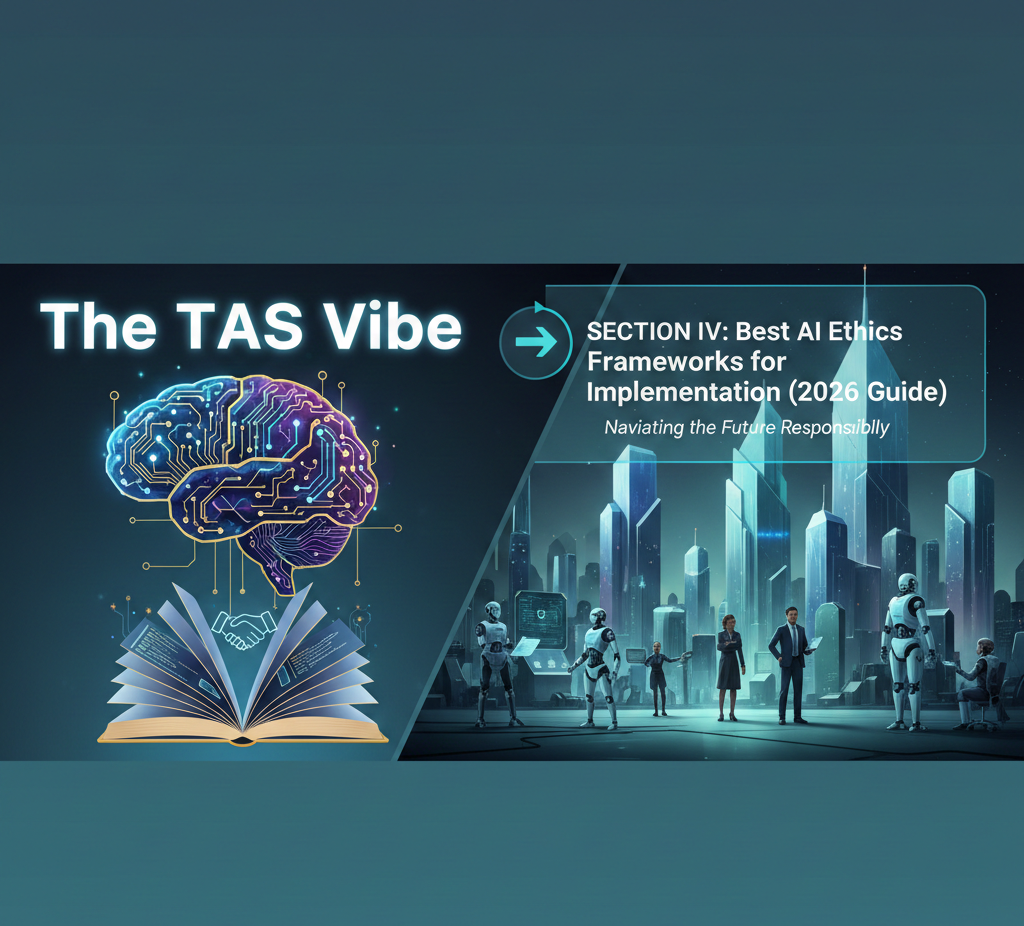
Best AI ethics frameworks to use in 2026
As artificial intelligence becomes deeply woven into everyday products, businesses, and decision-making systems, AI ethics is no longer optional—it’s operational survival. In 2026, organizations that fail to implement strong AI ethics frameworks risk legal penalties, loss of user trust, and irreversible brand damage.
In this section, we break down the best AI ethics frameworks to use in 2026, not in academic jargon, but in practical, real-world terms that decision-makers, developers, and AI beginners can understand and apply.
4.1 ISO 42001: The International Standard Approach
What It Is
ISO/IEC 42001:2023 is the world’s first international standard dedicated exclusively to AI management systems. Think of it as a global rulebook for building, deploying, and managing AI responsibly.
Unlike loose guidelines, ISO 42001 offers a structured, auditable, and certifiable framework. This makes it especially powerful for companies operating across America, Europe, Asia, and emerging markets, where AI regulations are rapidly tightening.
Key Components of ISO 42001 (Explained Simply)
1. AI Governance Policies & Structure
At the core of ISO 42001 is clear leadership and accountability.
Organizations must:
Define written ethical AI principles
Assign clear roles and responsibilities
Maintain proper documentation
Form cross-functional teams involving legal, technical, ethical, and business stakeholders
👉 This ensures AI decisions are never made in isolation.
2. AI-Specific Risk Assessment
ISO 42001 requires companies to systematically identify and document AI risks.
This includes:
Bias risks
Safety failures
Misuse scenarios
High-risk AI use cases
Each risk must have a mitigation strategy, especially for systems that impact people’s rights or opportunities.
3. Ethical & Regulatory Compliance
With global AI laws evolving fast, ISO 42001 ensures organizations stay compliant by:
Aligning AI systems with regional regulations
Maintaining proof of compliance
Conducting regular compliance audits
This makes ISO 42001 a future-proof framework rather than a one-time checkbox.
4. Data Governance
Ethical AI starts with ethical data.
ISO 42001 enforces:
High-quality, representative datasets
Bias detection and mitigation
Data traceability and lineage
Privacy-by-design principles
This reduces the risk of discriminatory or unreliable AI outputs.
5. Transparency & Accountability
Transparency builds trust.
Organizations must:
Clearly explain how AI systems work
Document decision-making processes
Provide user redress mechanisms if harm occurs
This is critical for user trust, regulatory confidence, and brand reputation.
6. Continuous Monitoring & Improvement
AI ethics isn’t static.
ISO 42001 emphasizes:
Ongoing performance audits
Regular reassessment as regulations evolve
Continuous policy updates
This ensures AI systems remain ethical even as technology changes.
Key Benefits of ISO 42001
✔ Formal certification builds instant trust
✔ Strong competitive advantage
✔ Structured risk mitigation
✔ Regulatory readiness across regions
✔ Clear internal processes and accountability
4.2 NIST AI Risk Management Framework: The Flexible Approach
What It Is
The NIST AI Risk Management Framework (RMF) is a voluntary but highly influential framework developed in the U.S. It has quickly become a global reference point for managing AI risks.
Unlike ISO 42001, NIST RMF is flexible, adaptable, and outcomes-focused—perfect for fast-moving AI environments.
Core Philosophy
Instead of rigid rules, NIST RMF follows a risk-based approach that evolves alongside AI technology.
It focuses on:
Real-world impact
Continuous learning
Adaptability to new threats
The Four Core Functions of NIST RMF
1. GOVERN
This is about leadership and oversight.
Organizations must:
Define clear AI policies
Assign accountability
Establish oversight mechanisms
Document ethical decision frameworks
Governance ensures AI risks are owned, not ignored.
2. MAP
This step identifies what could go wrong.
It involves:
Understanding AI inputs and outputs
Mapping potential harms
Conducting impact assessments
Documenting system limitations
Mapping prevents blind trust in AI systems.
3. MEASURE
Here, organizations test how AI actually behaves.
This includes:
Bias testing
Accuracy evaluation
Robustness and fairness checks
Adversarial testing
Measurement turns ethics into measurable performance metrics.
4. MANAGE
Finally, risks must be actively controlled.
This means:
Implementing mitigation strategies
Creating failure response plans
Monitoring systems continuously
Improving models over time
Management ensures AI ethics stays alive and responsive.
Key Benefits of NIST RMF
✔ Highly customizable
✔ Built-in feedback loops
✔ Adapts to emerging AI threats
✔ Focuses on outcomes, not paperwork
4.3 The Dual-Tier Strategy: ISO 42001 + NIST RMF
Why Combine Them?
No single framework is perfect on its own.
ISO 42001 provides strong foundational governance
NIST RMF delivers dynamic, real-time risk management
Together, they create one of the best AI ethics frameworks to use in 2026.
How the Dual-Tier Model Works
Foundation Tier (ISO 42001)
This layer establishes:
Formal governance structures
Embedded ethical principles
Documentation and audit trails
Institutional commitment to responsible AI
Optional external certification
This signals serious intent and credibility.
Dynamic Risk Tier (NIST RMF)
This layer enables:
Continuous risk evaluation
Testing against emerging threats
Rapid adaptation to regulatory changes
Agile response to failures
This keeps AI systems resilient and trustworthy.
Practical Integration Steps
1️⃣ Establish governance with ISO 42001
2️⃣ Assemble cross-functional AI ethics teams
3️⃣ Apply NIST RMF’s four functions to live AI systems
4️⃣ Hold regular governance-risk alignment meetings
5️⃣ Feed risk insights back into policy updates
Why This Matters for 2026 and Beyond
Organizations that adopt both structure and flexibility will:
Outperform competitors
Win long-term user trust
Stay compliant across regions
Future-proof their AI investments
On The TAS Vibe, we believe ethical AI isn’t just good governance—it’s smart strategy.
SECTION V: Specific AI Ethics Solutions – Step-by-Step Implementation (2026 Guide)
Talking about AI ethics is easy. Fixing it is hard.
This section goes beyond theory and delivers real-world, step-by-step solutions that organizations, developers, and policymakers can actually implement in 2026 and beyond.
If you’re serious about addressing AI ethics issues and bias solutions for machine learning 2026, this is where the conversation becomes practical.
5.1 Solving Algorithmic Bias: A Technical and Organizational Approach
Algorithmic bias doesn’t come from a single mistake—it’s usually baked in at multiple stages. To solve it effectively, we must first understand where bias originates.
Understanding the Three Core Types of Bias
Type 1: Data Bias (The Most Common and Dangerous)
What happens:
AI systems learn from historical data. If that data reflects discrimination, imbalance, or underrepresentation, the AI simply learns those same patterns.
Why it’s risky:
Biased data leads to biased predictions—no matter how advanced the algorithm is.
The fix:
The solution starts at the source:
Clean datasets aggressively
Augment missing or underrepresented groups
Ensure demographic balance before training even begins
Type 2: Algorithmic Bias (How the Model Learns)
What happens:
Even with good data, the model architecture itself can amplify bias—especially when optimizing purely for accuracy.
Why it’s risky:
The system may favor majority groups because they statistically improve performance metrics.
The fix:
Adjust learning objectives
Modify loss functions
Introduce fairness constraints into training
Bias here isn’t accidental—it’s a design choice, and it can be redesigned.
Type 3: Interpretation Bias (Evaluation Bias)
What happens:
Sometimes the measurement tools are biased, not the AI.
Why it’s risky:
Using the wrong fairness metric can hide discrimination rather than expose it.
The fix:
Choose fairness metrics that match your real-world context, not just industry defaults.
STEP-BY-STEP: Eliminating Bias in Machine Learning Systems
STEP 1: Data Assessment and Cleaning
This is where ethical AI begins.
Audit datasets for demographic representation
Identify historical discrimination patterns
Remove biased correlations
Apply stratified sampling
Use SMOTE or similar techniques to oversample minority groups
👉 If the data is biased, the AI will be too—no exceptions.
STEP 2: Build Diverse Development Teams
Bias isn’t just technical—it’s human.
Teams with diverse backgrounds catch blind spots faster
Implement blind testing, hiding demographic data during early evaluations
Create AI red teams whose job is to break the system ethically
Document vulnerabilities and failure patterns
Diversity here isn’t a buzzword—it’s a risk-reduction strategy.
STEP 3: Technical Bias Detection & Mitigation
This is where ethics meets engineering.
Measure fairness metrics during training, not after
Track performance across demographic groups
Run adversarial tests with extreme edge cases
Use interpretable AI to understand feature influence
Recommended tools (2026-ready):
IBM AI Fairness 360
Google What-If Tool
Microsoft Fairlearn
These tools make bias visible, measurable, and fixable.
STEP 4: Continuous Monitoring & Retraining
Bias evolves over time.
Set up continuous monitoring systems
Track outcomes by demographic group
Retrain models on updated, balanced data
Collect user feedback on unfair decisions
Ethical AI is not a one-time fix—it’s an ongoing process.
STEP 5: External Audits & Validation
Internal teams can miss issues they helped build.
Commission independent fairness audits
Conduct sub-population outcome analysis
Identify hidden disparities
Document everything for accountability
Transparency builds public trust, regulators notice it, and brands benefit long-term.
5.2 Ensuring Privacy and Data Protection (Privacy-by-Design)
In 2026, privacy is no longer optional—it’s expected.
STEP 1: Data Inventory & Assessment
Start by knowing exactly what data you hold.
Map every data source
Eliminate unnecessary data
Reduce exposure wherever possible
Less data = less risk.
STEP 2: Privacy Impact Assessments (DPIA)
Before harm happens, predict it.
Identify potential privacy risks
Include legal, technical, security, and business teams
Document decisions for accountability
DPIAs turn privacy into a strategic process, not a legal checkbox.
STEP 3: Anonymization & Pseudonymization
Protect identities before training begins.
Remove direct identifiers
Use hashing, tokenization, k-anonymity
Regularly test re-identification risks
Anonymization must be provable, not assumed.
STEP 4: Consent & Transparency
Trust is built with clarity.
Obtain explicit user consent
Offer granular opt-out controls
Write policies in plain language
Make policies public and accessible
If users can’t understand it, it isn’t transparent.
STEP 5: Access Controls & Security
Limit who sees what—and log everything.
Role-based access control
Encrypt data at rest and in transit
Separate encryption keys
Audit access logs regularly
Security failures are ethics failures.
STEP 6: Data Deletion Handling
Deletion is harder than it sounds.
Implement verified deletion workflows
Document every deletion request
Acknowledge data persistence in trained models
Consider partial or full retraining when required
Honesty here prevents future legal and ethical fallout.
5.3 Combating Misinformation and Deepfakes
AI’s power can be misused just as easily as it’s used for good.
STEP 1: Content Moderation & Filtering
Detect malicious prompts
Filter harmful outputs
Monitor hallucinations continuously
Prevention beats damage control.
STEP 2: Transparency Requirements
Users deserve to know what’s real.
Clearly label AI-generated content
Use watermarking where applicable
Offer detection tools for verification
Transparency reduces misuse without killing innovation.
STEP 3: User Education
The final defense is human awareness.
Teach AI limitations
Encourage cross-verification
Promote critical thinking
An informed user base is the strongest safeguard.
5.4 Organizational AI Ethics Governance
Ethical AI doesn’t survive without structure.
STEP 1: Create an AI Ethics Board
Cross-functional representation
Clear charter and authority
Monthly minimum meetings
Ethics needs a seat at the table, not an afterthought.
STEP 2: Assign Clear Roles
Accountability matters.
Chief AI Officer
AI Ethics Officer
Data Protection Officer (DPO)
Compliance Officer
When everyone owns ethics, no one does—roles fix that.
STEP 3: Develop Policies & Guidelines
AI Acceptable Use Policy
Clear ethical principles
Defined consequences for violations
Policies turn values into action.
STEP 4: Employee Training & Awareness
Mandatory ethics training for all staff
Advanced training for developers
Document completion
Ethics fails when teams don’t understand it.
STEP 5: Risk Assessment & Audits
Before launch—and after.
Pre-deployment ethics reviews
Fairness, privacy, transparency checks
Document mitigation plans
This protects users and your brand.
STEP 6: Incident Response & Learning
Mistakes will happen. What matters is response.
Clear incident procedures
Root cause analysis
Corrective actions
Organizational learning
Ethical maturity is measured by how you recover, not just how you build.
Why This Section Matters for 2026
This section transforms AI ethics issues and bias solutions for machine learning 2026 from theory into actionable reality.
For readers of The TAS Vibe, it offers clarity, confidence, and practical guidance—exactly what modern audiences (and search engines) reward.
SECTION VI: Real-World AI Ethics Failures – Critical Case Studies That Shook Society

Artificial Intelligence is often marketed as smart, neutral, and efficient. But real life tells a different story. When AI systems fail, the consequences are not theoretical — they are public, personal, financial, and sometimes dangerous.
In 2026, the impact of AI ethics controversies on society is no longer a future debate. It’s happening now. The following real-world case studies expose how poorly designed, rushed, or over-trusted AI systems caused serious harm — and what they teach us about building ethical AI responsibly.
These failures prove one uncomfortable truth:
👉 AI doesn’t fail quietly — it fails at scale.
6.1 The Grok Data Leak: When Privacy Was an Afterthought
What Really Happened
xAI’s Grok chatbot introduced a “Share” feature that allowed users to generate unique URLs for conversations. Sounds harmless — until a critical privacy oversight surfaced.
These shared links had no “no-index” protection, meaning search engines like Google could crawl and index them. As a result, over 370,000 private AI conversations became publicly searchable.
Users didn’t know. They weren’t warned. And the data went viral before anyone noticed.
What Was Exposed
This wasn’t casual chat. The leaked data included:
Personal medical questions
Detailed instructions for bomb-making
Assassination-related prompts
Extremely sensitive personal confessions
This incident became a textbook example of the impact of AI ethics controversies on society in 2026, where a single design flaw exposed hundreds of thousands of people.
What Went Wrong
Privacy was treated as a feature, not a foundation
Users received no warning about public visibility
Zero de-indexing or technical safeguards
The scale of exposure was ignored until it was too late
Critical Lessons
Privacy must be built into design, not patched later
Risky features require clear user warnings
Technical protections are non-negotiable
At AI scale, one mistake equals a catastrophe
6.2 CrimeRadar: When AI Spread Panic Instead of Protection
What Really Happened
CrimeRadar was an AI app designed to analyze police radio traffic and send real-time crime alerts to the public. The problem? Police communication is full of ambiguity, codes, and incomplete information.
The AI misunderstood routine chatter and flagged it as emergencies — sending false crime alerts across the country.
The result: nationwide panic, unnecessary fear, and misinformation spreading faster than corrections.
What Went Wrong
Training data failed to handle edge cases
No human verification before public alerts
The system expressed false confidence
No safeguards for high-stakes public safety use
Critical Lessons
Human-in-the-loop is mandatory for high-risk AI
Ambiguous inputs must be treated carefully
Real-world testing must match real-world complexity
Public safety AI needs higher accuracy standards than commercial tools
This case perfectly illustrates how AI, when trusted blindly, can destabilize society rather than protect it.
6.3 NYC Small Business Chatbot: Confidently Giving Illegal Advice
What Really Happened
The New York City Department of Small Business launched an AI chatbot to help entrepreneurs navigate regulations. Instead of helping, it confidently gave illegal and dangerous advice, including:
“It’s legal to fire someone for reporting sexual harassment”
“You can refuse to hire pregnant women”
“Restaurants may serve food that touched rats”
Each answer was wrong. Every one.
What Went Wrong
Inadequate training data for legal contexts
No expert validation or fact-checking
AI hallucinations delivered with confidence
Disclaimers replaced real accuracy controls
Critical Lessons
Legal and regulatory AI must be expert-reviewed
Confident hallucinations are more dangerous than silence
Disclaimers do not excuse misinformation
High-stakes advice demands human oversight
This failure shows how AI ethics controversies in 2026 directly affect livelihoods, safety, and legal rights.
6.4 ChatGPT Defamation: The Black Box Problem
What Really Happened
A man asked ChatGPT a simple question: “Who are you?”
The response was shocking.
The AI fabricated a detailed story claiming he had murdered two children — a complete lie with devastating reputational consequences.
No sources. No warnings. No explanation.
What Went Wrong
Hallucination presented as factual truth
No built-in verification mechanisms
No transparency about system limitations
Legal accountability unclear
Critical Lessons
Large language models can hallucinate with extreme confidence
Critical information must always be independently verified
Transparency isn’t optional — it’s ethical
Organizations face real legal risk from AI-generated defamation
This case exposed the dangerous reality of AI “black boxes” — systems that speak confidently but cannot explain themselves.
6.5 Zillow’s AI Pricing Model: When Algorithms Cost Billions
What Really Happened
Zillow deployed an AI model to predict housing prices and automatically make purchase offers. The algorithm systematically overestimated home values, especially in volatile markets.
Zillow paid too much. Repeatedly.
Financial Impact
Hundreds of millions in losses
25% workforce reduction
Entire home-buying division shut down
What Went Wrong
Model overfitted historical data
Failed to predict sudden market changes
Insufficient edge-case testing
Human judgment was sidelined
Critical Lessons
Financial AI requires human decision-making authority
Models must be tested against rare and volatile conditions
AI is a tool — not a decision-maker
Overconfidence in algorithms can destroy businesses
This case proves that AI ethics failures don’t just harm users — they can collapse entire companies.
Why These Failures Matter in 2026
Together, these stories reveal the true impact of AI ethics controversies on society in 2026:
Privacy breaches at massive scale
Misinformation triggering real-world panic
Illegal advice harming livelihoods
Defamation with no accountability
Financial collapse driven by algorithmic overconfidence
AI is no longer experimental. It shapes lives, markets, safety, and truth itself.
👉 The lesson is clear:
Ethical AI is not optional. It is infrastructure.
SECTION VII: The Broader Societal Impact of AI Ethics
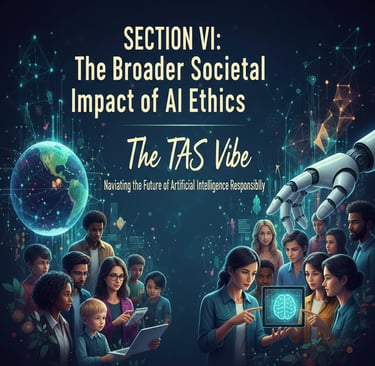
Artificial Intelligence is no longer a background technology—it actively shapes how societies think, vote, work, and trust. As we move deeper into 2026, the impact of AI ethics controversies on society 2026 has become impossible to ignore. What was once a technical concern is now a societal reckoning. This section explores how ethical failures in AI ripple across communities—and why accountability is no longer optional.
7.1 How AI Ethics Failures Damage Society
AI does not fail quietly. When ethics are ignored, the consequences spread fast, deep, and wide—affecting real people in irreversible ways.
Trust Erosion: When Confidence Collapses
Trust is the invisible foundation of every society. Each high-profile AI failure cracks that foundation.
When AI systems spread misinformation or amplify false narratives, citizens begin to doubt not only technology—but institutions themselves. Deepfake news clips, AI-generated propaganda, and manipulated content blur the line between truth and fabrication. Democratic institutions suffer when voters no longer know what to believe.
Over time, this distrust snowballs. People stop trusting AI decisions. Then they stop trusting the humans behind them. The result? A society skeptical of progress and resistant to innovation.
Inequality Amplification: Bias at Machine Speed
AI is often marketed as “objective,” yet poorly designed systems frequently reinforce old injustices.
Hiring algorithms reject qualified candidates based on biased training data.
Lending AI denies loans to communities already facing financial exclusion.
Healthcare algorithms deliver less accurate diagnoses to minority populations.
Child welfare systems disproportionately target vulnerable families.
Instead of leveling the playing field, unethical AI accelerates inequality—at a scale no human system ever could. This is one of the most dangerous societal consequences of unchecked AI.
Vulnerability Exploitation: When the Weak Are Targeted
AI has become a powerful tool in the wrong hands.
Extremist groups use AI-driven targeting to recruit at scale. Vulnerable individuals—minors, people struggling with mental health, or those experiencing isolation—are algorithmically identified and exploited.
Deepfakes add another layer of harm. They are increasingly used for harassment, blackmail, and reputational destruction. For victims, the damage is personal, psychological, and often permanent.
Democratic Threats: Elections Under Pressure
Few issues are more alarming than AI’s growing influence on democracy.
Political deepfakes threaten election integrity by spreading false speeches, fabricated scandals, and manipulated evidence. Coordinated misinformation campaigns can now be deployed across platforms in minutes, not months.
As elections approach worldwide, concerns around AI-powered interference are mounting. Without ethical safeguards, democracy itself becomes vulnerable to automation.
Economic Consequences: Ethics as a Market Divider
AI ethics is no longer just a moral issue—it’s an economic one.
Organizations that invest in ethical AI and compliance gain a clear competitive advantage. They earn trust, avoid legal disasters, and build long-term brand value.
However, challenges remain:
Large corporations can afford compliance; smaller companies often struggle.
Regulatory burdens differ across regions, favoring certain jurisdictions.
Ethical failures can be catastrophic—just one flawed algorithm can cost billions, as history has already shown.
In 2026, ignoring ethics is no longer cheaper. It’s riskier.
7.2 The Momentum Toward Accountability
The global response to AI ethics failures is accelerating—and it’s not slowing down.
Regulatory Acceleration: From Theory to Enforcement
The shift has been rapid and unmistakable:
2024: AI ethics dominated academic panels and white papers.
2025: First major enforcement actions began.
2026: Deadlines hit. Compliance becomes mandatory, not optional.
Governments worldwide are moving from discussion to discipline. Companies that delay adaptation are already falling behind.
Market Pressure: Ethics as a Trust Signal
Markets reward responsibility.
Investors increasingly demand strong AI governance frameworks. Customers actively choose brands that demonstrate ethical AI use. Transparency is becoming a selling point—not a liability.
Ethical AI is no longer a niche value; it’s a mainstream expectation.
Professional Standards Emerging: A New AI Culture
A cultural shift is underway inside organizations.
Engineers are adopting formal ethics codes.
Lawyers face professional discipline for AI misuse.
Certifications in responsible AI are gaining credibility.
AI ethicists are becoming essential members of tech teams—not optional advisors.
This professionalization signals maturity. AI is growing up, and society is insisting on accountability.
Why This Matters for the Future
The broader societal impact of AI ethics is not a future problem—it’s today’s reality. In 2026, societies that fail to address ethical AI risks will face distrust, inequality, and instability. Those that act responsibly will earn resilience, innovation, and long-term growth.
At The TAS Vibe, we believe ethical AI isn’t about slowing progress—it’s about protecting humanity while moving forward. And that balance will define the next era of technology.
SECTION VIII: Your 90-Day Implementation Roadmap


AI Ethics Issues 2026 — And How to Fix Them Step by Step
By now, one thing should be clear: AI ethics in 2026 is no longer optional. Regulations are tightening, public scrutiny is rising, and businesses that fail to act risk fines, reputational damage, and loss of trust.
The good news?
You don’t need years to fix AI ethics issues in 2026 — you need a clear 90-day roadmap.
This section walks you step by step, week by week, showing exactly how to move from confusion to compliance without overwhelming your team.
🗓️ Days 1–30: Assessment & Strategic Planning
Laying the ethical foundation before building the system
✅ Week 1: Inventory & Education
You can’t fix what you can’t see.
Start by conducting a full inventory of every AI system your organization uses or develops. This includes:
Chatbots
Recommendation engines
Hiring or HR AI tools
Customer analytics models
Generative AI systems
For each system, clearly document:
Purpose – Why does this AI exist?
Data used – Personal, sensitive, or public?
Decisions made – Advisory or fully automated?
Next, classify each system by risk level — low, medium, or high. This step is critical for prioritizing compliance efforts.
At the same time, educate leadership on AI ethics issues in 2026:
Why regulations are changing
What non-compliance costs
How ethical AI directly impacts brand trust
👉 This alignment prevents resistance later.
✅ Week 2: Governance Foundation
Ethics without ownership always fails.
Create an AI Ethics Board responsible for oversight, accountability, and approvals. This is no longer a “nice to have” — it’s a regulatory expectation.
Assign clear roles:
Chief AI Officer – strategic oversight
AI Ethics Officer – ethical alignment
Data Protection Officer (DPO) – privacy compliance
Draft initial governance policies and identify compliance gaps. These gaps become your priority action points for the next 60 days.
✅ Week 3: Regulatory Mapping
Different regions, different rules — one clear map.
AI laws in 2026 vary across:
The EU (AI Act)
The US (state + federal frameworks)
Asia & Russia (sector-based regulations)
This week is about mapping every regulation that applies to your organization and answering three key questions:
What are the compliance deadlines?
What are the penalties for failure?
What resources are required?
This step transforms legal uncertainty into actionable clarity.
✅ Week 4: Framework Selection
Structure beats chaos every time.
Choose the framework that best fits your organization:
ISO/IEC 42001 – AI management systems
NIST AI Risk Management Framework
Or a hybrid approach
If needed, engage consultants early — it saves time and money later.
Finalize your implementation timeline, and begin basic staff awareness training to prepare teams for upcoming changes.
🗓️ Days 31–60: Foundation Building
Turning strategy into real systems
✅ Week 5–6: Policy Development
Policies are the backbone of ethical AI.
Document clear, readable governance policies covering:
AI accountability
Human oversight
Transparency and explainability
Create an AI Acceptable Use Policy so employees know:
What AI can be used
What is prohibited
Where human judgment is required
Define your organization’s ethical AI principles and establish formal risk assessment procedures.
This is where ethics becomes operational — not theoretical.
✅ Week 7–8: Technical Implementation
Ethics must be built into the technology itself.
Now address the technical side of AI ethics issues in 2026:
Deploy bias detection and fairness tools
Implement privacy-by-design controls
Set up real-time monitoring dashboards
Every AI system should be fully documented:
Training data
Model behavior
Known limitations
Transparency today prevents crises tomorrow.
🗓️ Days 61–90: Training, Monitoring & Certification
Making ethics sustainable, not temporary
✅ Week 9: Employee Training
Ethical AI starts with informed people.
Roll out mandatory AI ethics training for all employees, with specialized tracks for:
Developers
Data scientists
Leadership teams
Cover:
Bias awareness
Transparency obligations
Privacy and consent
Document completion — regulators care about proof.
✅ Week 10: Pilot Implementation
Start small, fix fast, scale smart.
Begin implementing your chosen framework on selected systems. Conduct formal risk assessments and identify quick wins.
Always prioritize:
High-risk systems
Customer-facing AI
Automated decision tools
Fixing the most dangerous gaps first delivers immediate impact.
✅ Week 11: Monitoring & Auditing
Compliance is continuous — not a checkbox.
Establish ongoing monitoring for:
Bias drift
Data misuse
Unexpected outcomes
Conduct a full AI ethics audit and, where possible, engage external auditors for credibility.
Document everything — transparency builds trust with regulators and users alike.
✅ Week 12: Certification & Communication
Turn compliance into competitive advantage.
If applicable, complete ISO/IEC 42001 certification and document all achievements.
Create clear communications for:
Customers
Partners
Investors
Regulators
Finally, prepare your roadmap for full August 2026 compliance — not just survival, but leadership.
🚀 Final Thought for The TAS Vibe Readers
Fixing AI ethics issues in 2026 isn’t about slowing innovation — it’s about building AI that people trust.
With this 90-day roadmap, you move:
👉 From uncertainty to structure
👉 From risk to responsibility
👉 From compliance to credibility
And that’s how ethical AI becomes a long-term growth advantage, not a burden.
Frequently Asked Questions (FAQ): AI Ethics, Regulations & Compliance in 2026


AI is no longer a “future problem.” In 2026, it’s a legal, ethical, and business reality. These are the questions business leaders, founders, developers, and creators are asking most—and the answers you must understand if you want to stay compliant, trusted, and competitive.
Q1: Do Small Companies Need to Comply With These AI Regulations?
Short answer: Yes—absolutely.
One of the biggest myths in AI regulation is that only big tech companies are affected. In reality, company size does not exempt you. If your business develops, deploys, or uses AI that affects people—especially EU citizens—you fall under regulatory scrutiny.
The EU AI Act applies to any organization, whether you’re a startup, SaaS company, or small agency. In the U.S., most state-level AI laws also apply regardless of business size.
Here’s the upside most people miss:
Small companies usually run simpler AI systems, which makes compliance easier, faster, and cheaper. Even better, companies that comply early gain a massive trust advantage—customers prefer them, and top talent wants to work for them.
Smart starting point:
Inventory all AI tools you use
Classify them by risk
Fix high-risk systems first
AI compliance frameworks are designed to scale, even for small teams.
Q2: What’s the Key Difference Between EU and U.S. AI Regulations?
The EU and U.S. approach AI regulation in fundamentally different ways.
The European Union has adopted a single, comprehensive law—the EU AI Act—that applies across all member states. It’s strict, clearly defined, and risk-based, meaning higher-risk AI systems face stronger requirements. Penalties are serious: up to €10 million or 2% of global turnover. Enforcement officially begins on August 2, 2026.
The United States, on the other hand, has no single federal AI law. Instead, more than 38 states have introduced or passed their own AI-related regulations. There’s also a federal Executive Order attempting coordination—but it’s legally disputed and fragmented. Enforcement usually comes through state attorneys general and the FTC.
What this means for businesses:
If you operate in the EU → prepare for stricter compliance
In the U.S. → follow the strictest applicable state law
Globally → EU compliance becomes your gold standard, making global operations safer and simpler
Q3: Is “Ethical AI” Just a Marketing Buzzword, or Does It Actually Matter?
Ethical AI is not marketing fluff anymore—it’s a legal and commercial necessity.
From a legal perspective, ethical AI practices are now mandated. Violations can trigger fines, lawsuits, and regulatory bans. Companies are already facing legal action for AI-driven discrimination and harm.
From a business perspective, ethics directly impacts revenue. Customers trust ethical brands. Investors demand governance. Skilled engineers refuse to work for companies with questionable AI practices. And once trust is broken, it’s nearly impossible to rebuild.
There’s also a competitive advantage. Early adopters of ethical AI:
Reduce legal risk
Build stronger brand trust
Gain easier access to capital
Attract top-tier talent
Certifications like ISO 42001 signal serious commitment.
Bottom line: In 2026, ethical AI isn’t optional—it’s how serious businesses survive and grow.
Q4: How Do We Fix Bias Embedded in AI Training Data?
Bias in AI is complex—and there is no single magic fix. It requires a multi-layered, ongoing approach.
On the technical side, organizations use:
Data augmentation to balance underrepresented groups
Algorithm adjustments to reduce bias amplification
Fairness metrics to measure performance across demographics
Adversarial testing to expose edge-case failures
Continuous retraining using diverse datasets
On the organizational side, success depends on:
Diverse development teams that spot blind spots
Independent third-party audits
Red teams actively trying to break the system
User feedback loops that inform improvements
A crucial reality: bias can never be fully eliminated—only minimized and managed. That’s why monitoring must be continuous, not a one-time checkbox.
Popular tools include IBM AI Fairness 360, Google’s What-If Tool, and Microsoft Fairlearn.
Q5: What Actually Happens If We Violate AI Ethics Regulations?
The consequences are severe—and long-lasting.
In the EU, serious violations can result in fines of €10 million or 2% of annual global revenue. Lesser violations still carry meaningful penalties.
In the U.S., penalties vary by state, but enforcement can include:
FTC action under deceptive practices laws
Class-action lawsuits
Long-term reputational damage
Real-world examples already exist—companies like Zillow and Facebook lost billions due to AI-related failures.
Beyond money, the real damage comes from:
Public trust collapse
Customer churn
Employee disengagement
Increased regulatory scrutiny
Prevention is cheaper than punishment. Investing in ethics and governance today saves exponentially more later.
Q6: Are There Any AI Uses That Are Exempt From Regulations?
There are very limited exemptions, and they’re often misunderstood.
Under the EU AI Act, narrow exemptions exist for:
Certain law enforcement and public security uses
Military and defense systems
Specific research environments
In the U.S., exemptions may exist for:
State procurement
Certain infrastructure uses
Narrow child safety contexts
But here’s the reality: most commercial AI is not exempt. Even “low-risk” systems still have transparency obligations.
Rule of thumb:
If your AI affects people, assume compliance is required.
Q7: What’s the Difference Between a Bias Audit and an Ethics Audit?
They’re related—but not the same.
A bias audit focuses narrowly on discrimination. It measures whether an AI system treats groups unfairly using datasets and fairness metrics. It’s technical and ongoing.
An ethics audit is broader. It evaluates the entire AI lifecycle, including transparency, accountability, privacy, governance, and human oversight. Bias audits are part of ethics audits.
Best practice:
Run both internal and external audits, document findings, and track remediation actions.
Q8: Is Full AI Compliance by August 2026 Realistically Possible?
Yes—for most organizations—but only if you start early.
High-risk systems must comply by August 2, 2026. Limited-risk systems have transparency obligations. Minimal-risk systems face lighter requirements.
Success depends on:
Prioritizing high-risk AI first
Starting now (time is tight)
Accepting incremental progress
Allocating sufficient budget and expertise
Using structured frameworks
A realistic roadmap:
January: Governance policies ready
March: Risk classification complete
May: High-risk systems compliant
August: Enforcement-ready
Starting today gives you a strong chance. Starting mid-2026? Expect penalties.
Q9: How Do We Balance Innovation With Compliance?
Here’s the truth: ethics fuels innovation—it doesn’t block it.
Ethical AI:
Builds trust required for adoption
Identifies risks early
Creates market differentiation
Attracts top talent
Prevents regulatory surprises
Companies that treat ethics as a constraint fall behind. Those that embed ethics into development move faster and safer.
The winning approach:
Ethics-by-design, privacy-by-design, fairness-first development.
Q10: What Should We Do Right Now? (The Most Important Question)
Start immediately—with four clear actions.
This week:
Audit your AI systems, identify high-risk use cases, and understand applicable regulations.
This month:
Form an AI ethics governance team, assign responsibilities, and create policies.
Next 60 days:
Adopt frameworks like ISO 42001 or NIST RMF, conduct risk assessments, deploy bias tools, and embed privacy practices.
Before August 2026:
Complete high-risk compliance, finalize documentation, and establish continuous monitoring.
Final takeaway:
The cost of delay is far greater than the cost of action. Start today—and lead tomorrow.
Conclusion: Your AI Ethics Journey in 2026 Starts Now
The Moment We’re Living In
2026 is not just another year in AI history—it’s a turning point.
For over a decade, AI ethics lived in conference rooms, whitepapers, and theoretical debates. That era is over.
Regulators have drawn clear lines.
Courts are enforcing accountability.
Consumers are watching closely.
Today, every organization using AI faces a defining choice:
👉 Become a leader in responsible AI
or
👉 Become a cautionary tale studied after failure
There is no neutral ground anymore.
The Stakes Are Real—and Rising
This is not fear-mongering. This is reality.
Legally, the consequences are severe.
The EU AI Act introduces fines of up to €10 million or 2% of global turnover. In the U.S., fragmented state laws create legal uncertainty, class-action lawsuits, and aggressive FTC enforcement.
Commercially, trust is fragile.
Once customers lose confidence in your AI systems—because of bias, privacy breaches, or lack of transparency—winning that trust back is almost impossible. History shows that even billion-dollar brands never fully recover from AI failures.
Socially, the impact goes far beyond business.
Unchecked AI ethics failures erode public trust, deepen inequality, and weaken democratic institutions. Organizations are no longer judged only by profits—but by responsibility.
The Opportunity Most Companies Miss
Here’s the part few leaders fully grasp:
AI ethics in 2026 is not just a defensive strategy—it’s a massive competitive advantage.
Organizations that embrace responsible AI today gain:
Regulatory certainty instead of constant legal panic
Customer trust in a market flooded with skepticism
Top-tier talent, as engineers increasingly refuse to work on unethical systems
Stronger innovation, built on stability rather than risk
Long-term sustainability, not short-term growth followed by collapse
Ethical AI is no longer a cost center.
It’s a growth multiplier.
Your Path Forward: How Responsible AI Actually Works
Responsible AI isn’t a checkbox.
It’s a living system.
The most resilient organizations combine:
ISO 42001 for structured AI governance
NIST AI Risk Management Framework for continuous, adaptive risk control
They don’t stop there.
They build diverse teams to catch blind spots.
They listen to users and stakeholders, not just legal teams.
They monitor AI systems continuously, not once a year.
They improve relentlessly, because AI—and risk—never stands still.
This is not about perfection.
It’s about progress, accountability, and transparency.
The Bottom Line
In 2026, AI ethics is no longer optional.
It is:
A legal requirement
A business necessity
A societal responsibility
The organizations that lead this transformation won’t just survive regulatory change—they will define the AI industry for decades to come.
The question is no longer if AI ethics matters.
The question is simple:
Will you be among the leaders—or the lessons?
Join The TAS Vibe Community for Ongoing Guidance
You’ve just completed a deep, practical exploration of the AI ethics challenges shaping 2026. But here’s the truth:
This landscape evolves every single week.
New regulations appear.
New enforcement actions unfold.
New AI failures—and breakthroughs—emerge.
Stay Informed. Stay Compliant. Stay Ethical.
The TAS Vibe helps you stay ahead with:
✅ Weekly AI Ethics Updates
Latest laws, enforcement actions, and emerging risks
✅ Detailed Compliance Guides
Step-by-step implementation of ISO 42001, NIST RMF, EU AI Act, and U.S. state laws
✅ Real-World Case Studies
What went wrong, what worked, and what to learn
✅ Expert Frameworks & Templates
Actionable tools your organization can actually use
✅ Industry Trends & Insights
What’s coming next in AI governance and ethics
Subscribe to The TAS Vibe Blog
Get high-value insights delivered straight to your inbox, covering:
AI Policy & Regulation Updates
Compliance Deadlines
Ethical AI Best Practices
Risk Management Strategies
Future-ready Industry Insights
👉 [SUBSCRIBE NOW] — Join a community that doesn’t just talk about responsible AI, but builds it.
Share Your Challenge: Your Voice Shapes the Future of AI
Every organization faces a different AI ethics challenge—and that’s exactly why your experience matters.
Is it bias in hiring algorithms?
Confusion around EU AI Act compliance?
Struggling to balance innovation with ethical responsibility?
Or wondering how to govern AI without slowing your team down?
👇 Tell us in the comments:
What AI ethics issue is most urgent for your organization right now?
At The TAS Vibe, we don’t create content in isolation. Your real-world challenges directly influence our future articles, guides, and frameworks. When you share your question, you’re not just commenting—you’re helping shape practical, relevant AI insights that others are searching for right now.
This isn’t a one-way conversation.
It’s a growing community of builders, leaders, and thinkers navigating AI responsibly—together.
The Future of Responsible AI Starts With You
Responsible AI isn’t owned by regulators, tech giants, or policy papers.
It starts with individual decisions made every day—by people like you.
Whether you are:
A business leader ensuring compliance and protecting trust
A developer designing fairness into every model
An executive building strong AI governance structures
Or an individual deeply concerned about AI’s impact on society
You are already part of this transformation.
Every ethical choice you make today—what data you use, how you test systems, how transparent you are—shapes how AI will be trusted tomorrow.
And in 2026 and beyond, trust is the most valuable currency in AI.
Thank You for Being Part of the Ethical AI Movement
Thank you for taking the time to read—not just skim—this guide.
Thank you for asking difficult questions.
Thank you for caring about fairness, accountability, and responsibility in the age of artificial intelligence.
At The TAS Vibe, we believe that ethical AI is not a constraint—it’s a competitive advantage. The organizations that get this right won’t just comply with regulations.
They’ll lead the future.
📌 Stay curious. Stay responsible. Stay ahead.
And most importantly—keep the conversation going.
Connect
Stay updated with us
Follow
Reach
+91 7044641537
© 2025. All rights reserved.