
AI for Beginners Explained: A Simple Guide Anyone Can Understand
AI for beginners explained in simple language using life examples, kitchen analogies and clear steps so anyone can understand artificial intelligence easily
TECHNOLOGYBEST AI TOOLS FOR BUSINESS AUTOMATION ROADMAP 2026
Alex Thorne – Tech Simplifier at The TAS Vibe
1/20/20266 min read
Artificial Intelligence Explained for Non-Technical Users: A Simple Kitchen-Table Guide (Day 4)
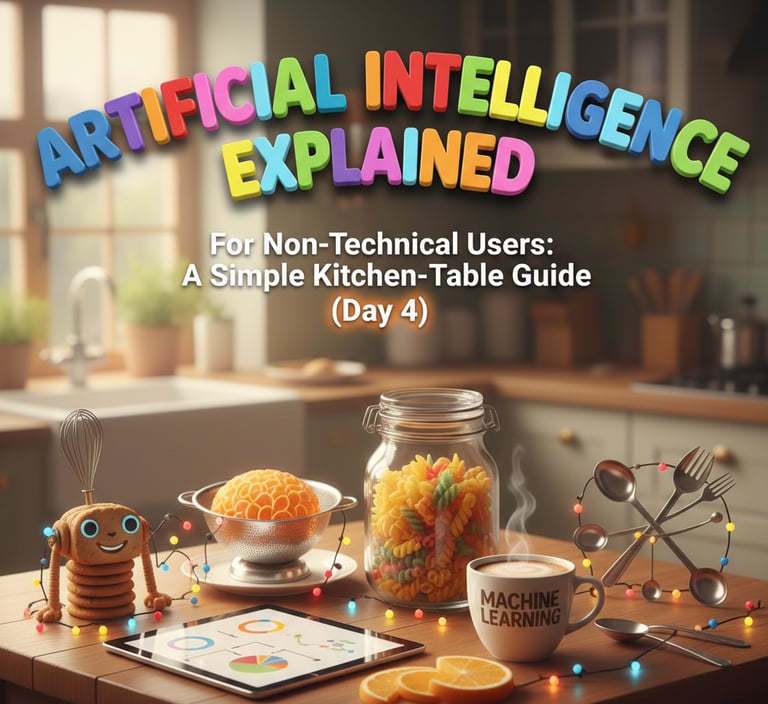
Welcome to Day 4 of The TAS Vibe’s easy-to-understand AI series.
If words like algorithms, data models, or machine learning make your head spin, relax. Today, we’re explaining artificial intelligence explained for non technical users using something everyone understands: your kitchen.
No coding. No math formulas. No tech jargon overload.
Just recipes, ingredients, and a bit of trial-and-error cooking wisdom.
By the end of this article, you’ll understand how AI works, why data matters, and how machines learn from mistakes, all without feeling like you need a computer science degree.
Watch this quick video for an overview before reading
🎧 Prefer listening? Play the audio version below.
This mind map gives you a quick overview of the concepts covered below.


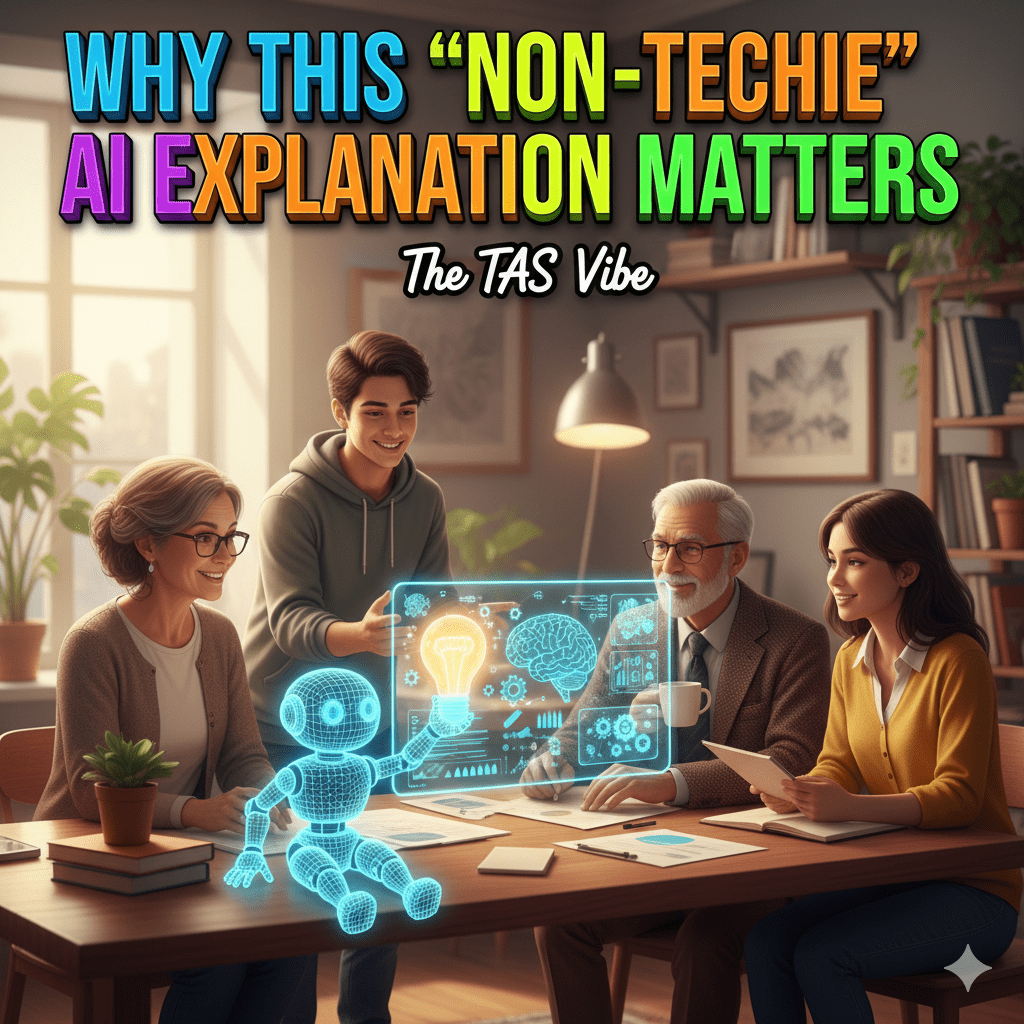
Why This “Non-Techie” AI Explanation Matters
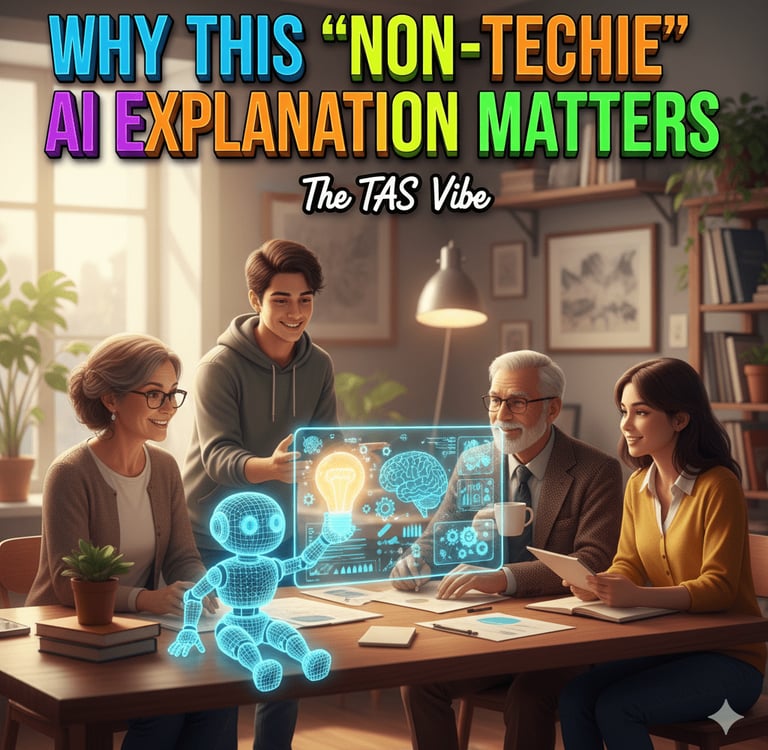
Artificial Intelligence is no longer a future concept. It’s already:
Recommending what you watch on Netflix
Powering Google search results
Helping doctors detect diseases
Deciding which ads you see
Assisting students, creators, and businesses daily
Yet millions of people still ask:
“I use AI every day… but how does it actually work?”
This guide is built for:
Students (16+)
Working professionals
Bloggers & creators
Curious minds across America, Europe, Russia, and Australia
Let’s start cooking.
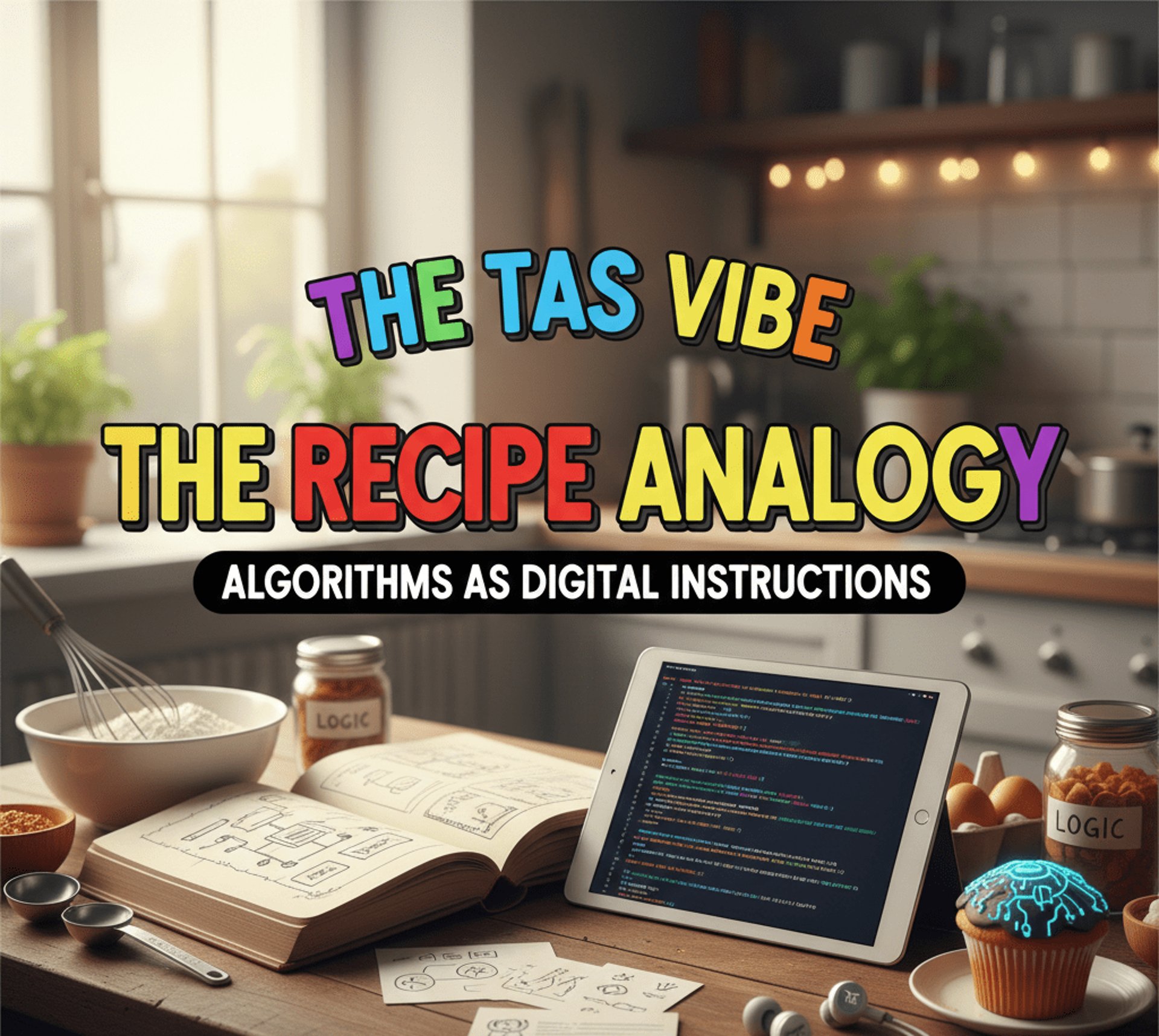
The Recipe Analogy – Algorithms as Digital Instructions
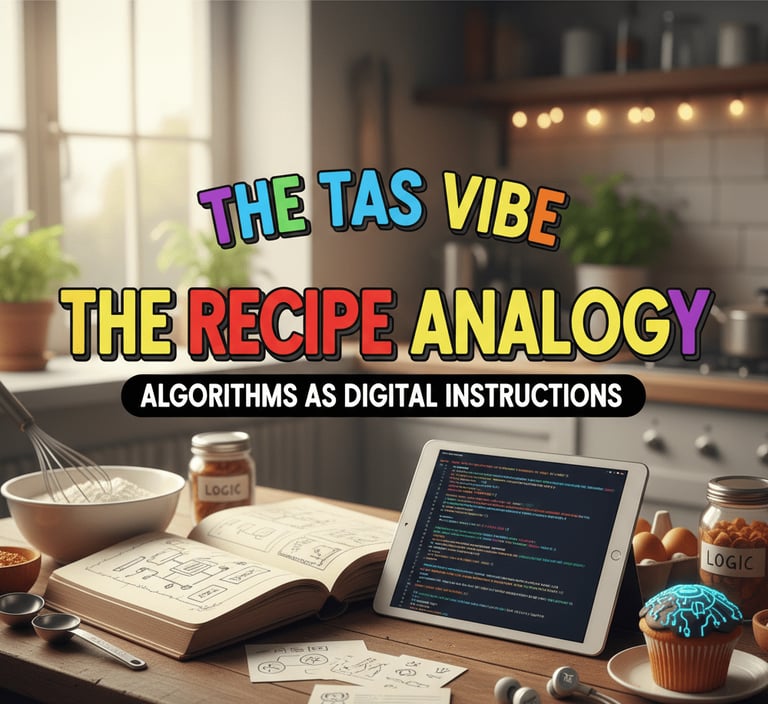

What Is an Algorithm (Without the Tech Headache)?
In simple terms:
An algorithm is a step-by-step instruction list for a computer.
Think of it like a recipe.
When you cook pasta, you don’t just throw things into a pot randomly. You follow steps:
Boil water
Add pasta
Stir occasionally
Drain
Serve
That sequence is a recipe algorithm.
AI works the same way—except instead of cooking food, it processes information.
Algorithms Are Not Smart – They Are Precise
Here’s an important truth many people miss:
AI doesn’t “think.” It follows instructions.
If a recipe says:
“Add salt,”
the system adds salt—even if it ruins the dish.
Similarly:
AI follows its algorithm exactly
It does not understand context unless taught
It cannot “guess” beyond instructions
This is why bad instructions = bad results.
Different Recipes, Different AI Outcomes
Just like cooking styles:
Italian recipes differ from Asian recipes
Baking differs from frying
AI algorithms also differ based on purpose:
Search algorithms rank information
Recommendation algorithms suggest content
Image algorithms recognize faces
Language algorithms predict words
Each algorithm is designed for one job only, just like a recipe.
Data – The Ingredients That Make AI Taste Good (or Bad)
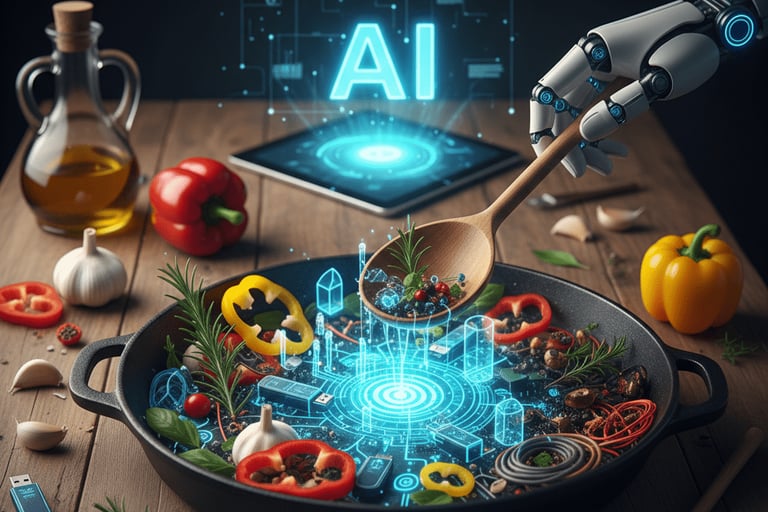
What Is Data in Simple Language?
If algorithms are recipes, then data is the ingredients.
Data includes:
Text (articles, messages, emails)
Images (photos, videos)
Numbers (prices, scores, statistics)
Audio (voice recordings, music)
AI doesn’t learn from thin air. It learns from what you feed it.
Good Ingredients = Good Results
Imagine making a salad with:
Fresh vegetables
Clean water
Proper seasoning
The salad tastes great.
Now imagine:
Rotten vegetables
Expired dressing
Dirty water
Same recipe. Terrible outcome.
AI works the same way:
High-quality data → accurate AI
Poor data → biased or broken AI
This is why some AI systems fail—they were trained on bad ingredients.
Why Bias Happens in Artificial Intelligence
One of the most asked questions under artificial intelligence explained for non technical users is:
“Why does AI sometimes behave unfairly?”
Kitchen answer:
If your ingredients only come from one source
The dish only reflects that source
If AI data:
Excludes certain groups
Overrepresents one region
Reflects outdated information
Then AI results will reflect those limitations.
AI doesn’t choose bias.
Bias is cooked into the ingredients.
Data Quantity vs Data Quality
Many assume:
“More data is always better.”
Not true.
1 million poor-quality ingredients = bad dish
10,000 clean, balanced ingredients = better outcome
Modern AI focuses more on quality, diversity, and relevance than sheer volume.
The Feedback Loop – How AI Learns From Its Mistakes


AI Learning Is Like Taste Testing
Picture yourself cooking soup.
You:
Taste it
Too salty? Add water
Too bland? Add spices
Taste again
Adjust
This is exactly how AI learning works.
What Is a Feedback Loop?
A feedback loop is when AI:
Produces an output
Gets feedback (right or wrong)
Adjusts future behavior
This process repeats thousands—or millions—of times.
The more feedback:
The better the predictions
The fewer mistakes over time
Real-Life Examples of AI Feedback Loops
Streaming Platforms
You watch a show
You stop halfway
AI learns you didn’t like it
It adjusts future recommendations
Email Spam Filters
You mark an email as spam
AI learns
Similar emails get blocked
Navigation Apps
You avoid a suggested route
AI recalculates
Future routes improve
Each action you take is like tasting the soup.
Why AI Still Makes Mistakes
Even great chefs mess up sometimes.
AI mistakes happen because:
New data appears
Human behavior changes
Situations are unpredictable
AI isn’t finished learning—it’s always cooking.
How All Three Pieces Work Together
Let’s combine everything:
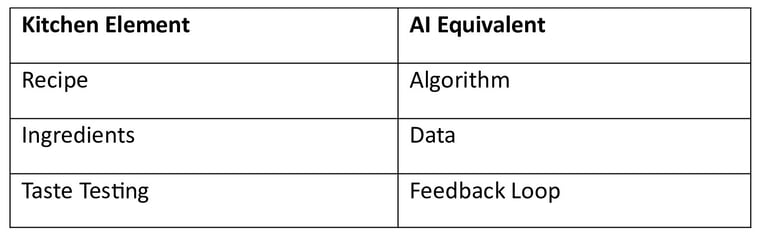
If one part fails:
Great recipe + bad ingredients = bad dish
Great ingredients + wrong recipe = chaos
No feedback = no improvement
This is the core engine of artificial intelligence, explained without code
Why Non-Technical Users Should Care About AI


You don’t need to build AI to be affected by it.
AI influences:
Job hiring systems
Credit approvals
Online visibility
Education tools
Health recommendations
Understanding AI basics gives you:
Better decision-making power
Awareness of limitations
Control over digital choices
Knowledge is digital self-defense.
Preparing for What’s Next in AI
Today’s AI is powerful—but tomorrow’s AI will be transformative.
To explore where AI is heading next, don’t miss our internal deep dive:
👉 [Day 5: The 2026 Master Guide – State of the Union]
(An essential read for understanding the future of AI, society, and digital life.)
Key Takeaways – AI Without the Intimidation

Algorithms are instructions, not intelligence
Data quality decides AI success or failure
Feedback loops help AI improve over time
AI reflects human input—good and bad
Understanding AI helps you use it wisely
Artificial intelligence isn’t magic.
It’s just very fast cooking.
Frequently Asked Questions (FAQ)


Is artificial intelligence dangerous for non-technical users?
AI itself is neutral. Risks come from:
Poor data
Bad design
Misuse by humans
Understanding AI reduces fear and increases control.
Can AI think like a human?
No. AI:
Predicts patterns
Does not feel, reason, or understand meaning
Mimics intelligence without consciousness
Do I need to learn coding to understand AI?
Absolutely not.
Conceptual understanding—like this guide—is enough for everyday use.
Why does AI sometimes give wrong answers?
Because:
Data may be incomplete
Context may be missing
Feedback is still evolving
Mistakes are part of learning.
Is AI replacing human jobs completely?
AI changes jobs more than it replaces them.
New roles emerge as old ones evolve.
Disclaimer


This article is for educational and informational purposes only.
It does not provide technical, legal, or professional advice.
AI technologies evolve rapidly, and real-world applications may differ.
Request to Follow – Stay Connected with The TAS Vibe

If this guide helped you:
Follow The TAS Vibe for daily tech simplifications
Share this article with friends who fear “tech talk”
Stay tuned for upcoming deep dives into AI, digital life, and future trends
Author Bio
Alex Thorne – Tech Simplifier at The TAS Vibe
Alex is passionate about breaking down complex technology into everyday language. When not writing about AI, Alex believes tech should be as easy as boiling an egg—no instruction manual required.
Thank you for reading Day 4. See you in Day 5 for the future of AI.
Comments
Connect
Stay updated with us
Follow
Reach
+91 7044641537
Copyright: © 2026 The TAS Vibe. All rights reserved.