
AI prompts for writing a memoir that unlock your real life story
AI prompts for writing a memoir help uncover hidden memories, shape raw emotions, and turn your real life experiences into a powerful, honest, and unforgettable story.
HOW TO HUMANIZE AI TEXT MANUALLY FOR FREE (7 STEPS)
Agni - The TAS Vibe
2/4/20266 min read


The Heart in the Machine: Using AI Writing Prompts to Tell Your Life's True Story
You know that box. The one collecting dust in your attic right now. Mine's stuffed with blurry Polaroids from the '90s, concert tickets from shows I barely remember, and old letters that still smell like cedar because my grandmother stored them that way. Those things aren't just stuff—they're proof that you lived, that you mattered. But actually sitting down to write about it? That blank page might as well be a brick wall.
Here's what I've learned: you don't have to tackle this alone. AI has become something genuinely useful for personal storytelling. It's not about cold, robotic text generation anymore. It's more like having someone who actually wants to hear your rambling stories about the old neighborhood, who asks follow-up questions, who helps you dig through the mess of your own life and make sense of it.
Mind Map
Why You Might Actually Want AI Help (And It's Not Cheating)


Most people think of AI as something for writing boring work emails or debugging code. But if you're trying to document your life—really document it, not just in bullet points but in actual narrative—AI becomes this weird, useful thing. It stops writer's block by doing what writer's block hates: asking questions. Specific ones. The kind that make your brain go "oh yeah, I forgot about that."
Whether you're using ChatGPT to outline a family memoir or just trying to organize the chaos of everything you've lived through, having a tool that asks "what did that smell like?" can unlock things you didn't know you'd forgotten.
Getting Started: Prompts That Actually Work
The trick with writing a memoir isn't cataloging every meal you've eaten. It's capturing the feeling of your life. The texture of it. Which means you need prompts that go deeper than "tell me about your childhood."
Childhood Memories (The Sensory Stuff)
I've had the best luck with prompts that force you to remember details, not just events:
"Act like you're interviewing me for a documentary. Ask me five specific questions about the street I grew up on. I want to remember the sounds, what the kitchens smelled like, what we actually did when it got dark outside."
"My grandmother's house was one of those places that felt like it had a personality. Help me come up with metaphors for how a house feels after fifty years of people actually living in it. Get weird with it."
These work because they're not asking you to write. They're asking you to remember, which is a totally different thing.
Digging Deeper Into Who You Are
Sometimes you write just to figure yourself out. These prompts do that:
"Write a conversation between me now and me at seventeen. We're sitting on a bench somewhere. What's one thing I tell that younger version about what happens next? What do they need to know?"
"Give me a prompt about a time I really failed at something. But frame it in a way that shows the kind of resilience I didn't even know I had back then."
What Actually Works in 2026
The tools have gotten legitimately better. If you tried AI writing five years ago and hated it, it's worth another shot.
Claude 3.5 Sonnet has basically become the standard for anyone serious about personal writing. It doesn't do that purple prose thing. It writes more like an actual human talks—less flowery, more real.
Sudowrite started as a tool for fiction writers, but the "Story Bible" feature is genuinely helpful if you're juggling family history across multiple pieces. It keeps your facts straight when you'd otherwise contradict yourself.
Novelcrafter is solid if you've got thousands of scattered notes and voice memos and old emails. It helps you organize your life's characters—your friends, your family, whoever shaped you—into something coherent.
The Part Nobody Talks About: Making It Actually Sound Like You
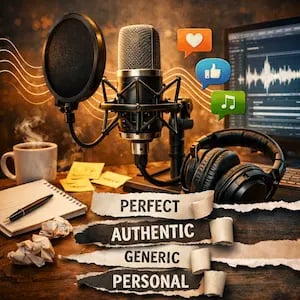
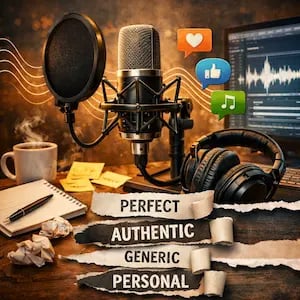
This is where most people mess up. Raw AI text reads like a plastic plant. It looks right, but there's no life in it. You've got to inject yourself into the draft.
Read it out loud. Seriously. If you wouldn't say it to a friend over coffee, cut it. AI loves long, balanced sentences. Real people love fragments. Rhythm matters more than grammar.
Add your internal stuff. AI is good at describing what happened. It's terrible at describing how you felt. You need to manually add those moments: "My stomach dropped," or "I remember this weird mix of guilt and relief washing over me."
Get stupidly specific. Don't let the AI say "a cold drink" when you drank a lukewarm Tab at 3 AM. Don't let it say "soft music" when it was Fleetwood Mac's Landslide on repeat. Generic is the enemy of real.
Trust your instincts. If a sentence feels wrong, it probably is. AI can generate ten alternatives in seconds. Pick the one that sounds most like you.
Writing for the Next Generation


Not everyone's goal is a published book. A lot of people just want their kids or grandkids to understand why certain things matter, where the family values actually came from.
These prompts can help with that:
"I need to write a letter to my unborn grandchild. I want to explain why our family cares about [whatever it is] and tell the story of when I first realized how important it actually was."
Or even simpler: dig into that family tree. Ask the AI: "Based on these three facts about my great-grandfather coming to this country, write a scene describing the moment he first saw the harbor. Make it real."
When you turn dry genealogy into actual narrative, it becomes something your descendants will actually want to read.
The Healing Part
Here's the thing nobody expects: sometimes writing through hard stuff is easier when you're not alone with it. AI prompts for processing grief or trauma or shame give you a space to externalize it. It's like having a therapist who never judges, never gets tired, never runs out of questions.
You're not cheating by using technology to help you find words that feel too heavy to carry by yourself.
Wrapping Up
Your story is yours alone. Nobody else has lived exactly what you've lived. Using AI isn't cutting corners—it's like having a chisel when you're carving a statue out of stone. The stone was already there. The form was always inside it. AI just helps you find it.
Start with one prompt today. One childhood memory. One letter you wish you could write. Let the technology handle the logistics so you can focus on being honest.
A quick note: Double-check anything the AI generates about actual facts, especially family history stuff. The technology is good, but it's not perfect with dates and names. Your personal voice is always the strongest part—use AI to amplify it, not replace it.
Want more on this? Check out The TAS Vibe.
Flash Card
Quiz
Frequently asked questions
Can AI really sound like me?
Not on the first draft, no. But if you feed it examples of how you actually write or give it a specific style guide ("keep this gritty, cut the fancy words, use short sentences"), it gets surprisingly close. The real work is editing it until it feels like you again.
Is it safe to throw my personal memories into an AI?
Depends on which one. ChatGPT and Claude will use your data for training unless you opt out. If your stuff is really sensitive, look into local AI options or privacy-focused tools like NovelAI. Read the privacy policy. It matters.
Which one should I use if I'm starting from zero?
ChatGPT is easiest to learn. But if you specifically want something that sounds less like a robot and more like actual prose, Claude 3.5 tends to win. Try both free versions and see which one clicks for you.
How do you stop AI from sounding cheesy?
Tell it what NOT to do. Literally say: "Avoid flowery adjectives. Don't use phrases like 'vivid tapestry' or 'a testament to.' Keep this grounded. Make it gritty." Negative prompts are weirdly effective at steering things in the right direction.
Subscribe to our Blogging Channel The TAS Vibe
Connect
Stay updated with us
Follow
Reach
+91 7044641537
Copyright: © 2026 The TAS Vibe. All rights reserved.