Best AI Tools for Solopreneurs 2026: Ultimate Stack
Discover the best AI tools for solopreneurs 2026 to boost productivity, automate tasks, grow revenue, and dominate your niche with smart, cutting-edge tools.
AI MARKETING AUTOMATION FOR SOLOPRENEURSTECHNOLOGY
The TAS Vibe
1/12/202631 min read
My post content
Module 2 :The Ultimate AI Tool Stack for Solopreneurs in 2026: Core Automation Tools You Can’t Ignore


✍️ Author Bio
About Agni | The TAS Vibe
Agni is a digital strategist, SEO optimization specialist, and the visionary founder of The TAS Vibe—a knowledge-driven platform built for modern content creators, solopreneurs, and online business builders navigating the AI-first economy.
With years of hands-on experience in search engine optimization (SEO), niche audience growth, CTR-focused content architecture, and Google AdSense–friendly publishing, Agni has carved a reputation for transforming underperforming blogs into scalable digital assets. His work bridges the gap between cutting-edge AI tools and human-first content strategies, helping creators grow traffic, authority, and revenue—without burning out or hiring large teams.
At the core of Agni’s expertise lies a deep understanding of how search intent, user psychology, and AI-powered automation intersect in 2026 and beyond. He has helped dozens of bootstrapped entrepreneurs, bloggers, coaches, and solo founders identify the right technology stack—tools that drive exponential reach while keeping operational costs lean and sustainable.
What sets Agni apart is his niche-oriented mindset. Instead of chasing vanity traffic, he teaches creators how to:
Build high-intent niche audiences
Design content that earns clicks and keeps readers engaged
Optimize for long-term AdSense revenue and affiliate performance
Use AI to scale systems, not shortcuts
Through The TAS Vibe, Agni shares real-world workflows, SEO-tested frameworks, and AI marketing automation strategies that are practical, ethical, and future-proof. His insights are crafted for creators who want clarity—not complexity—and results—not hype.
Agni’s guiding philosophy is simple yet powerful:
“The right AI tools shouldn’t replace your creativity—they should amplify it.”
Every guide, course, and article published on The TAS Vibe reflects this belief—empowering creators to stay authentically human while leveraging AI as a strategic growth partner.
If you’re serious about building a profitable, scalable, and resilient digital brand in the age of AI, Agni’s work is designed to help you move faster, rank smarter, and grow stronger—one optimized decision at a time. 🚀
Audio Overview
Introduction: The Silent Advantage Modern Solopreneurs Have
There was a time—not too long ago—when being a solopreneur meant living in permanent overload. You were the content creator at sunrise, the marketer by mid-morning, the designer after lunch, customer support in the evening, and the accountant late at night. Every task demanded your attention, and growth always felt just one hire away—but that hire was usually too expensive, too risky, or simply not sustainable.
Fast-forward to 2026, and the rules have quietly changed.
The most successful solopreneurs today aren’t working longer hours or burning themselves out trying to “hustle harder.” Their real edge is something far more strategic: they work alongside machines that never sleep, never get tired, and never ask for a salary hike. This is the silent advantage modern solopreneurs have—and most people are still underusing it.
The Real Shift: From Hustle to Systems
AI didn’t just introduce new tools; it introduced a new way of running a solo business. The advantage isn’t automation alone—it’s intelligent automation. In other words, systems that don’t just do tasks, but support decisions, improve consistency, and multiply output without multiplying effort.
Yet here’s where many solopreneurs go wrong.
They chase shiny tools.
One month it’s an AI writer. Next month it’s a social media scheduler with “smart” features. Then a funnel builder, then an email automation tool—each promising to save time, but together creating chaos. Logins everywhere. Data scattered. Brand voice diluted. Workflows broken.
What they’re missing is not another tool.
They’re missing a coherent AI marketing stack for solopreneurs—a set of tools that actually talk to each other, complement each other, and work toward the same business goals.
Why a Stack Matters More Than Individual Tools
A professional marketing team doesn’t operate in silos. Content, SEO, email, analytics, and customer engagement all flow into one another. Your AI stack should do the same.
In 2026, you no longer need a full-time content team, a marketing manager, a copywriter, and a data analyst to compete. What you need is a smartly chosen combination of no-code AI tools for solopreneurs that can:
Create high-quality, SEO-optimized content at scale
Maintain a consistent brand voice across platforms
Automate lead nurturing and follow-ups
Analyze performance and suggest improvements
Run quietly in the background while you focus on strategy and growth
When stacked correctly, these tools don’t feel like software. They feel like a lean, invisible marketing department living inside your laptop.
From Overwhelmed Freelancer to Lean Growth Machine
This module is not about overwhelming you with options. It’s about clarity.
We’ll break down the practical technology stack that modern solopreneurs are using to transition from reactive, task-driven work to proactive, system-driven growth. These are tools that:
Don’t require a computer science degree
Cost less than hiring even a part-time intern
Can realistically function as AI tools to replace a marketing team
Save hours every week instead of creating new busywork
Most importantly, we’ll explain why each tool belongs in the stack—not just what it does. You’ll see how each piece supports the others, so your workflows feel smooth, intentional, and scalable.
The Questions That Actually Matter
The real challenge in 2026 isn’t access. The tools already exist.
The real questions are:
Which AI tools actually complement each other instead of overlapping?
Which ones genuinely save time instead of demanding more setup and management?
Which stack allows you to scale content and campaigns without losing your brand’s human voice?
This module answers those questions with a marketer’s mindset, an SEO strategist’s precision, and a solopreneur’s need for simplicity.
By the end, you won’t just know what tools are available. You’ll understand how to stack them like a professional marketing department, designed specifically for solo founders who want leverage—not complexity.
Section 1: Understanding the Modern Solopreneur Technology Stack
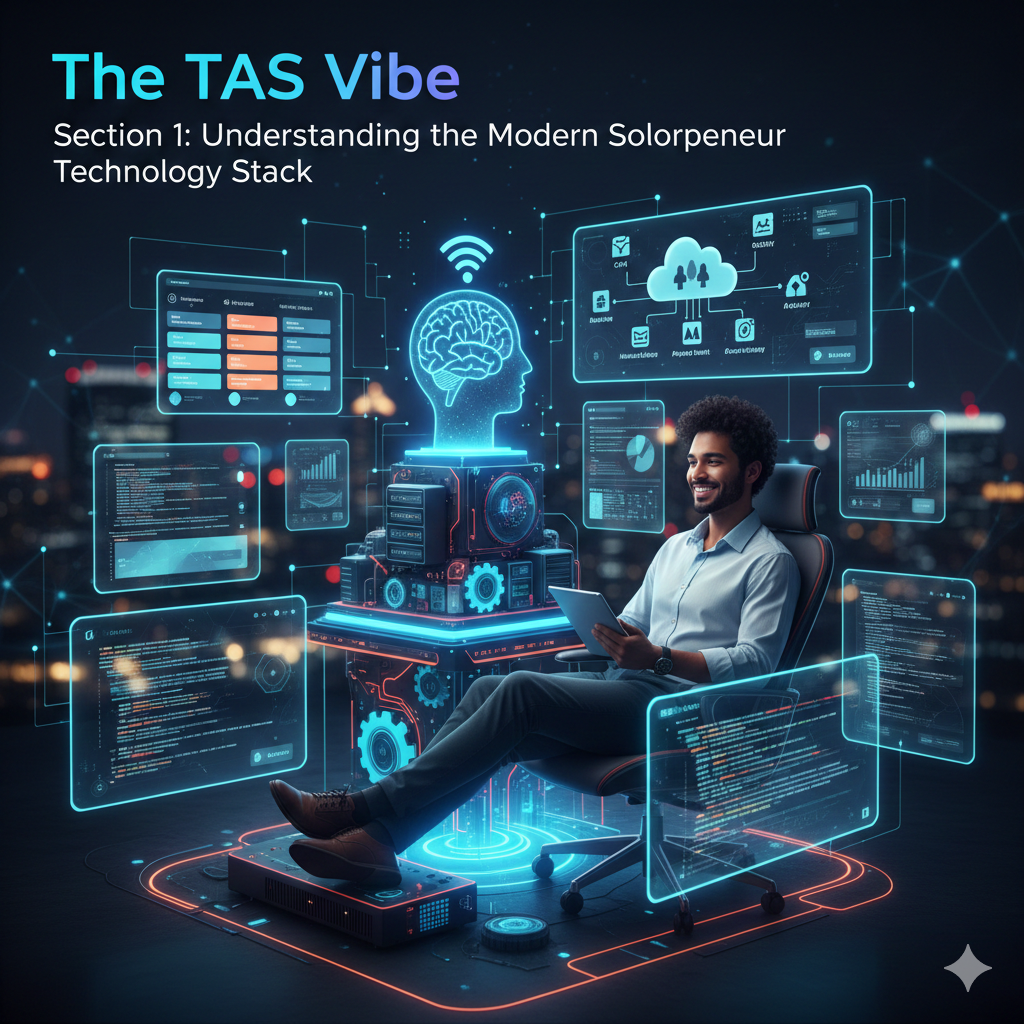

The Three Layers of a Sustainable AI Setup (2026 Edition)
In 2026, being a solopreneur no longer means doing everything manually. It means designing a smart technology stack that works for you—even while you sleep.
When most creators search for the best AI tools for solopreneurs, they often focus on individual apps. But that’s a mistake.
Real scalability doesn’t come from tools—it comes from architecture.
The most successful one-person businesses today are built on a three-layer AI technology stack, where every system plays a clear role and feeds the next. When these layers work together, a solopreneur can operate with the efficiency of a small team—without burning out.
Let’s break this down in a way that actually makes sense.
The Three Layers of a Sustainable AI Stack
Think of your AI setup like the human body:
You need a nervous system to coordinate actions
You need a voice to communicate
You need hands to create and execute
Miss one, and the whole system underperforms.
🔁 Layer One: Automation & Orchestration
The Nervous System of Your One-Person Business
Automation is not about replacing creativity—it’s about removing friction.
This layer ensures that your tools, platforms, and data talk to each other automatically, without constant manual input. It’s the difference between running a business and babysitting one.
What This Layer Does:
Connects apps and platforms seamlessly
Triggers workflows based on user behavior
Eliminates repetitive admin tasks
Reduces human error
Frees up mental energy for strategy and creativity
For example:
A new email subscriber automatically gets tagged, added to a CRM, and enrolled in a welcome sequence
A blog post gets published and distributed across multiple platforms instantly
Customer actions trigger personalized responses without you lifting a finger
Without this layer, solopreneurs quickly hit a wall—spending hours on tasks that AI can handle in seconds.
💬 Layer Two: Engagement & Communication
Your Brand’s Voice at Scale
Automation alone creates efficiency—but efficiency without emotion feels robotic.
This layer is where your business becomes human.
Engagement & communication tools manage how you interact with:
Email subscribers
Leads
Customers
Community members
Social audiences
And in 2026, expectations are high. People want instant responses, personalized communication, and authentic brand voices—even from solo creators.
What This Layer Does:
Keeps conversations alive 24/7
Personalizes communication based on behavior
Nurtures leads automatically
Builds trust at scale
Maintains consistent brand tone
When done right, your audience never feels like they’re talking to a machine—even though AI is working behind the scenes.
This is where:
AI-powered email flows
Smart chat systems
CRM-driven messaging
Behavioral segmentation
come together to turn attention into relationships.
✍️ Layer Three: Creation & Execution
The Output Engine That Fuels Growth
Here’s a hard truth:
You can’t engage if you have nothing to say.
This layer is responsible for creating and executing content across every platform where your audience exists—blogs, email, social media, landing pages, ads, and more.
In 2026, content velocity matters as much as content quality.
What This Layer Does:
Accelerates content creation
Assists with design, copy, and structure
Maintains brand consistency
Enables multi-channel publishing
Turns ideas into assets quickly
AI doesn’t replace your creativity here—it amplifies it.
Instead of staring at a blank screen, you:
Start with structured ideas
Generate drafts faster
Optimize content for SEO and CTR
Repurpose content across platforms
This layer ensures your business always has something valuable to engage with, feeding directly into Layer Two.
⚙️ Why the Stack Only Works When All Three Layers Align
Here’s where most solopreneurs go wrong—they optimize one layer and ignore the others.
Let’s break the consequences:
Automation without engagement → Cold, lifeless customer experiences
Engagement without creation → Nothing meaningful to communicate
Creation without automation → Burnout, chaos, and inconsistent growth
The real magic happens when:
Automation handles the heavy lifting
Engagement maintains human connection
Creation fuels the entire ecosystem
This is the true architecture behind the best AI tools for one-person business success.
Not flashy features.
Not tool overload.
But intentional interplay between specialized systems—each doing what it does best.
Final Takeaway for The TAS Vibe Audience
If you want to win as a solopreneur in 2026, stop asking:
“Which AI tool should I use?”
Start asking:
“How should my AI stack work together?”
Because sustainable growth doesn’t come from more tools—it comes from smarter systems.
And once these three layers are aligned, your business stops feeling like a struggle… and starts feeling like leverage.
Section 2: The Automation Foundation — Building Your Solopreneur Operating System
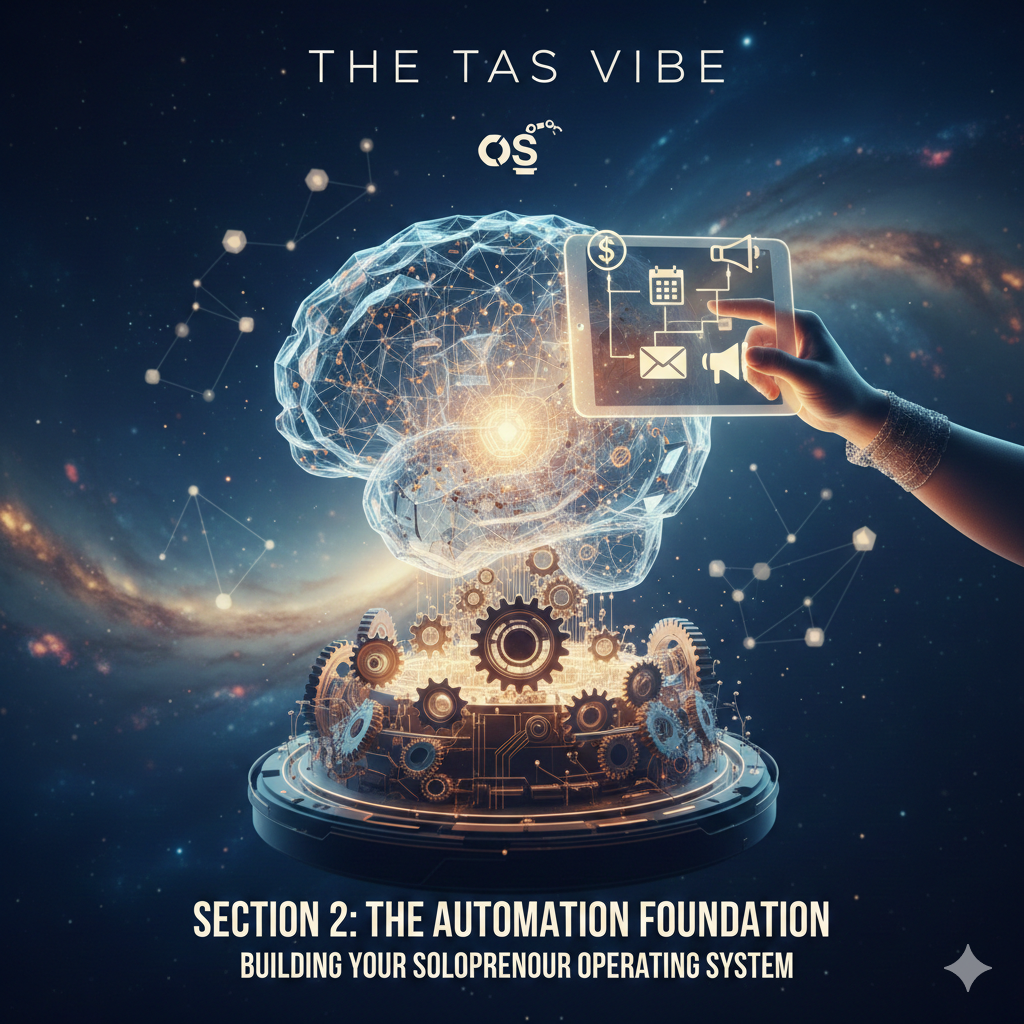
If Section 1 was about why AI automation matters, Section 2 is about building the engine that makes everything else possible.
Before you scale content.
Before you automate customer conversations.
Before AI starts “working for you.”
You need one thing first:
👉 A workflow automation foundation.
This foundation is not flashy. It doesn’t look like viral content or AI-generated posts. But it is the connective tissue of your entire digital business—the invisible system that moves information, makes decisions, and executes tasks without you lifting a finger.
In 2026, solopreneurs who win are not the hardest workers.
They are the best system builders.
Why Workflow Automation Must Be Your First Priority
Most solopreneurs make the same mistake:
They try to automate outputs before automating processes.
They focus on:
AI content tools
Chatbots
Email sequences
But underneath, everything is still manual.
That creates friction.
Manual Work Is the Silent Growth Killer
If you are:
Copy-pasting leads from forms into spreadsheets
Manually tagging subscribers
Forgetting follow-ups
Repeating the same steps every single day
You don’t have a business—you have a job that never ends.
Workflow automation platforms solve this exact problem by doing one critical thing:
They run decisions without your input.
This is what transforms a solo business into a scalable system.
What Workflow Automation Really Means (In Plain English)
Workflow automation is simply this:
When something happens → the system decides → the system acts.
No reminders.
No “I’ll do it later.”
No mental load.
This is why AI automation tools for solo business owners are not optional in 2026—they are survival tools.
2.1 Visual Workflow Platforms: Where Most Solopreneurs Start
Visual workflow platforms are the on-ramp to automation.
They require no coding, no engineering background, and no technical intimidation.
You see your business logic instead of guessing it.
Let’s break down the three platforms that dominate this space—and why each exists.
Make (Formerly Integromat): The Visual Workflow Commander
If Zapier is the friendly assistant, Make is the strategic commander.
Make has quietly become the gold standard for solopreneurs who want power without programming.
Why Make Is So Powerful
Make’s strength lies in control and logic, not simplicity.
1. Scenario Builder Interface
You literally draw your workflow:
Trigger
Decision
Action
Conditional path
Next action
This visual clarity eliminates confusion and prevents automation mistakes.
2. Advanced Branching Logic
Make allows true decision-making:
“If this condition is true, do X.
Otherwise, do Y.”
This is essential for:
Lead qualification
Customer segmentation
Intelligent routing
Dynamic responses
Most simpler tools can’t handle this depth.
3. Cost-Effective Scaling
Make charges per operation, not per user.
This matters.
As your business grows:
Your workflows grow
Your automation volume grows
But your costs remain predictable—a huge advantage for solopreneurs watching margins.
4. Enterprise-Level Integrations
Make connects with thousands of apps—but more importantly, it supports non-mainstream tools that many platforms ignore.
This flexibility is future-proofing your system.
The Honest Limitation of Make
Make can feel overwhelming for very simple tasks.
If all you need is:
Email → Google Sheet
You may be using only 10% of its power.
That’s not a flaw.
That’s headroom.
Zapier: The Integration Superpower
Zapier is the default choice for automation—and for good reason.
When someone says:
“I need to connect two apps”
Zapier is usually the fastest solution.
Where Zapier Excels
1. Largest Integration Library
With 7,000+ supported apps, Zapier speaks almost every digital language.
This eliminates compatibility anxiety.
2. Ready-Made Templates
Zapier’s template marketplace is a massive time saver.
Want to:
Capture LinkedIn leads
Add them to Airtable
Trigger an email sequence
A pre-built workflow already exists.
You modify.
You launch.
You move on.
3. Exceptional Documentation
This is underrated.
When something breaks, Zapier’s help resources:
Are readable
Are accurate
Actually solve problems
That saves hours.
4. Clean, Step-By-Step Logic
Zapier’s interface is linear and intuitive.
For most solopreneurs, this reduces mental friction and accelerates adoption.
The Trade-Off with Zapier
Zapier uses task-based pricing.
Each action counts.
At low volume, this is perfect.
At high volume, it can surprise you.
If your automation runs hundreds of times per day, costs add up faster than Make.
Best Use Case for Zapier
✅ Solopreneurs automating simple to moderate workflows (2–4 steps)
Example:
New subscriber → CRM tag → Welcome email
Investment Snapshot
Free tier available
$19.99/month covers ~750 tasks (enough for most solo businesses)
2.2 Enterprise-Grade Yet Accessible: The Open-Source Option
n8n: For Founders Who Want Full Control
n8n is not for everyone—and that’s exactly why it’s powerful.
This is the tool for solopreneurs who:
Value privacy
Hate vendor lock-in
Want ownership, not dependency
What Makes n8n Different
1. Complete Data Ownership
Your workflows run on your server.
No third-party cloud dependency unless you choose it.
For privacy-focused founders, this is non-negotiable.
2. One-Time Infrastructure Setup
If you understand basic hosting:
DigitalOcean
Heroku
VPS
You can run n8n for $5–15/month indefinitely.
No usage penalties.
No surprise bills.
3. Unlimited Automation Freedom
Unlike SaaS tools:
No task limits
No operation caps
No forced upgrades
Your system scales because your server scales.
4. Developer-Friendly Extensibility
If something doesn’t exist, you build it.
n8n doesn’t restrict creativity—it enables it.
The Honest Challenge of n8n
n8n requires technical confidence.
You are responsible for:
Hosting
Updates
Stability
Troubleshooting
For non-technical solopreneurs, this can feel heavy.
Best Use Case for n8n
✅ Technically inclined solopreneurs who want ownership, privacy, and long-term cost control
Investment Snapshot
Open-source: Free
Self-hosted server: ~$5–15/month
Cloud version: ~$20/month
2.3 AI-Native Automation: The Next Evolution
This is where automation stops being mechanical—and becomes intelligent.
Dify: The AI-Native Workflow Platform
If Make and Zapier connect apps, Dify connects apps with understanding.
This is not just automation.
This is AI-powered decision-making.
Why Dify Changes the Game
1. Knowledge-Aware Workflows
Dify can ingest:
PDFs
Documents
Websites
Internal knowledge
And then reason with that information.
Your automation understands your business context.
2. Multi-Model AI Support
You are not locked into one AI provider.
Use:
OpenAI
Claude
Gemini
Local models like Ollama
This flexibility is critical in 2026’s fast-moving AI ecosystem.
3. Workflow + Chatbot Hybrid
Dify lets you build:
Customer-facing AI assistants
Internal decision agents
Support systems that act, not just talk
Chat + action = real value.
4. Shockingly Easy Deployment
Despite its power, Dify deploys fast:
Vercel
Cloud
Self-hosted
No engineering team required.
Why This Matters for Solopreneurs
This is where AI workflow tools for solopreneurs stop being productivity hacks and start becoming digital employees.
Your system doesn’t just react—it thinks.
Best Use Case for Dify
✅ Solopreneurs building:
Customer-facing AI tools
Intelligent internal systems
Context-aware automation without heavy coding
Investment Snapshot
Free self-hosted
Cloud deployment starts around $20/month
Final Thought: Your Automation Stack Is Your Competitive Advantage
In 2026, tools are not optional.
Systems are the strategy.
The solopreneur who builds workflows first:
Scales faster
Burns out less
Operates like a company, not a freelancer
This automation foundation is what allows everything else—AI content, marketing, sales, and growth—to compound.
And this is exactly the kind of edge The TAS Vibe is built to teach.
🔗 Section 3: Creating Your Engagement Layer — Never Miss a Conversation
In 2026, attention is currency, but conversation is capital.
Most solopreneurs obsess over tools—AI writers, automation platforms, funnel builders—but overlook the most critical layer of their business: how conversations actually happen. Not content. Not ads. Conversations.
This is where many promising solo businesses quietly lose momentum.
Why Your Communication Stack Matters More Than Your Tools
Here’s an uncomfortable truth most “AI stack” guides won’t tell you:
The solopreneur with the best conversational AI stack is rarely the one with the smartest technology.
It’s the one who sounds like the same human everywhere.
Your audience doesn’t think in tools. They feel continuity.
If someone reads your email, then chats with your website bot, then DMs you on social media—and each interaction feels like a different personality—you’ve created trust friction. That friction silently kills conversions, retention, and brand loyalty.
True engagement isn’t about replying fast.
It’s about replying consistently.
This is the invisible layer separating:
AI tools that amplify your brand
From AI tools that create noise
Your engagement layer ensures:
One voice
One tone
One philosophy
Across every channel.
Let’s build that layer properly.
3.1 The Conversational AI Core
Every solopreneur needs a central intelligence for conversations—a place where context, tone, and strategy live. This isn’t about replacing you. It’s about multiplying you.
🧠 ChatGPT: Your Swiss Army Knife for Customer Conversation
ChatGPT remains the most versatile conversational AI available—not because it’s perfect at one thing, but because it’s excellent at many things.
For solopreneurs, that flexibility is gold.
Strategic Uses That Actually Move the Needle
1. Customer Inquiry Routing
Instead of emotionally reacting to customer emails or DMs, you paste them into ChatGPT with your business context:
Your offer
Your audience
Your tone guidelines
Within seconds, you get:
Calm
Thoughtful
On-brand responses
This alone can prevent countless reputation-damaging replies made in frustration or haste.
2. FAQ Automation Without Sounding Robotic
By training ChatGPT on your knowledge base (using tools like Chatbase), you can embed a conversational assistant on your site that:
Answers accurately
Explains clearly
Sounds human
This dramatically reduces repetitive questions without alienating visitors.
3. Brand Voice Protection
One underrated use: asking ChatGPT to review your responses.
You’re not outsourcing communication—you’re quality-controlling it.
“Does this reply sound aligned with my brand voice?”
That single prompt protects long-term trust.
4. Real-Time Brainstorming
From objection handling to content ideas to customer education scripts—ChatGPT becomes your thinking partner, not just a writer.
The Critical Nuance Most People Miss
ChatGPT is not a customer service system.
It’s the brain, not the body.
You still need:
Routing
Logging
Follow-up infrastructure
Used correctly, ChatGPT enhances your customer service. Used incorrectly, it becomes a disconnected gimmick.
Best for:
Solopreneurs who need AI support across multiple communication scenarios, not just one narrow use case.
💰 Investment: ChatGPT Plus at ~$20/month covers nearly all individual needs.
🧩 Claude: When Understanding and Nuance Matter Most
If ChatGPT is your all-purpose assistant, Claude is your deep-thinking specialist.
Claude shines in situations where:
Context is long
Stakes are high
Nuance matters
Why Claude Is a Power Tool for Certain Solopreneurs
1. Massive Context Window
Claude can read and reference 100,000+ tokens at once. That’s:
Entire product manuals
Long client histories
Full course curricula
No summarization hacks. No lost context.
2. Superior Reasoning for Complex Questions
For solopreneurs offering:
Consulting
Coaching
Strategic services
Claude’s step-by-step reasoning feels clearer and more trustworthy to clients.
3. Safer, More Thoughtful Recommendations
Claude’s Constitutional AI training makes it less prone to:
Overconfident advice
Risky assumptions
This matters when your words directly influence business decisions.
Strategic Positioning
Don’t choose between ChatGPT and Claude.
Use them intentionally:
Claude → High-value, high-touch conversations
ChatGPT → Everything else
Best for:
Solopreneurs handling sophisticated customer interactions where depth > speed.
💰 Investment: Claude Pro at ~$20/month.
3.2 Specialized Conversational Systems
Once conversations scale, raw AI models aren’t enough. You need systems.
🤖 Botpress: Custom AI Agents Without Becoming a Programmer
Botpress is where solopreneurs graduate from “chatbot experiments” to real conversational infrastructure.
What Botpress Unlocks
Multi-Channel Presence
One AI agent across:
Website
WhatsApp
Telegram
Custom platforms
Same brain. Same tone. Everywhere.
Rapid Knowledge Training
Upload your business info once. Your bot learns in minutes—not weeks.
Custom Logic Without Coding
Unusual workflows? Conditional responses? Escalations?
Botpress handles complexity without engineering overhead.
Human Handoff (Non-Negotiable)
When AI reaches its limits, it passes the full conversation to you.
No awkward resets. No lost context.
This is how a solo operator handles 80% of conversations automatically while personally handling the 20% that truly matter.
Best for:
Solopreneurs with growing inbound volume who need scale—but not enterprise tools.
💰 Investment:
Free tier available; paid plans ~$25–$100/month.
🧑💼 Lindy AI: Your Virtual Operations Assistant
If Botpress talks to customers, Lindy works for you.
This isn’t a chatbot.
It’s a digital employee.
What Lindy Actually Handles
Inbox triage → Reads, prioritizes, drafts replies
CRM updates → Logs customer info automatically
Meeting scheduling → Handles time zones and follow-ups
Preference learning → Gets smarter about how you decide
Over time, Lindy doesn’t just assist—it anticipates.
The Philosophical Shift
Most tools require effort.
Lindy returns effort.
That psychological difference changes how you work:
Less decision fatigue
Fewer interruptions
More creative bandwidth
Best for:
Solopreneurs buried under admin work who want time back.
💰 Investment: Starts around $25/month, scaling with complexity.
3.3 Email as Infrastructure (Not Just Marketing)
In the AI era, email isn’t outdated.
It’s underestimated.
While everyone chases new platforms, email remains:
The highest-ROI channel
The most stable asset
The most controllable conversation space
📧 Moosend: The Balanced Choice
Moosend quietly does what solopreneurs need most: reliability.
Why It Works So Well
Unlimited sends → No growth penalties
Smart segmentation → Automated relevance
Pre-built workflows → Less setup, faster results
Budget-friendly → Sustainable scaling
Best for:
Solopreneurs treating email as a relationship engine, not a blast tool.
💰 Investment: ~$15–$30/month.
🔐 Self-Hosted Email: Maximum Control, Minimum Cost
For solopreneurs building low-cost AI tools or newsletter-first businesses, ownership matters.
Sendy + Amazon SES
One-time license: $59
~$1 per 10,000 emails
Compared to mainstream platforms, this is economically disruptive.
Listmonk
Free
Open-source
Scales massively
Total data ownership
Best for:
High-volume senders and privacy-conscious creators who want full control.
Final Insight for The TAS Vibe Readers
Tools don’t build trust.
Consistent conversations do.
Your engagement layer ensures that no matter where your audience meets you—email, chat, DM, or bot—they experience one coherent human presence.
In 2026, that’s not a luxury.
That’s a competitive advantage.
Section 4: Your Content & Creative Engine
Building a Scalable Content System That Fits the Solopreneur Reality
For most solopreneurs, content isn’t the problem.
Consistency is. Time is. Energy is.
You don’t fail because you lack ideas—you fail because creating, designing, editing, and publishing everything manually burns you out.
This is where your AI-powered content & creative engine becomes non-negotiable.
You can’t automate marketing if you don’t have content.
You can’t build trust if your content feels rushed.
And you definitely can’t scale if every blog post, graphic, or video costs you an entire weekend.
In 2026, winning solopreneurs don’t “work harder.”
They build systems where AI handles 80% of execution, while they focus on strategy, storytelling, and brand authority.
Let’s break down the exact AI stack that makes this possible.
4.1 Text-Based Content Generation
Where Every Content Empire Begins
Text is still the foundation of digital authority—blogs, emails, scripts, landing pages, social captions.
But the way solopreneurs create text in 2026 has completely changed.
ChatGPT: The Fast-Draft Foundation
Almost every solopreneur starts with ChatGPT—and for good reason.
ChatGPT isn’t just a writing tool.
It’s a thinking partner.
Used correctly, it compresses hours of mental work into minutes.
The Real Solopreneur Workflow
Here’s how high-performing creators actually use ChatGPT:
1. Outline Generation (The Time Saver)
You paste your topic, niche, and audience intent.
In seconds, you receive a logical, SEO-ready structure.
This alone eliminates blank-page paralysis.
2. Draft Creation (The Speed Boost)
Using the outline, ChatGPT generates a complete first draft.
Not perfect—but usable.
3. Repurposing (The Traffic Multiplier)
One blog post becomes:
Email newsletters
Twitter/X threads
LinkedIn posts
Course lessons
Lead magnets
4. Refinement (The Quality Upgrade)
You feed your own writing back into ChatGPT to:
Improve clarity
Tighten tone
Simplify complex ideas
Fact-check technical sections
The Critical Rule Most People Miss
ChatGPT is never your final product.
Top solopreneurs spend:
20% of time generating
80% of time personalizing
That’s how content stops sounding “AI-written” and starts sounding like you on your best day.
Best for:
Rapid ideation, outlines, drafts, and repurposing at scale.
Investment:
~$20/month for ChatGPT Plus — arguably the highest ROI tool in your entire business.
Jasper: When Brand Voice Is Everything
If your audience follows you—not just your information—Jasper becomes a strategic asset.
This is where many solopreneurs level up from “content creator” to brand authority.
What Jasper Does Better Than Generic AI
Brand Voice Training
You feed Jasper your:
Past blog posts
Email newsletters
Sales pages
It learns how you sound—not just what you say.
Tone Control on Demand
Professional for sales pages.
Friendly for newsletters.
Authoritative for thought leadership.
Campaign-Level Consistency
From blog → social → email → ads, everything sounds like the same person.
Built-In SEO Assistance
Keyword placement, headings, and structure are guided without killing readability.
This is the difference between:
“Another AI article”
and “Wow, this sounds like you”
Best for:
Solopreneurs whose personal brand is their business.
Investment:
Starts around $49/month — justified if content directly drives revenue.
Writesonic: The SEO-First Content Weapon
Writesonic is for solopreneurs who see content as a long-term traffic asset, not just a creative outlet.
This tool thinks in terms of search intent and rankings.
Why SEO-Focused Solopreneurs Love It
Real-Time Web Access
Unlike static models, Writesonic can reference current data—critical for 2026 topics.
SERP Intelligence
It shows you:
What’s already ranking
Why it’s ranking
How to compete intelligently
Multiple AI Models
Switch between ChatGPT, Claude, or Gemini depending on the task.
Global Scaling
Create localized, high-quality content in multiple languages without translators.
Best for:
Solopreneurs building blogs as traffic engines and lead machines.
Investment:
Starts around $20/month — ideal for SEO-driven creators.
4.2 Visual Content & Design
Looking Professional Without Hiring a Designer
Design used to be a bottleneck.
Now it’s a competitive advantage—if you use AI correctly.
Canva AI Magic Studio: The Designer Inside Your Browser
Canva remains essential not because it’s flashy—but because it’s efficient.
In 2026, Canva AI turned design into a one-person operation.
What Changed With AI
Text-to-Image: Describe → generate → publish
Background Removal: One click, zero Photoshop
Magic Write: Copy perfectly sized for designs
Smart Resize: One design → all platforms
Instead of juggling tools, Canva covers 90% of visual needs in one place.
Best for:
Social media visuals, email banners, ads, thumbnails.
Investment:
$12.99/month for Canva Pro — a no-brainer for solopreneurs.
Midjourney: When You Need Visuals No One Else Has
Templates are fast—but uniqueness builds brands.
That’s where Midjourney shines.
Why Solopreneurs Use Midjourney Strategically
Truly original images
Consistent characters or mascots
Full commercial rights
Creative inspiration via community
For some solopreneurs, Midjourney replaces freelance illustrators entirely.
Best for:
Creators whose visuals are part of their competitive edge.
Investment:
Starts at $10/month.
Figma + AI Plugins: A Design System Without Adobe
If you build digital products, apps, or complex layouts—Figma becomes powerful with AI.
Must-Have Plugins
Autoflow: Auto-generate diagrams and flows
Content Reel: Smart placeholders
Designed with AI: Layout suggestions
Together, they turn Figma into a lean design powerhouse.
Best for:
Product builders, UX-focused solopreneurs.
Investment:
Free + ~$9/month for plugins.
4.3 Video Content: The Highest-ROI Format in 2026
Video builds trust faster than any other medium—and AI finally made it scalable.
Descript: Edit Video Like a Document
Descript changed everything by making video text-editable.
One Recording → Ten Assets
Auto-transcription
Edit by deleting words
Extract clips instantly
Repurpose everywhere
This is content leverage at its finest.
Best for:
Podcasters, educators, coaches.
Investment:
Free tier; paid from $12/month.
ElevenLabs: Voice That Sounds Human
Bad audio kills trust.
ElevenLabs fixes that instantly.
Natural voices
Emotional control
Voice cloning
Multilingual output
Best for:
Tutorials, podcasts, explainer videos.
Investment:
Free tier; paid from $11/month.
HeyGen: Scalable On-Camera Presence
HeyGen lets your face scale—without burnout.
Personalized sales videos
Global language versions
A/B testing messages
Consistent branding
Best for:
Personal-brand solopreneurs.
Investment:
Free testing tier; paid plans available.
Lumen5: Blog-to-Video in 15 Minutes
You already wrote the blog.
Lumen5 turns it into video—automatically.
This is pure efficiency.
Best for:
Bloggers repurposing content into video.
Investment:
Free tier; paid from $11/month.
Final Thought for The TAS Vibe Readers
The solopreneurs winning in 2026 aren’t creating more content.
They’re building content engines.
AI doesn’t replace your creativity—it protects it.
When tools handle the heavy lifting, you finally get to focus on:
Insight
Strategy
Storytelling
Scale
And that’s where real authority is built.
Section 5: Assembling Your Personal AI Stack
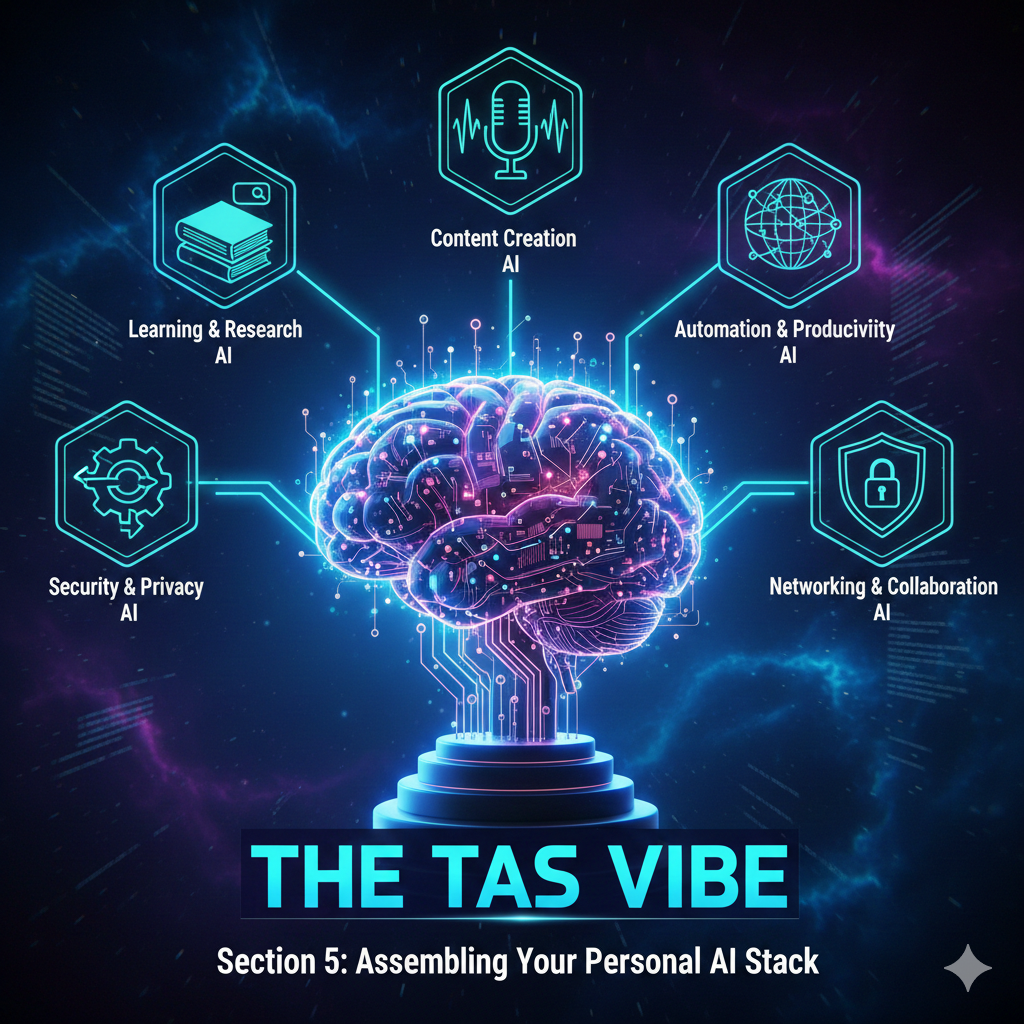
The Integration Strategy Every Solopreneur Needs in 2026
By the time most solopreneurs reach this stage, they’ve already discovered an uncomfortable truth:
AI tools don’t fail—poor integration does.
Having access to powerful AI is no longer a competitive advantage.
Knowing how to assemble, connect, and scale your AI stack intelligently is what separates profitable solopreneurs from overwhelmed tool collectors.
Let’s break this down step by step—starting with the mistakes almost everyone makes.
The Three Fatal Mistakes When Building Your AI Stack
Mistake #1: Tool Sprawl Without Integration
(Also known as “Pokémon Syndrome”)
Most solopreneurs don’t build stacks—they collect tools.
ChatGPT for content.
Zapier for automation.
Canva for visuals.
An email platform.
A scheduler.
A chatbot.
A dashboard.
On paper, it looks impressive.
In reality?
Nothing talks to anything else.
So you end up with situations like:
ChatGPT creates blog content… but it never reaches your email list
Zapier connects apps… but you still manually move data
Analytics live in one tool, leads in another, content in three more
Result:
👉 7 subscriptions
👉 0 real workflows
👉 Maximum frustration
The core issue isn’t the tools—it’s the missing integration strategy.
If your AI stack doesn’t move information automatically from idea → content → distribution → monetization, it’s not a stack.
It’s digital clutter.
Mistake #2: Assuming All-in-One Platforms Save Money
“All-in-one” sounds comforting—especially to solopreneurs on a budget.
These platforms promise:
Content creation
Email marketing
Social scheduling
Funnels
Analytics
Automation
All under one login.
But here’s the hard truth:
All-in-one usually means average-at-everything, excellent-at-nothing.
What happens next is predictable:
The AI writing feels generic
The email deliverability is weak
The analytics are shallow
Automations are limited
So eventually, you add:
A better AI writer
A stronger email platform
A real automation tool
Now you’re paying twice—once for the “all-in-one” you outgrew, and again for the specialized tools you actually need.
Starting with best-in-class tools—connected properly—is almost always cheaper long-term.
Mistake #3: Ignoring the Learning Curve
This is the silent killer of AI adoption.
The best AI stack is not:
The most powerful
The most expensive
The most feature-rich
It’s the one you’ll actually use every day.
Many solopreneurs buy advanced tools, feel overwhelmed, and quietly abandon them after a week.
Rule to remember:
Consistency beats capability.
Start with tools that feel intuitive.
Master them.
Then expand gradually.
The Three-Month AI Stack Implementation Timeline
This phased approach is what prevents overwhelm—and ensures ROI.
Month 1: Foundation (Build Once, Use Forever)
Your goal here is flow, not perfection.
Core Stack:
Zapier (or Make for complex logic) – automation backbone
One conversational AI (ChatGPT or Claude)
Canva – visuals without designers
Moosend – affordable, automation-ready email marketing
Why this works:
ChatGPT creates content
Canva visualizes it
Moosend distributes it
Zapier connects everything
Investment: ~$75/month
Time commitment: ~10 hours setup, then daily use
At this stage, you’re already operating like a small team.
Month 2: Specialization (Support Your Core Business)
Now you add tools only if your workflow demands them.
Jasper → if content is your revenue engine
Descript → if you publish video or podcasts
Botpress → if customer queries are consuming your time
Additional investment: ~$50–100/month
Notice the pattern:
👉 No random tools
👉 Every addition solves a specific bottleneck
Month 3: Optimization (Cut, Refine, Scale)
This is where professionals separate from amateurs.
Actions to take:
Map your real workflows (not your imagined ones)
Remove tools you’re not using weekly
Add precision tools only where they matter
Examples:
Figma + plugins for advanced design workflows
ElevenLabs for voice content
HeyGen for AI video personalization
Your final stack should feel light, fast, and intentional.
Realistic budget: ~$150–250/month
That’s your entire digital team.
The Real Cost of Your AI Stack (And Why It’s Cheaper Than You Think)
Many solopreneurs assume:
“AI automation costs $500+ per month.”
Reality tells a different story.
Minimal Viable Stack (Serious Side Business)
ChatGPT – $20
Zapier – $19.99
Canva Pro – $12.99
Moosend – $15
Total: ~$68/month
Professional Stack (Full-Time Solopreneur)
ChatGPT – $20
Make – $9.99
Jasper – $49
Canva Pro – $12.99
Descript – $15
Moosend – $25
Botpress – $25–100
Total: ~$157–207/month
Fully Optimized Stack (Established Brand)
Add:
Midjourney – $10
Figma plugins – $9
ElevenLabs – $11
HeyGen – $15–30
Claude – $20
Total: ~$232–272/month
📌 Perspective check:
That’s less than hiring one freelancer for 2–3 hours per month.
Most solopreneurs report their AI stack replaces 20–30 hours of monthly labor.
Avoiding Vendor Lock-In While Still Moving Fast
The smartest solopreneurs don’t choose between open-source and SaaS.
They use both.
Use SaaS When:
You need results immediately
Cutting-edge AI performance matters
Email, CRM, or analytics are core
Community support is valuable
Consider Open-Source When:
You want full data control
Privacy is non-negotiable
You’re building internal tools
Long-term ownership matters
Examples:
n8n for automation
Dify / Flowise for AI workflows
The Hybrid Strategy (Best of Both Worlds)
Use Zapier or Make as the orchestration layer:
Connect SaaS tools
Integrate self-hosted systems
Maintain flexibility
Avoid being trapped by one vendor
This approach gives you speed today and freedom tomorrow.
Final Takeaway for The TAS Vibe Readers
Your AI stack is not a shopping list.
It’s an ecosystem.
Build it:
Slowly
Intentionally
Around workflows—not hype
The solopreneurs who win in 2026 won’t use more AI tools.
They’ll use fewer tools, integrated better.
And that’s the real unfair advantage.
Section 6: The Solopreneur Workflow in Action
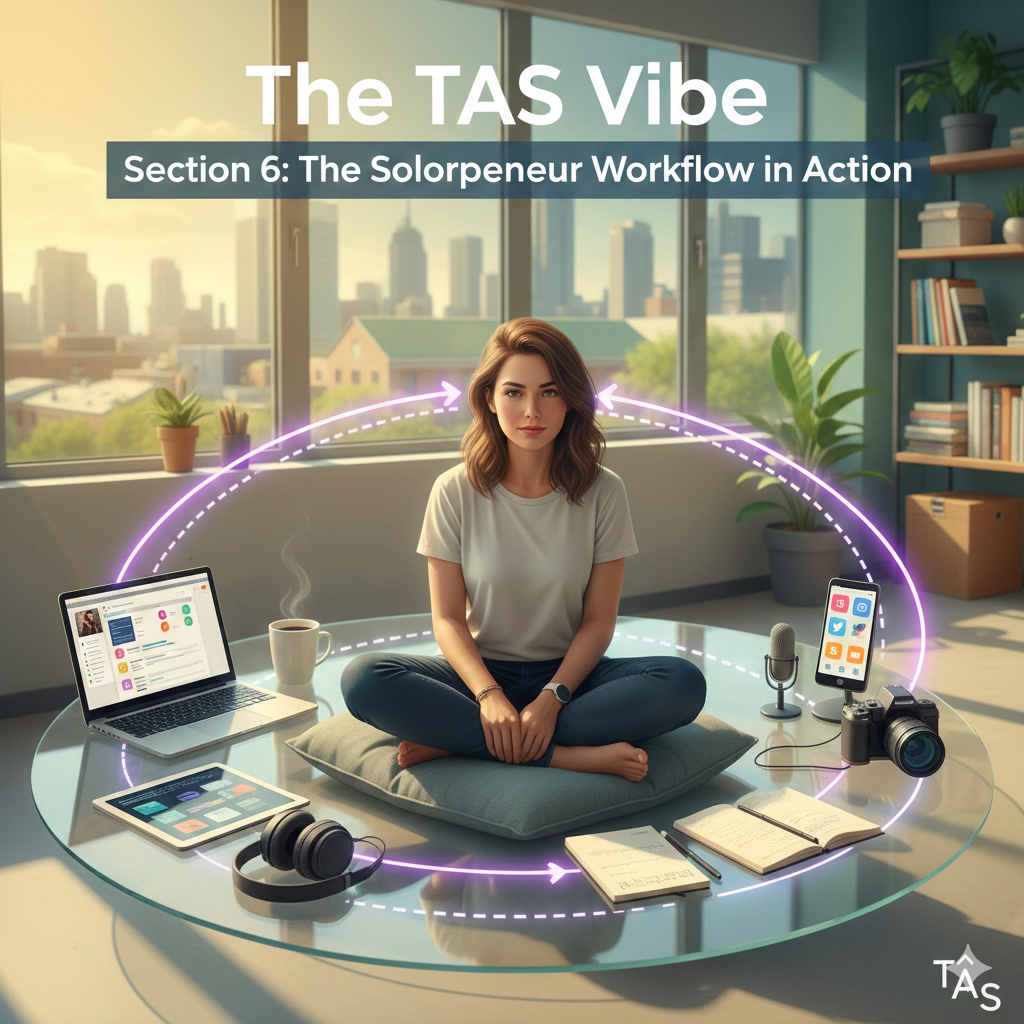
A Real Tuesday Morning With a Full AI Stack (2026 Edition)
If you’ve ever wondered what AI marketing automation looks like in real life, not in theory, not in sales pages—but in an actual solopreneur’s day—this section is where everything clicks.
This is not a “hustle harder” fantasy.
This is calm, controlled, repeatable leverage.
Welcome to a normal Tuesday morning for a modern solopreneur running The TAS Vibe–style AI stack in 2026.
7:00 AM — You Wake Up. Your Business Is Already Awake
Before you touch your phone or laptop, Lindy AI has been working silently in the background.
While you slept, it has:
Triaged 23 emails
Automatically sorted newsletters, cold pitches, customer queries, and partner emails
Flagged 3 urgent emails that genuinely need your attention
Added 2 new prospects to your CRM
Pulled from email conversations and contact forms
Tagged them based on intent and source
Scheduled 4 follow-up reminders
No sticky notes
No “I’ll remember later” stress
Drafted responses to 5 FAQ-style emails
Polite
On-brand
Ready for your approval
7:30 AM — Review, Approve, Send (15 Minutes Flat)
You sit down with coffee ☕.
Instead of writing emails, you’re reviewing decisions already made.
You scan Lindy’s drafted replies
Approve or lightly modify 8 emails
Hit send
Total time spent: 15 minutes
No emotional energy drained.
No context switching.
No inbox guilt.
This is the first mindset shift every successful solopreneur makes:
AI does the first draft. Humans do the final judgment.
8:00 AM — Content Creation Without Burnout
This is where most solopreneurs struggle—and where your AI stack shines.
Step 1: ChatGPT — Speed + Structure
You open ChatGPT and paste the blog topic you decided on yesterday.
Within minutes:
A clean SEO-friendly outline is generated
The outline expands into a full draft in under 5 minutes
You’re not publishing this raw.
You’re accelerating the boring parts.
Step 2: Jasper — Voice & Brand Consistency
You paste the draft into Jasper.
Jasper:
Adjusts tone to match your voice
Improves flow
Removes robotic phrasing
Now the content sounds like you, not a machine.
Step 3: Human Touch Where It Matters
You personally write:
A custom intro (emotional hook, credibility, CTR-focused)
A strong conclusion (CTA, internal links, audience engagement)
Time spent: 20 minutes
This is where authority is built—and why Google still rewards human insight.
Step 4: Canva AI — Visuals Without a Designer
Generate a featured image
Match blog branding
Export optimized sizes for blog + social
Step 5: Schedule and Forget
Blog post scheduled for tomorrow
Metadata, internal links, and categories already set
⏱️ Total time: ~45 minutes
📈 Output: One high-quality SEO article ready to rank
8:45 AM — Video Content From Assets You Already Own
Instead of recording new videos daily, you repurpose intelligently.
Descript: From Call to Content
Upload yesterday’s client call
Descript auto-transcribes it—accurately
You delete 15 minutes of small talk
The video auto-edits itself to match the transcript
No timeline dragging.
No editing stress.
Lumen5: Short-Form Distribution Engine
Extract the top 3 engaging 60-second moments
Send them to Lumen5
Convert into:
Reels
Shorts
LinkedIn videos
9:20 AM — Customer Engagement Runs on Autopilot
Your Botpress AI chatbot has been handling conversations while you focused on content.
Handled automatically:
8 customer questions
4 FAQs
3 product-related
1 escalated correctly
12 lead captures
Instantly added to Moosend email list
Tagged by interest
2 conversations needing human judgment
Waiting neatly in your queue
You respond personally to the 2 complex ones.
Time spent: 10 minutes
The system learns from your answers—meaning tomorrow, it’s even smarter.
9:45 AM — You Finally Do the Real Work
Now comes the part AI cannot replace:
Strategy
Relationship building
High-ticket sales conversations
Brand positioning
Long-term vision
Everything else—the repetitive, draining, operational work—has already been handled.
The Result (Read This Carefully)
In 2 hours and 45 minutes, you’ve:
Managed 100+ customer interactions
Created:
1 SEO blog post
Multiple short-form videos
Cleared your inbox
Captured new leads
Maintained brand consistency
Preserved mental energy
📊 Reality Check:
A traditional marketing agency would need:
1 content writer
1 editor
1 social media manager
…to produce the same output in a month.
You did it solo, before lunch.
Final Truth: This Is Not the Future—This Is the Standard
This workflow isn’t advanced.
It’s not experimental.
It’s not reserved for tech elites.
In 2026, this is simply how smart solopreneurs operate.
The difference between struggling creators and scalable creators is not talent—it’s intentional stack design.
AI doesn’t replace you.
It replaces everything that keeps you from doing your best work.
And on The TAS Vibe, this is the edge we build—one system at a time. 🚀
🔧 Section 7: The Tools You Don’t Need (And Why Knowing This Matters)
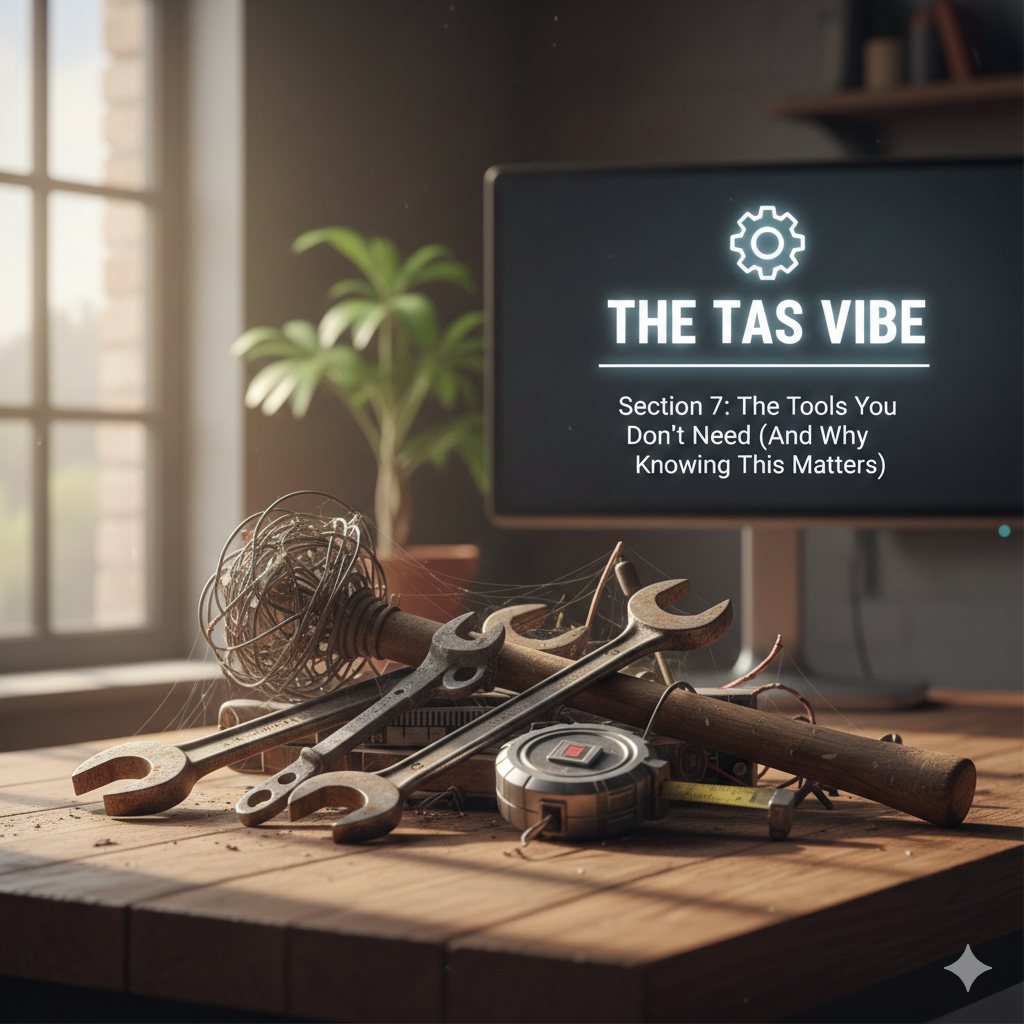
In 2026, the biggest threat to solopreneurs isn’t a lack of AI tools.
It’s having too many.
The AI ecosystem has exploded—new platforms, plugins, dashboards, and “game-changing” software launch every single week. Each promises to save time, boost revenue, or automate your entire business while you sleep. For a solopreneur, this creates a dangerous illusion:
“If I don’t use this tool, I’ll fall behind.”
This mindset is quietly destroying productivity, profits, and focus.
Let’s break this down.
🚨 The Overconsumption Problem: When More Tools Make You Less Effective
AI tool overload is the new burnout.
Most solopreneurs don’t fail because they lack intelligence or ambition. They fail because they fragment their attention across too many tools, never mastering any of them deeply enough to see real ROI.
Here’s the paradox:
A solopreneur using 3 well-mastered tools outperforms
A solopreneur juggling 12 half-understood platforms
Why?
Because every new tool adds:
A learning curve
Configuration time
Integration issues
Subscription anxiety
Mental overhead
Instead of working on the business, you end up working inside dashboards.
❌ Common Tools Solopreneurs Buy—but Rarely Need
Let’s look at the most common traps, one by one.
🤖 1. Multiple Conversational AI Subscriptions
ChatGPT + Claude + Gemini + Perplexity = Overkill
Many solopreneurs subscribe to two or three AI chat tools “just in case.”
In reality, 95% of solopreneurs will never hit the limits of one well-used model.
The truth:
ChatGPT alone can handle ideation, SEO drafts, email copy, scripts, outlines, and automation prompts
Claude excels at long-form reasoning
Gemini is strong for Google-native workflows
But here’s the key insight:
You don’t need all of them at once.
Smart move:
Pick one. Master it. Push it to its limits.
Only add a second after you can clearly say:
“This tool cannot do X, and I lose money because of it.”
Anything else is subscription stacking—not strategy.
✍️ 2. Specialized AI Content Tools (Too Early)
Jasper, Copy.ai, Writesonic—they’re powerful.
But for beginners or early-stage solopreneurs?
They’re often unnecessary.
Why?
ChatGPT now covers 80–90% of content creation needs
Specialized tools charge 5× more for marginal gains
You still need human judgment for SEO, tone, and intent
These tools shine after you:
Publish content at scale
Have clear content workflows
Know exactly where generic AI output falls short
Until then, they’re a luxury—not a lever.
⚙️ 3. Using Zapier, Make, and n8n Together
This is one of the biggest silent productivity killers.
Each automation platform:
Has its own logic
Its own pricing model
Its own failure points
Using all three doesn’t make you advanced—it makes you scattered.
Rule of leverage:
Choose Zapier or Make or n8n
Learn it deeply
Build real, revenue-linked automations
Expand only when you hit hard limitations
Automation should simplify your life—not turn you into a systems engineer.
📋 4. Project Management Tools “Just in Case”
ClickUp. Monday. Asana.
Powerful? Yes.
Necessary for a solo business? Rarely.
If you:
Work alone
Manage your own deadlines
Don’t coordinate with a team
Then heavy project management tools add more friction than value.
What works better early on:
Notion
Google Sheets
Simple to-do lists
Even pen and paper
Complex systems only make sense when complexity exists.
📩 5. Trendy Newsletter Platforms You Don’t Need Yet
Substack, Ghost, Revue—they’re attractive and community-driven.
But functionally?
Most solopreneurs don’t need them.
Email marketing basics—broadcasts, automation, segmentation—are handled perfectly by:
Mailchimp
Moosend
Brevo
These platforms do 95% of what trendy tools do—for less cost and more flexibility.
Upgrade only when:
You monetize subscriptions
You need platform-native discovery
You have a strategic publishing reason
Trend adoption without strategy is expensive curiosity.
🧠 The Decision Framework That Saves Money (and Focus)
Before buying any new tool, pause and ask these four questions.
1️⃣ Does This Solve a Real Gap in My Current Stack?
Not:
“This looks cool.”
But:
“This fixes a specific operational bottleneck.”
If you can’t name the problem clearly—don’t buy.
2️⃣ Is It 2× Better or Just Different?
A tool must be dramatically better to justify:
Migration
Learning time
Setup cost
If it’s only 10–15% better, the switch usually isn’t worth it.
3️⃣ Will I Use This Weekly?
Daily or weekly use = subscription
Monthly or “someday” use = pay-per-use or skip entirely
Most unused tools die in dashboards—not because they’re bad, but because they’re rarely needed.
4️⃣ Can I Explain Why I Chose This Over Alternatives?
If you can’t articulate the reason in one sentence, you’re not making a strategic choice—you’re reacting to marketing.
🎯 The Big Insight Most Solopreneurs Miss
Here’s the uncomfortable truth:
Most solopreneurs instinctively say “no” to 80% of tools they consider.
And that instinct is usually correct.
Focus doesn’t come from having more tools.
It comes from using fewer tools exceptionally well.
Mastery beats novelty.
Execution beats experimentation.
Clarity beats chaos.
🔑 Final Takeaway for The TAS Vibe Readers
Your competitive advantage in 2026 isn’t owning the newest AI tool.
It’s knowing which tools to ignore.
That restraint is what turns solopreneurs into scalable creators—and dashboards into revenue engines.
🔧 Section 8: Common AI Stack Mistakes (And How Successful Solopreneurs Fix Them)
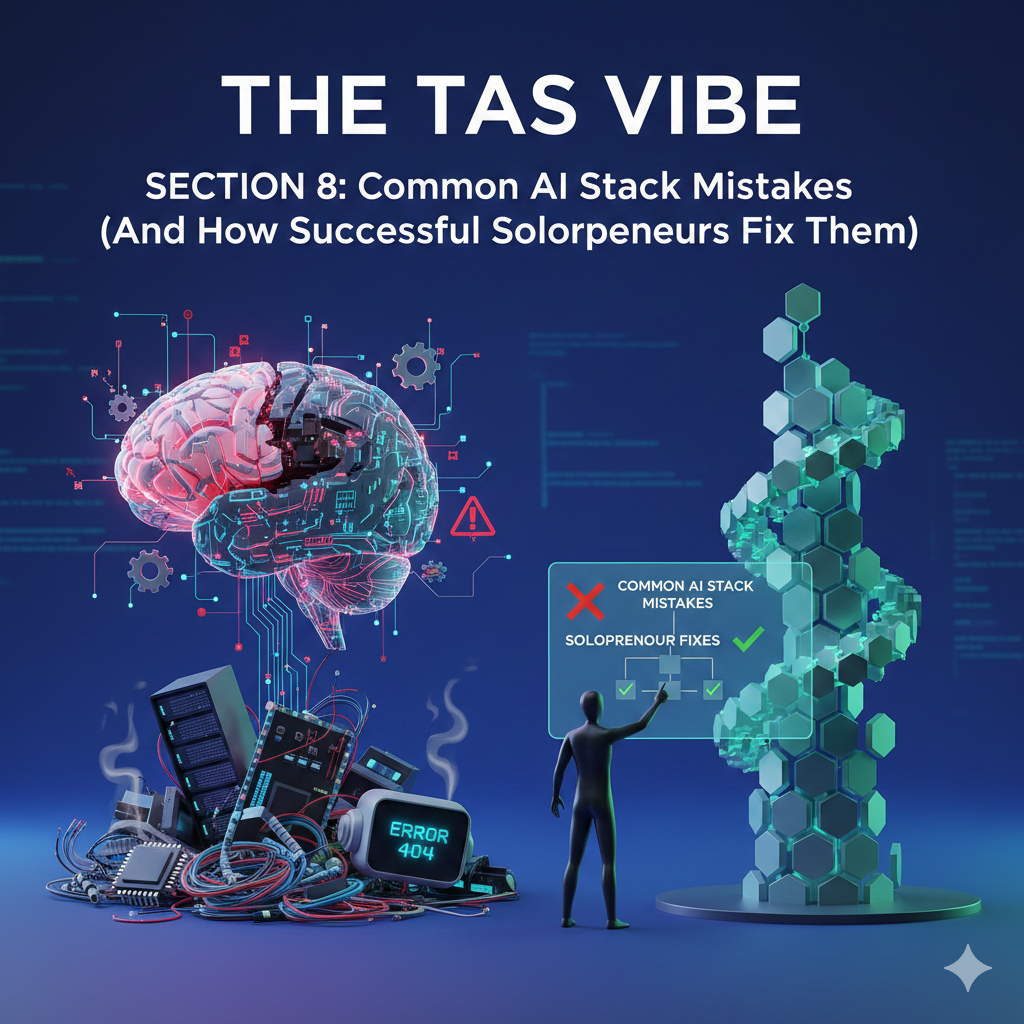
By the time solopreneurs start building their AI stack, they usually do one thing right—they choose powerful tools.
But here’s the uncomfortable truth most gurus won’t tell you:
👉 Having great tools does not mean you have a great system.
In fact, many solopreneurs feel more overwhelmed after adopting AI than before—because of a few common, silent mistakes. Let’s break them down and show how high-performing solopreneurs actually fix them.
❌ Mistake #1: The “Unconnected Tools” Trap
The Problem: Powerful Tools, Zero Teamwork
On paper, your stack looks impressive:
ChatGPT for content
Zapier for automation
Canva for visuals
Moosend for email marketing
Each tool works brilliantly on its own.
But together? They behave like strangers at a networking event.
So what happens in real life?
You copy blog content from ChatGPT and paste it into Canva
You manually upload visuals and PDFs
You add email subscribers to Moosend by hand
You waste 2–3 hours daily doing work AI was supposed to eliminate
At this point, AI isn’t saving time—it’s creating friction.
💡 Key Insight:
Most solopreneurs don’t suffer from “bad tools.”
They suffer from unmapped workflows.
✅ The Solution: Think in Workflows, Not Tools
Successful solopreneurs fix this by asking better questions before touching automation.
Step 1: Map the Workflow on Paper First
Before Zapier, APIs, or integrations—write it down.
Ask yourself:
What is the input? (e.g., new email subscriber)
What is the desired output? (e.g., added to CRM + welcome email)
Which tools must talk to each other?
Step 2: Connect Only What Matters
Examples:
Use Zapier to automatically send new Moosend subscribers to your CRM
Trigger internal alerts when a lead converts
Create structured handoffs between tools instead of manual copying
Step 3: Accept Smart Hybrid Systems
Not everything needs full automation.
Use Canva’s API where available
For non-API tasks, define one clean manual step, not five messy ones
📌 Remember:
Tool frustration isn’t about complexity—it’s about skipping the planning phase.
❌ Mistake #2: Chasing Features Instead of Outcomes
The Problem: Too Many Tools, Too Little Mastery
Here’s a hard stat most solopreneurs ignore:
You’re probably using 40% of ChatGPT
5–10% of Zapier
And buying new tools hoping they’ll magically fix things
Instead of mastering what you already own, you keep adding:
“This AI writes better headlines”
“This automation is faster”
“This dashboard looks cooler”
The result?
Shallow usage
Fragmented systems
Subscription overload
Zero compounding advantage
✅ The Solution: Mastery Before Expansion
High-performing solopreneurs do the opposite.
Step 1: Commit to a 90-Day Tool Mastery Rule
For the next 3 months:
Use only your current tools
Explore advanced prompts, hidden features, workflows
Stop buying anything new
Step 2: Document Everything
Write down:
What tasks you automate
What still requires manual effort
What feels slow, broken, or impossible
Step 3: Let Limitations Choose Your Next Tool
Only after mastery do you ask:
“What can’t these tools do?”
That gap—not marketing hype—decides your next purchase.
❌ Mistake #3: Shiny New Tool Syndrome (The Silent Profit Killer)
The Problem: Excitement Without ROI
Every week in 2026:
A new AI tool launches
Claims to “revolutionize solopreneur workflows”
Promises faster growth with fewer clicks
So you:
Buy it
Spend 3–4 hours setting it up
Use it for two weeks
Quietly return to your old system
Forget to cancel the subscription
Multiply this by 5–6 tools—and you’re leaking money monthly.
✅ The Solution: Ruthless Tool Discipline
Successful solopreneurs operate with subscription minimalism.
Rule #1: Tools Must Fail Before Being Replaced
Never replace a tool because:
Something looks newer
A YouTube creator said so
Replace tools only when they demonstrably fail to meet a documented need.
Rule #2: Abuse Free Tiers First
Before paying:
Test real workflows
Stress the limits
Confirm actual ROI
If it can’t prove value on the free tier—it won’t magically improve when paid.
Rule #3: Quarterly Subscription Audits
Set a recurring calendar reminder every 90 days.
Ask:
Have I opened this tool in 30 days?
Does it directly impact revenue or time savings?
If not:
Cancel immediately
Re-evaluate in 3 months if the need still exists
🧠 Mindset Shift:
Tools are employees.
If they don’t work, they’re fired.
🚀 Final Takeaway for The TAS Vibe Readers
AI success in 2026 isn’t about having more tools.
It’s about having fewer tools, deeply integrated, outcome-driven, and ruthlessly optimized.
The best solopreneurs:
Map workflows before automation
Master tools before upgrading
Audit subscriptions like finances
And that’s why they grow faster—with less stress.
🧩 Final Thoughts: Your Stack Isn’t Finished Yet (And That’s a Good Thing)
The most successful solopreneurs don’t have perfect stacks.
They have intentional stacks.
They can answer:
Why each tool exists
What problem it solves
Whether it still deserves a place
Your 2026 stack may look completely different in 2027—and that’s not failure. That’s evolution.
What stays constant:
Automation foundation
Engagement layer
Creative engine
What should change:
Specific tools
Integrations
Workflow depth
Start simple.
Master the foundation.
Build outward with purpose.
📚 Quick Reference: Essential Reading List
HubSpot – State of AI in Small Business
For benchmarking and validationZapier Blog – Automation Frameworks
For inspiration and workflow logicOfficial Tool Documentation
Yes, it’s boring. Yes, it matters.Your Own Usage Data
The most honest signal of what’s working
✅ Action Items Before You Leave This Module
Before moving forward, do this:
🔍 Identify your top 3 operational frustrations
🧭 Map each to a tool category:
Automation
Engagement
Creation
🧰 Choose one tool per category to implement first
⏱️ Schedule 2 focused hours this week to build your foundation stack
📝 Document one workflow you want fully automated
🔖 Bookmark your tools list and review it quarterly
🚀 The Real Solopreneur Advantage
The solopreneur advantage isn’t luck.
It’s leverage.
It’s:
Choosing the right tools
Understanding how they connect
Building systems that scale your impact, not your hours
You’re about 10% into understanding your AI advantage.
👉 Module 3 is where you turn that understanding into something unstoppable.
We’ll see you there—right here on The TAS Vibe 🔥
Connect
Stay updated with us
Follow
Reach
+91 7044641537
© 2025. All rights reserved.