
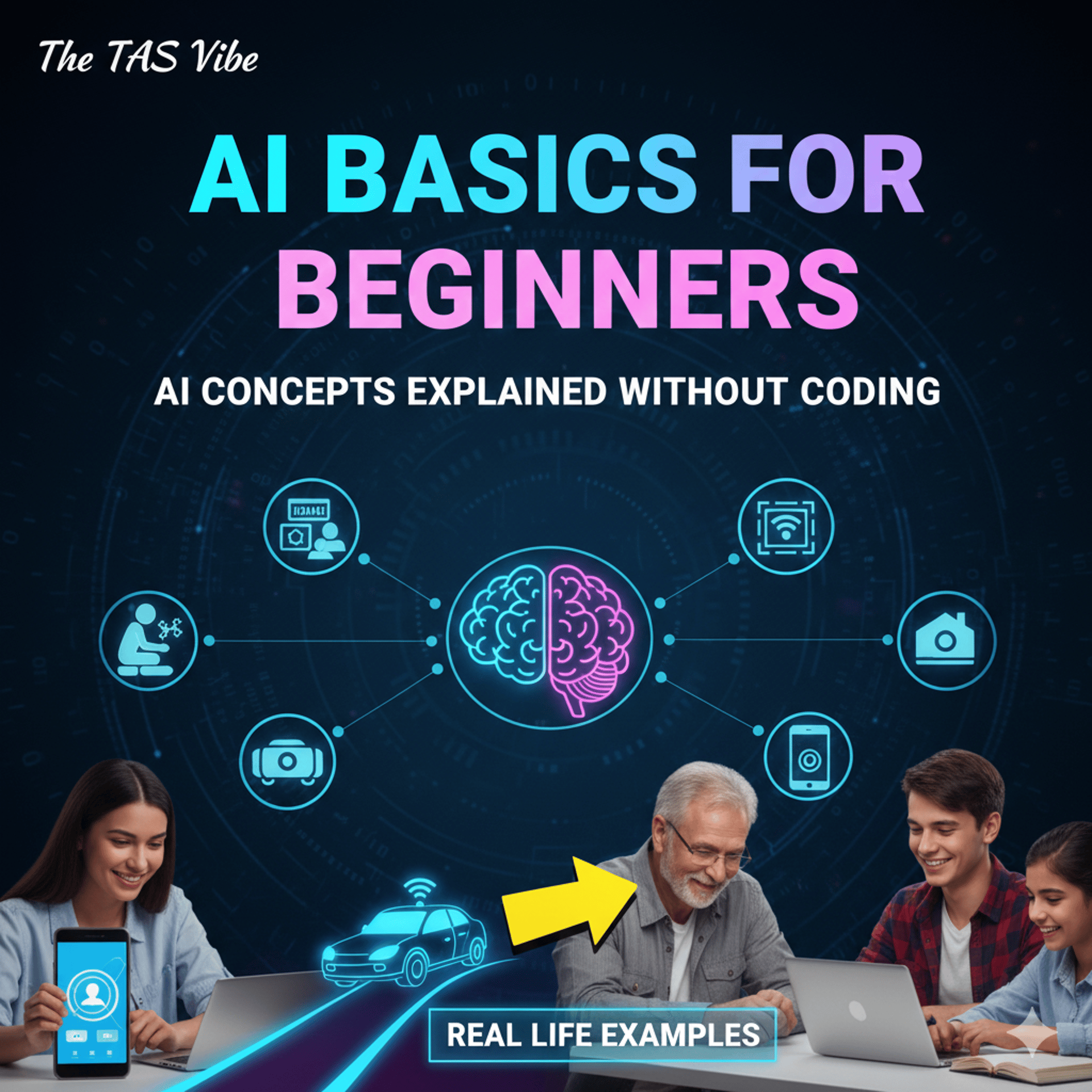
AI Concepts Explained for Beginners Without Coding
AI concepts explained for beginners without coding in a clear, friendly guide that removes jargon, builds confidence, and shows how works in everyday life.!
TECHNOLOGYBEST AI TOOLS FOR BUSINESS AUTOMATION ROADMAP 2026
Marcus Chen Lifestyle Tech Reviewer at The TAS Vibe
1/19/20266 min read
Introduction: AI Isn’t Coming—It’s Already With You

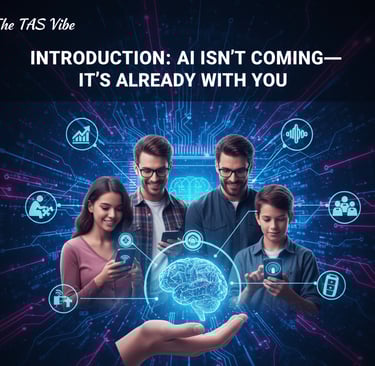
When most beginners hear “artificial intelligence,” they imagine futuristic labs, humanoid robots, or advanced scientists typing code on glowing screens.
But here’s the truth:
👉 AI already lives in your pocket.
Every swipe, tap, voice command, and recommendation you see on your phone is powered by artificial intelligence working silently in the background. You don’t need to understand algorithms or write code to experience it—you’re already using it daily.
This Day 3 guide focuses on AI basics for beginners with real life examples, showing how AI fits naturally into everyday life—from texting and music streaming to health tracking and smart homes.
By the end of this article, you’ll stop asking “Where is AI used?”
And start realizing “I use AI all the time.”
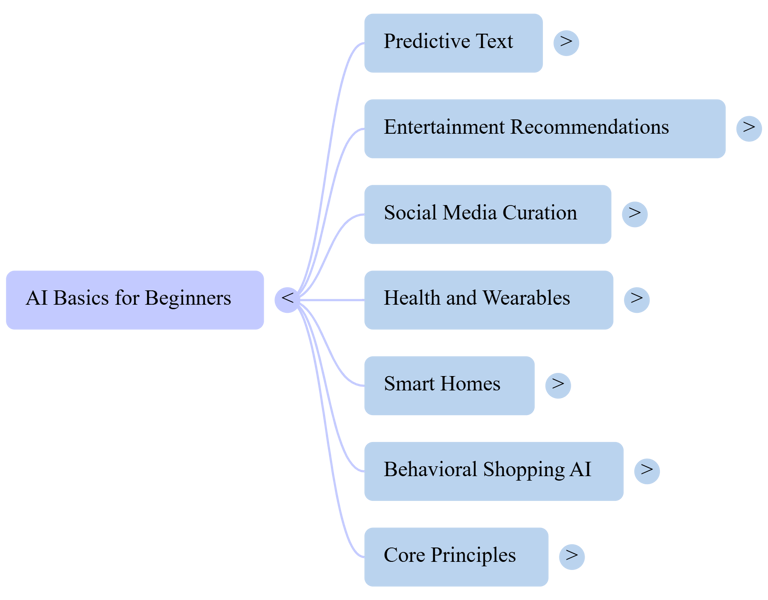
This mind map gives you a quick overview of the concepts covered below.
🎧 Prefer listening? Play the audio version below.
Why Everyday AI Matters More Than Advanced AI
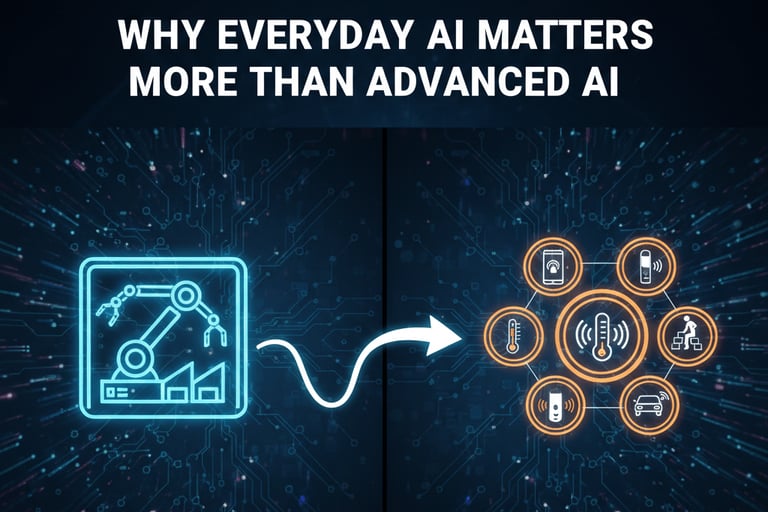
Advanced AI systems get headlines, but everyday AI shapes behavior.
It influences what you watch
What you buy
How you communicate
How healthy you stay
This practical exposure makes everyday AI the best starting point for beginners.
At The TAS Vibe, we believe real understanding starts with familiar examples—not theory.
The Hidden Assistant – How Your Phone Predicts Your Next Word
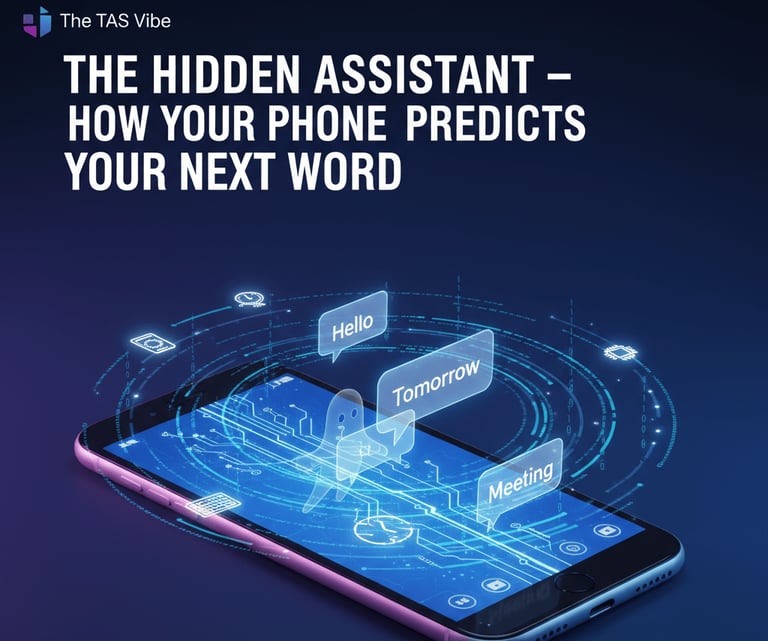
Have you ever noticed how your phone:
Finishes your sentences
Suggests emojis
Corrects spelling automatically
That’s not coincidence. That’s AI at work.
How Predictive Text Really Works (Simple Explanation)
Your keyboard doesn’t “understand” language like humans. Instead, it:
Analyzes billions of sentence patterns
Learns which words commonly follow others
Predicts the most likely next word
If you type:
“I’ll call you in”
Your phone predicts:
“a minute” or “5 minutes”
Because statistically, that’s what most people type.
This is machine learning in action—learning from patterns, not meanings.
Why This Is Powerful (and Helpful)
Saves time
Reduces typing errors
Adapts to your personal style
Improves with usage
Your phone becomes more helpful the more you use it.
That’s a core AI principle.
Entertainment Engines – Why Spotify Knows Your Mood Better Than You Do
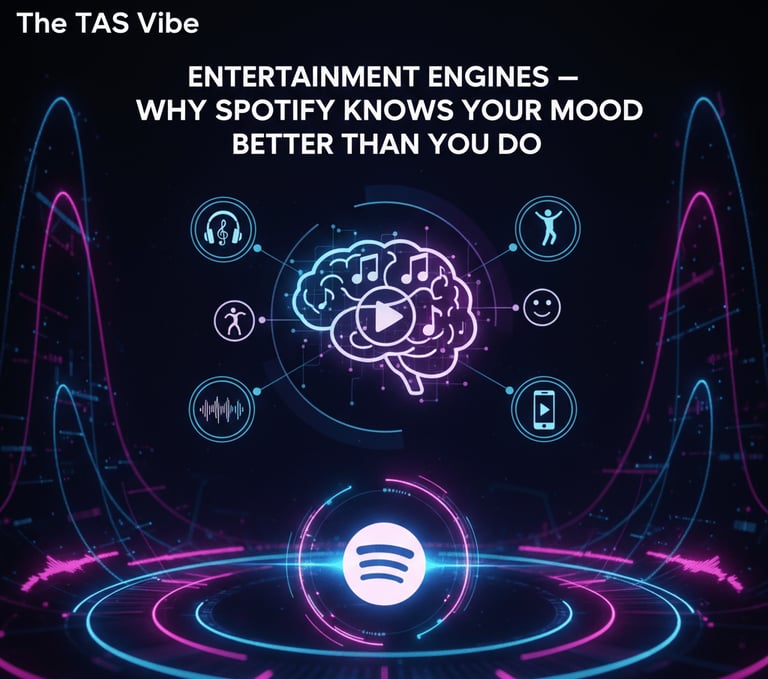
Ever felt like Spotify or Netflix understands your taste too well?
That’s not magic—it’s recommendation AI.
The Science Behind Recommendations
Entertainment platforms track:
What you watch or listen to
How long you engage
What you skip
When you stop
Then AI compares your behavior with millions of others.
If users with similar habits enjoy a certain song or show, AI assumes you might too.
This method is called collaborative filtering.
Mood Detection Without Emotions
Spotify doesn’t know your emotions—but it recognizes patterns.
Calm music in the evening
Energetic playlists during workouts
Sad songs late at night
AI detects behavioral signals and adapts.
That’s why playlists feel “personal.”
Why This Matters for Beginners
This is one of the best AI basics for beginners with real life examples because:
It’s relatable
It’s visible
It improves user experience
AI isn’t replacing creativity—it’s helping you discover it faster.
AI in Social Media – The Feed You Never Chose
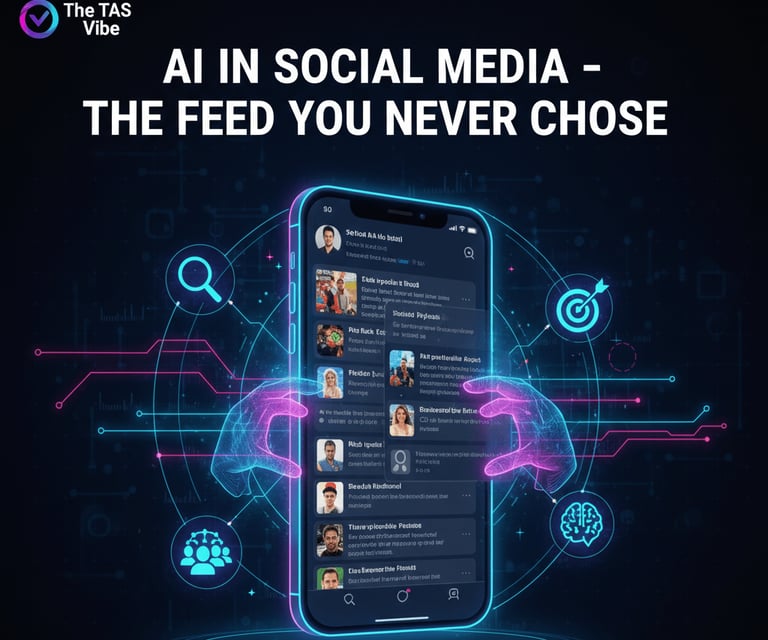
Your social media feed is not random.
AI decides:
Which posts appear
In what order
How often
How AI Curates Your Feed
AI analyzes:
Likes
Comments
Shares
Watch time
The more you interact with a type of content, the more similar content appears.
This creates:
Personalization
Engagement
Longer screen time
The Double-Edged Sword
AI improves relevance—but can also:
Create echo chambers
Reinforce biases
Limit exposure to new ideas
Understanding this helps users consume content consciously, not passively.
Health & Home – AI That Cares Before You Do
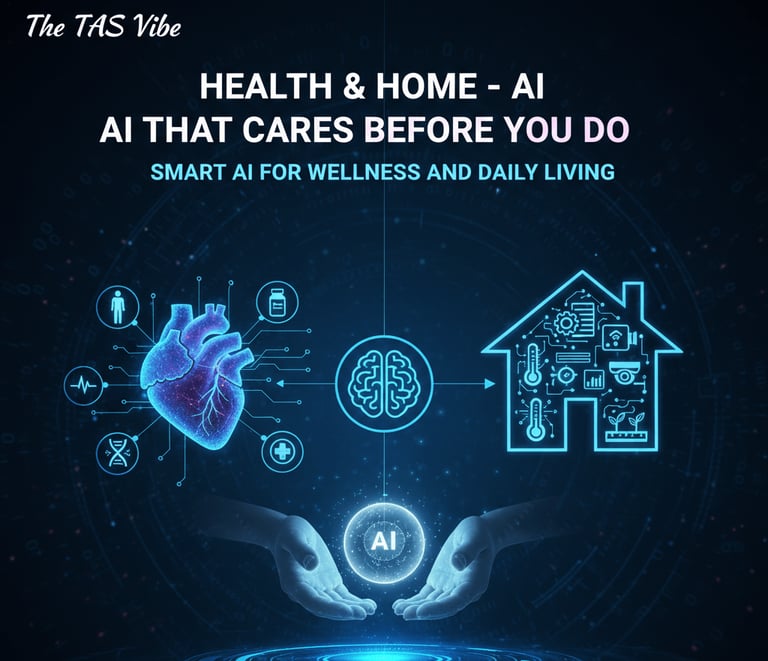
AI isn’t just about entertainment. It’s quietly transforming health and lifestyle.
Wearables That Predict Illness Before Symptoms
Smartwatches and fitness bands track:
Heart rate
Sleep cycles
Activity levels
Oxygen saturation
AI detects abnormal patterns.
For example:
Elevated heart rate at rest
Poor sleep consistency
Reduced activity
These signals can warn users before they feel sick.
This isn’t diagnosis—it’s early awareness.
Why This Is Revolutionary
Encourages preventive care
Supports healthier habits
Reduces healthcare burden
AI becomes a health companion, not a doctor replacement.
Smart Homes – When Your House Learns You


Smart homes don’t just follow commands—they learn routines.
Everyday Smart Home AI Examples
Lights adjusting to time of day
Thermostats learning temperature preferences
Security systems recognizing familiar faces
Voice assistants managing schedules
AI observes habits and optimizes comfort.
Convenience Meets Efficiency
This reduces:
Energy waste
Manual effort
Cognitive load
Your home becomes responsive, not reactive.
AI in Shopping – Why Ads Feel “Too Accurate”


Ever searched for something once and saw ads everywhere?
That’s behavioral AI.
How Shopping AI Works
AI analyzes:
Search history
Browsing behavior
Purchase patterns
It predicts buying intent.
This helps:
Businesses target better
Users find relevant products faster
Understanding this empowers users to control privacy settings wisely.
Why These Examples Matter for AI Beginners
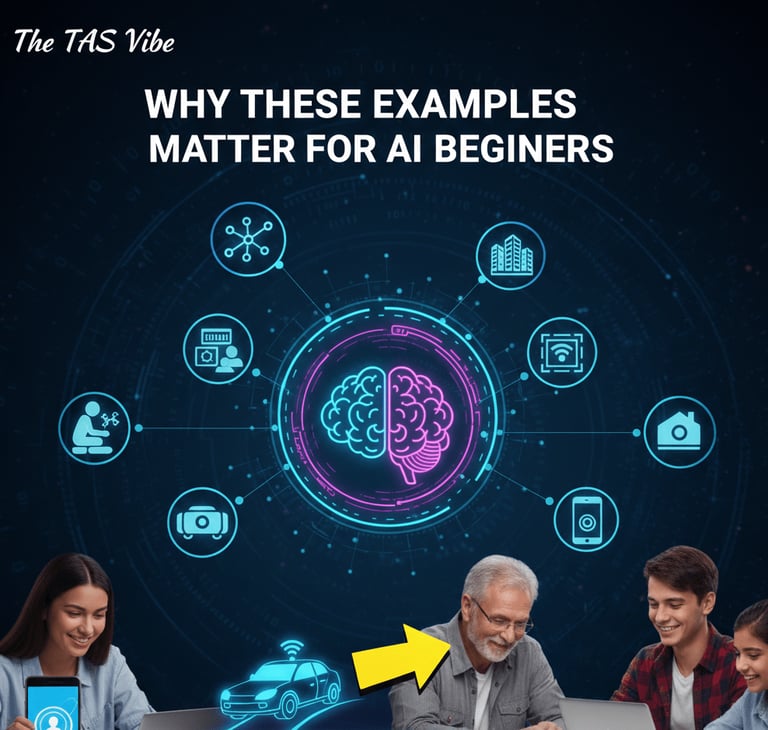
These real-life examples answer the biggest beginner question:
👉 “What does AI actually do?”
AI:
Predicts
Recommends
Personalizes
Optimizes
It doesn’t think or feel—but it assists intelligently.
The TAS Vibe Perspective – AI Should Feel Natural, Not Scary
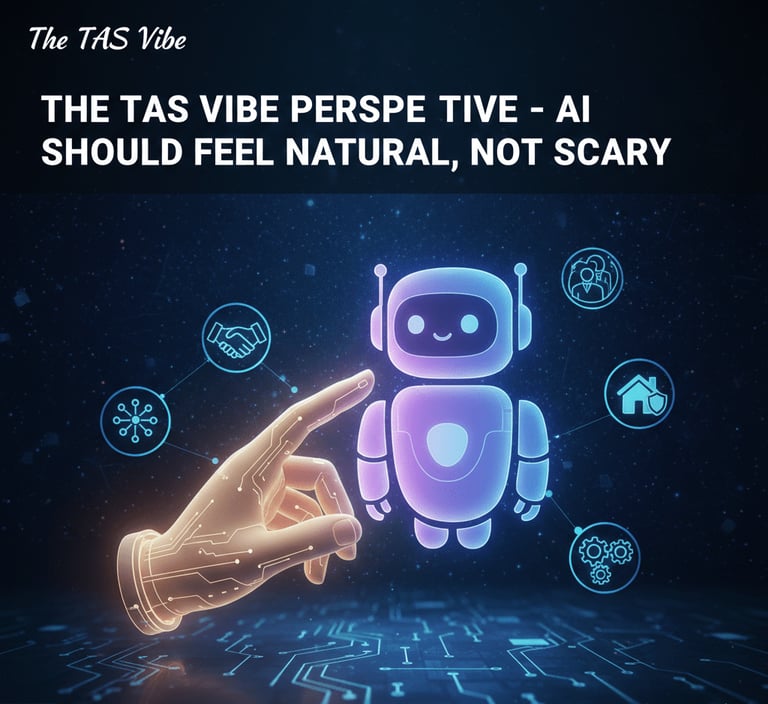
At The TAS Vibe, our goal is clarity, not complexity.
You don’t need technical depth to:
Understand AI
Use it responsibly
Benefit from it
You just need awareness.
What’s Next? Understanding AI Decisions
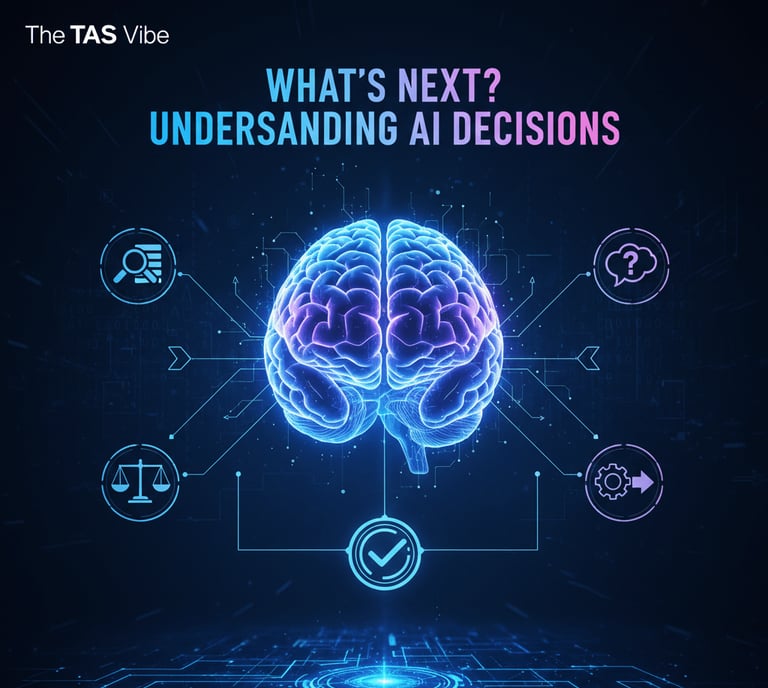
You’ve now seen where AI exists in daily life.
👉 Internal Link to Day 4 Post:
Next, read Day 4: Inside the Machine – How AI Makes Decisions and Where It Can Go Wrong, where we explore transparency, bias, and trust in AI systems.
Conclusion: AI Is Already Part of You
AI isn’t the future—it’s the present.
It types with you.
It recommends for you.
It tracks for you.
It protects you.
Once you recognize these patterns, AI becomes less intimidating and more empowering.
That’s the real purpose of learning AI basics for beginners with real life examples.
Author Bio
Marcus Chen
Lifestyle Tech Reviewer at The TAS Vibe
Marcus tests and reviews the latest 2026 consumer technology—from smart wearables to AI-powered homes. His mission is to find the real-world “vibe” inside every chip and explain it in a way everyone can understand.
Disclaimer
This article is for educational and informational purposes only. It does not offer medical, financial, or professional advice. AI-powered tools should be used responsibly and with awareness of privacy and data policies.
Follow The TAS Vibe
If this article helped you:
Follow The TAS Vibe for daily AI learning
Share this guide with beginners
Bookmark this AI beginner series
Your support helps us keep technology human, simple, and useful.
Frequently Asked Questions (FAQ)
Q1: What are AI basics for beginners with real life examples?
They are simple explanations of how AI works in daily tools like phones, apps, wearables, and smart homes.
Q2: Is AI always collecting personal data?
AI systems often rely on data, but users can manage privacy through settings and permissions.
Q3: Does AI understand emotions?
No. AI detects patterns in behavior—not emotions or intent.
Q4: Are smart devices safe to use?
Most are safe when properly configured, updated, and used with privacy awareness.
Q5: Why should beginners learn about everyday AI?
Because it shapes decisions, habits, and digital experiences—even when unnoticed.
Watch this quick video for an overview
Connect
Stay updated with us
Follow
Reach
+91 7044641537
Copyright: © 2026 The TAS Vibe. All rights reserved.