
Artificial Intelligence Explained for Non Technical Users
Artificial intelligence explained for non technical users in a beginner friendly guide that removes jargon, breaks myths, and shows how AI works in life Now
TECHNOLOGYBEST AI TOOLS FOR BUSINESS AUTOMATION ROADMAP 2026
The TAS Vibe
1/18/20265 min read
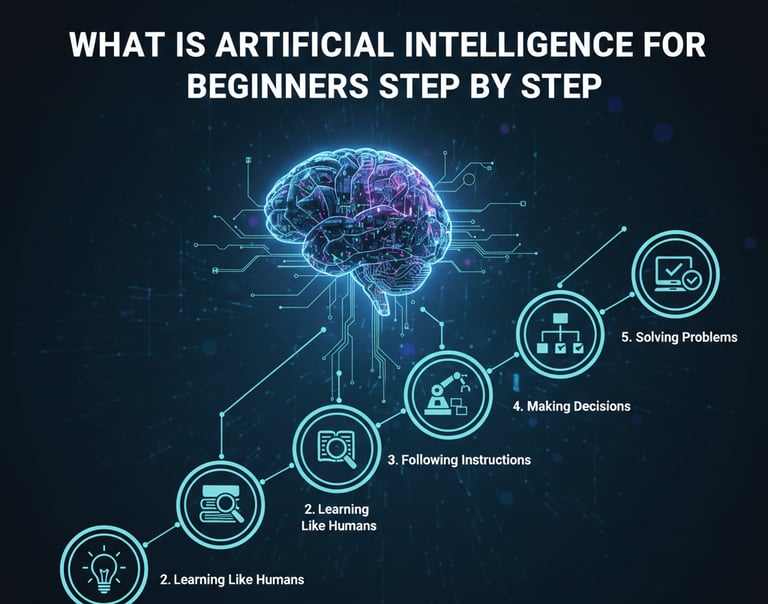
What Is Artificial Intelligence for Beginners Step by Step
Introduction: Why Understanding AI’s Roots Matters
On Day 1, we removed the fear and confusion around artificial intelligence and discovered that AI is not magic or a robot uprising—it’s a powerful human-made tool.
Now comes Day 2, where we slow things down and build the foundation step by step.
If you truly want to understand what is artificial intelligence for beginners step by step, you must first know:
Where AI came from
How it evolved over time
What types of AI exist today
Why the “simple” AI around you is more powerful than it looks
This article gives you that foundation—clearly, calmly, and without technical jargon.
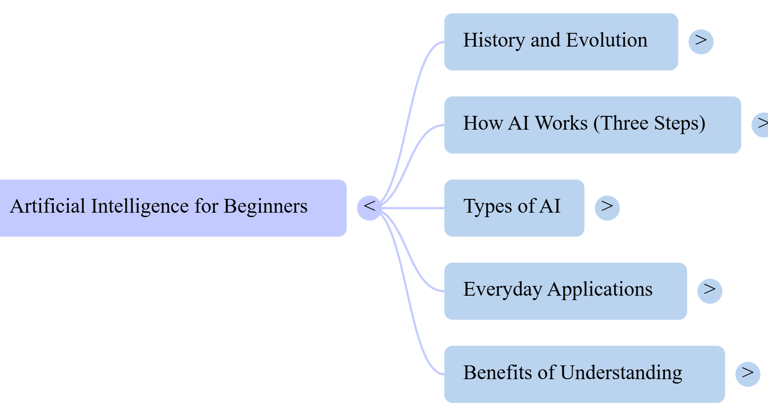
Mind Map
Audio
From 1950 to 2026 – A Quick Timeline of How We Got Here
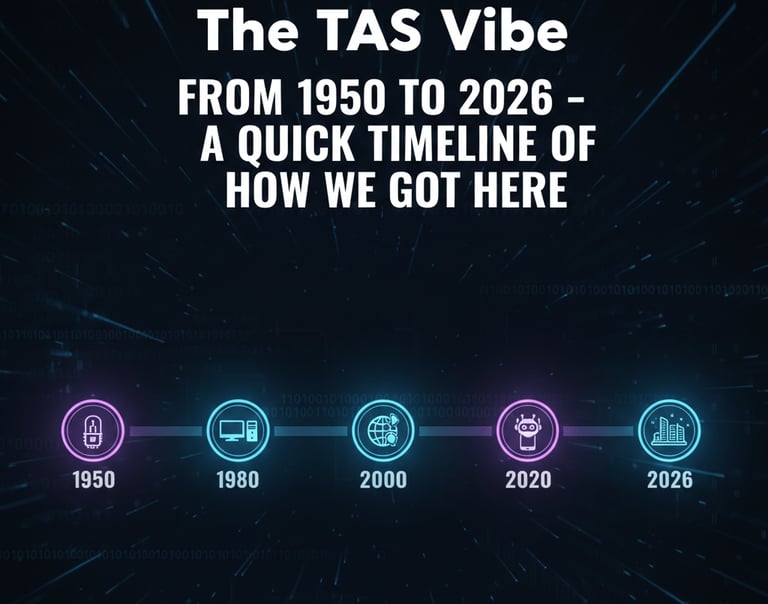
Artificial Intelligence didn’t suddenly appear in the 2020s. It has a long, fascinating history filled with breakthroughs, failures, and comebacks.
1950s – The Question That Started It All
In 1950, British mathematician Alan Turing asked a revolutionary question:
“Can machines think?”
He proposed the Turing Test, a simple idea:
If a machine can hold a conversation that feels human, it shows intelligence.
This question planted the seed for artificial intelligence.
1960s–1970s – Early Optimism
Early researchers believed human-level AI was just a few decades away.
Governments invested heavily.
But computers were slow, data was scarce, and expectations were too high.
1980s–1990s – The AI Winter
Progress slowed. Funding dropped.
This period became known as the AI Winter.
AI wasn’t dead—it was waiting for the right conditions.
2000s–2010s – The Data Explosion
Three things changed everything:
The internet created massive amounts of data
Computers became faster and cheaper
New learning techniques emerged
AI systems began recognizing speech, images, and patterns accurately.
2020–2026 – AI Goes Mainstream
Today, AI:
Writes text
Analyzes data
Recommends content
Powers search engines
Supports healthcare, finance, education, and marketing
AI is no longer experimental—it’s infrastructure.
What Is Artificial Intelligence for Beginners Step by Step?
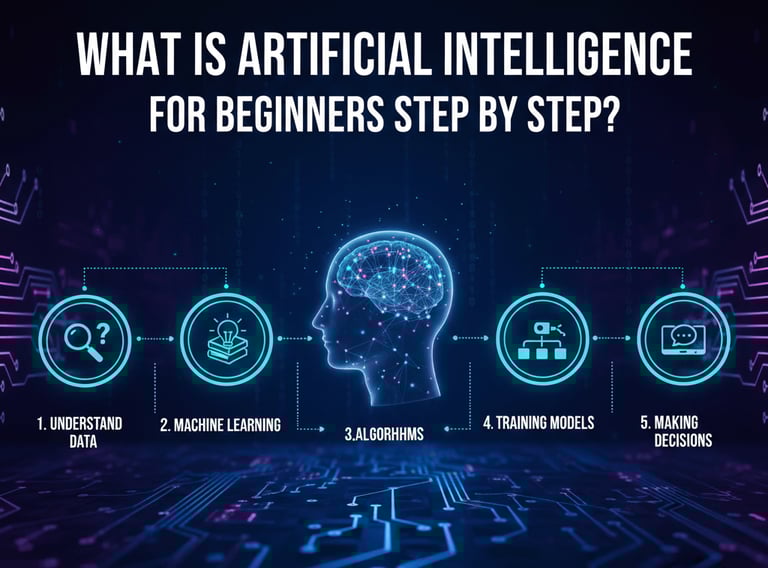
Let’s break it down clearly.
Artificial Intelligence is the ability of a machine to:
Take in information
Learn from patterns
Make decisions or predictions
That’s it.
To make this easier, AI intelligence can be understood in three simple steps.
Three Steps to Intelligence – How AI Actually Works
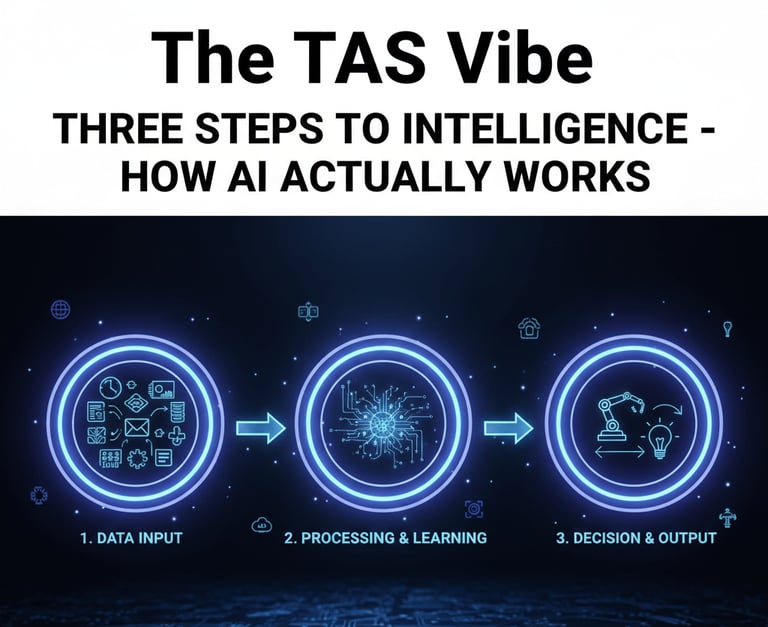
Step 1 – Sensing (Input)
AI starts by sensing the world through data.
Examples:
Text from websites
Images from cameras
Sounds from microphones
Numbers from sensors
AI doesn’t see or hear like humans—it processes signals and data.
Step 2 – Reasoning (Processing)
This is where learning happens.
AI looks for:
Patterns
Relationships
Probabilities
For example:
If users who like Movie A also like Movie B, AI connects the dots.
This reasoning is not emotional or conscious—it’s statistical logic.
Step 3 – Acting (Output)
Finally, AI takes action:
Recommends a video
Flags spam
Suggests a route
Generates a response
The action depends entirely on how humans designed the system.
Types of AI – Narrow AI vs. General AI
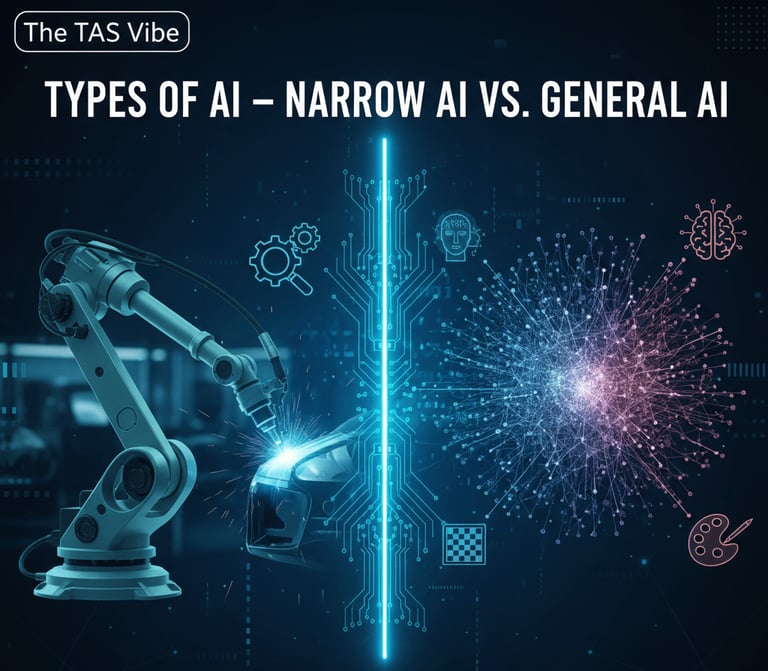
One of the biggest misunderstandings about AI comes from not knowing its types.
Narrow AI (Weak AI)
This is the AI we use every single day.
Examples:
Google Search
Voice assistants
Recommendation engines
Image recognition
Chat tools
Narrow AI is designed to do one task extremely well.
It cannot:
Think outside its domain
Understand emotions
Transfer intelligence to new tasks
Why “Weak AI” Is Actually Very Strong
Despite the name, Narrow AI is incredibly powerful.
It:
Beats humans at pattern recognition
Works 24/7 without fatigue
Handles massive data volumes
Improves productivity
Most global businesses depend on it.
General AI (Strong AI)
This is the AI you see in movies.
General AI would:
Learn any task a human can
Understand context deeply
Reason across domains
Important truth:
👉 General AI does not exist yet.
As of 2026, all real-world systems are Narrow AI.
Why AI Feels Intelligent Even Without Consciousness
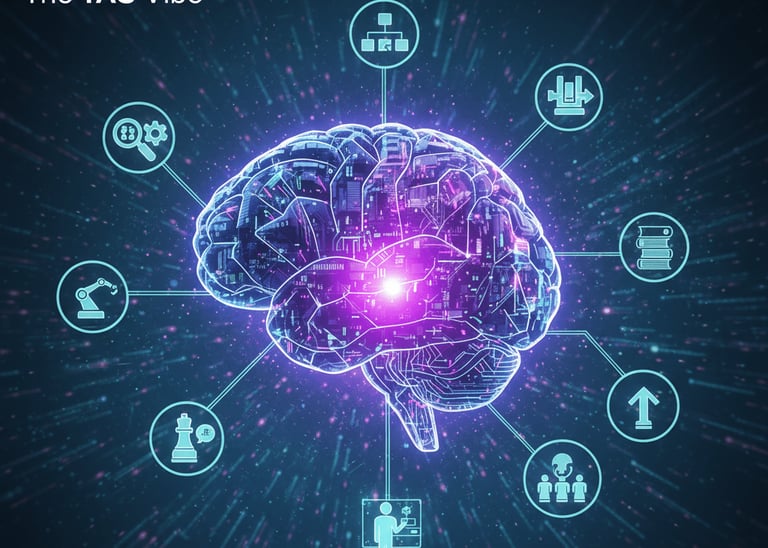
AI doesn’t “understand” in a human sense.
It predicts what comes next based on training.
Think of it like:
A musician who memorizes patterns
A chess player calculating moves
A language learner recognizing sentence structures
The intelligence is functional, not emotional.
AI in Everyday Life – You’re Already Using It
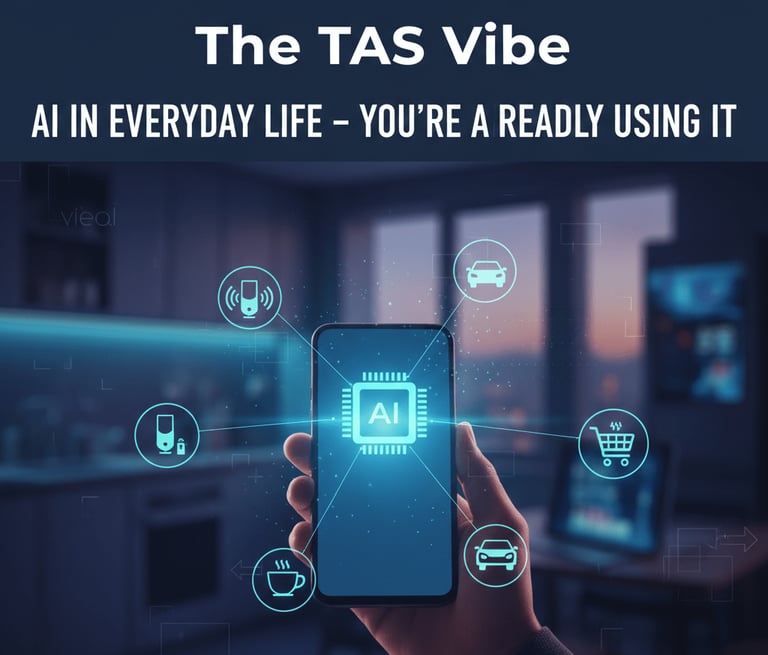
Even beginners interact with AI daily without noticing.
Everyday AI Examples
Email spam detection
Navigation apps
Online shopping suggestions
Social media feeds
Translation tools
This silent presence makes AI powerful—and invisible.
Why Learning AI Step by Step Matters
Understanding AI history and types helps you:
Avoid misinformation
Use tools responsibly
Make smarter career decisions
Stay relevant in a changing world
AI knowledge is no longer optional—it’s modern literacy.
The TAS Vibe Learning Path
At The TAS Vibe, we believe clarity beats complexity.
You’re not here to become a data scientist overnight.
You’re here to understand AI confidently.
👉 Internal Link to Day 3 Post:
Next, read Day 3: How Machines Learn – A Beginner’s Guide to Data, Training, and Models, where we explain machine learning without math or coding.
The Road Ahead – What Comes After Foundations

Once you understand:
AI history
How intelligence works
Narrow vs. General AI
You’re ready to explore:
Machine learning
Data training
Ethical considerations
Real-world use cases
That’s exactly what’s coming next.
Conclusion: You’re No Longer an AI Beginner
You now understand:
Where AI came from
How it works step by step
What types of AI exist
Why today’s AI is powerful yet limited
This foundation prepares you for deeper learning—without fear.
Author Bio
Sarah Vibe
Digital Historian at The TAS Vibe
Sarah tracks the evolution of technology from its earliest concepts to modern applications. At The TAS Vibe, she helps readers understand not just what technology is—but why it matters and where it’s heading next.
Disclaimer
This article is for educational purposes only. It does not constitute professional, legal, or financial advice. AI technologies evolve rapidly, and readers should stay informed and use tools responsibly.
Support The TAS Vibe
If this guide helped you:
Follow The TAS Vibe for daily AI learning
Share this article with beginners
Bookmark this series to stay ahead of the curve
Your support helps us keep technology simple and accessible.
Frequently Asked Questions (FAQ)
Q1: What is artificial intelligence for beginners step by step?
AI is a system that senses data, learns patterns, and acts based on predictions—designed entirely by humans.
Q2: Is all AI today considered weak AI?
Yes. All existing AI systems are Narrow (Weak) AI focused on specific tasks.
Q3: When will General AI exist?
There is no confirmed timeline. As of 2026, General AI remains theoretical.
Q4: Do I need math or coding to understand AI basics?
No. Conceptual understanding comes first. Technical skills are optional later.
Q5: Why should non-technical people learn AI?
Because AI affects careers, education, privacy, and daily decisions—regardless of profession.
Connect
Stay updated with us
Follow
Reach
+91 7044641537
Copyright: © 2026 The TAS Vibe. All rights reserved.