AI Bias Examples 2026 Shocking Real Cases in Hiring
Discover AI bias examples 2026 shocking real cases that exposed unfair hiring, discrimination, and ethical failures in AI systems worldwide. Read the truth now.
AI ETHICS ISSUES 2026
1/26/20266 min read
AI Bias Examples 2026 That Shocked the World
The email Rahul received looked polite. Automated. Cold.
“Thank you for applying. After careful evaluation, we regret to inform you…”
He had 6 years of experience. Two certifications. Strong referrals. He had even cleared the technical round.
Later, a recruiter quietly told him something off the record:
“Your profile was rejected by the screening AI before we even saw it.”
No one could explain why.
This is not a rare story in 2026.
Across the US, Europe, Australia, Russia, and Asia, AI hiring platforms like HireVue, Pymetrics, Eightfold.ai, Paradox Olivia, ModernHire, iCIMS Talent Cloud, and LinkedIn Talent Insights are now deciding who gets seen — and who gets silently filtered out.
And this year, multiple investigations, audits, and regulatory actions exposed something deeply uncomfortable:
AI did not remove bias from hiring. It scaled it.
Some of the most disturbing AI bias examples 2026 revealed discrimination based on gender, age, skin tone, accent, postal code, education background, and even facial micro-expressions.
This is where the conversation around ethical AI hiring, algorithmic fairness, and hiring automation bias exploded.
Watch this quick video for an overview before reading.
🎧 Prefer listening? Play the audio version below.
What AI Bias Really Means (Beyond the Textbook Definition)
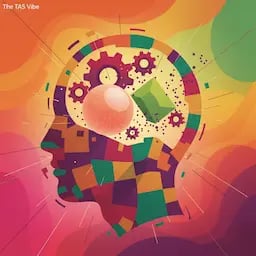
AI bias is not a coding mistake.
It is what happens when:
Historical inequality becomes training data
Proxy signals (school, location, accent) replace human judgement
Recruiters trust the machine more than their own intuition
Vendors market AI as “objective” without explainability
AI systems learn patterns. If the past hiring data preferred 28-year-old urban male engineers, the AI quietly learns:
“This is what success looks like.”
And repeats it. At scale.
A biased recruiter may affect 50 candidates a month.
A biased AI model inside an ATS (Applicant Tracking System) can affect 500,000 applicants in a quarter.
That’s why AI algorithm bias real world cases 2026 are now discussed in HR compliance conferences, AI ethics panels, and government hearings.
How Bias Secretly Enters Hiring Algorithms
From 2024–2026 audits, most bias entered through:
10–15 years of historical hiring data dominated by one demographic
Lack of multilingual and multicultural datasets
Facial analysis models trained mostly on lighter skin tones
NLP models penalising “non-urban” writing styles
Hidden proxies: postal codes, college names, employment gaps
Zero pre-deployment fairness testing
Blind belief that “AI is neutral”
Spoiler: AI is never neutral. It inherits values from data.
Real AI in Hiring Bias Cases That Triggered Global Debate
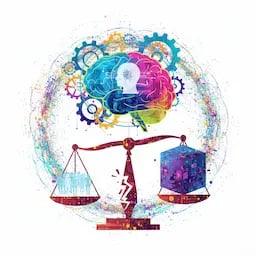
These are not theory. These are the cases that forced policy change.
Case 1 — US Tech Company Using Resume Screening AI (Eightfold-like system)
An internal audit in early 2026 revealed:
Women were rejected 3.2× more than men for developer roles
CVs mentioning women-led projects were downranked
Graduates from historically diverse colleges scored lower
Root cause?
The model was trained on 12 years of male-dominated hiring history.
The HR team thought the AI was “finding the best talent”. It was actually replicating the past.
Fix: Dataset rebalance, fairness constraints, and mandatory human review for all AI rejections.
Case 2 — European Bank Using Video Interview AI (HireVue-style assessment)
The system analysed:
Eye movement
Facial expression
Voice tone
Speech rhythm
Findings after regulatory review:
Darker skin tones were misread in facial scoring
Non-native English speakers scored low on “confidence”
Neurodivergent candidates flagged as “low engagement”
This became one of the most cited AI discrimination examples affecting people 2026.
Regulators forced suspension under EU AI Act fairness clauses.
Case 3 — Asian E-commerce Giant Using Psychometric AI (Pymetrics-like tool)
The tool predicted “team compatibility”.
Patterns discovered:
Candidates over 40 were filtered out early
Employment gaps reduced compatibility score
Rural applicants scored low on “adaptability”
The AI had equated youth + urban background = innovation.
Fix: Synthetic diversity testing and removal of age-correlated signals.
Case 4 — Australian Government Internship Ranking Portal
Students from:
Private schools
Urban English writing styles
Certain vocabulary patterns
were consistently ranked higher.
Public backlash forced a full algorithm audit.
This case pushed Australia to mandate algorithm audit reports for public sector hiring tools.
Case 5 — Russian Retail Chain Using Geographic AI Filtering
Applicants from postal codes associated with migrant communities were auto-rejected.
Location was being used as a reliability predictor.
No recruiter knew this was happening until a data scientist flagged the anomaly.
Fix: Removal of geographic and socioeconomic proxies.
The Ethical Failures Behind These Incidents


When this news broke, recruiters were furious. Not because AI failed.
Because they couldn’t explain what the AI was doing.
Common patterns:
Blind trust in automation
No explainability dashboards
No bias audits before deployment
No candidate appeal mechanism
Vendors selling “accuracy”, hiding fairness limitations
This is where terms like algorithmic transparency, explainable AI (XAI), fairness metrics, disparate impact testing, and bias mitigation layers became mainstream HR vocabulary in 2026.
Shocking Data That Changed the Conversation
By mid-2026, industry reports showed:
68% of Fortune 500 companies use some form of AI in hiring
41% had never conducted a bias audit
37% of rejected candidates were screened out before human review
Legal complaints related to AI hiring bias rose 3× compared to 2024
That’s when governments stepped in.
Global Regulatory Response in 2026


USA: AI Hiring Transparency & Accountability guidelines for employers
EU: Strict enforcement of EU AI Act fairness and explainability clauses
Australia: Mandatory algorithm audit for public recruitment tools
Singapore & India: Ethical AI certification frameworks for HR tech
Russia: Compliance monitoring for automated hiring systems
Ethical AI hiring is no longer optional. It is compliance.
How Organisations Are Preventing Hiring Automation Bias in 2026
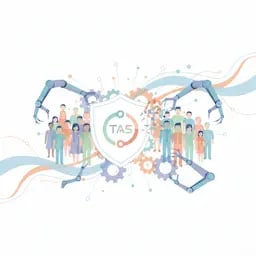
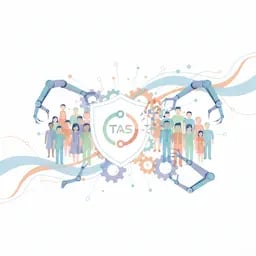
Serious companies now follow this checklist:
1. Diverse, balanced training datasets
2. Pre-launch disparate impact testing
3. Humans reviewing AI rejections
4. Explainable AI dashboards for recruiters
5. Removal of proxy variables (school, location, accent)
6. Quarterly third-party ethical audits
7. Candidate appeal and transparency requests
This is the foundation of ethical AI hiring today.
Why This Matters to You (Student, Job Seeker, Recruiter, Developer)


If you are 18 or 48, this affects you.
Your CV might not be rejected by a human.
It might be rejected by a pattern.
Understanding AI algorithm bias real world cases 2026 helps you ask the right questions:
Was my profile reviewed by a human?
Can I request a review?
What AI tool is being used?
These are normal questions in 2026.
Ethical AI Is Now a Competitive Advantage
Companies publicly showcasing fair AI systems are:
Attracting diverse talent
Avoiding lawsuits
Building employer trust
Strengthening brand reputation
Fairness is now a hiring brand asset.
Conclusion — The Lesson 2026 Taught the World
AI is powerful. But without ethics, it quietly amplifies inequality.
The AI bias examples 2026 shocked the world not because machines failed…
…but because humans trusted them without questioning.
With proper audits, explainability, and human oversight, AI can absolutely improve hiring.
But only if we design it that way.
The responsibility now lies with HR teams, AI vendors, regulators, developers, and informed candidates.
Preventing bias requires deliberate action. For a beginner-friendly walkthrough, read our guide:
Interlink: How to Prevent AI Bias: Practical Guide for Beginners
Author Bio — Agni
Agni is a technology writer and AI ethics observer who breaks down complex systems into everyday language. Through The TAS Vibe, he focuses on how algorithms influence recruitment, education, and real-world decision making. He advocates for transparent, explainable, and fair AI systems that serve people — not filter them unfairly.
Disclaimer
This article is for educational and awareness purposes. The cases reflect documented industry patterns and reported AI bias incidents presented for learning clarity.
Frequently asked questions
Q1: Is AI naturally biased?
No. Bias enters through data, design choices, and lack of testing.
Q2: Why is AI bias common in hiring tools?
Because they learn from historical hiring patterns that contain inequality.
Q3: Can hiring automation bias be prevented?
Yes — with audits, diverse data, explainability, and human oversight.
Q4: What should candidates do if rejected by AI?
Request transparency and human review.
Q5: Are governments regulating AI hiring in 2026?
Yes. Multiple regions now enforce fairness and transparency rules.
Comments
Connect
Stay updated with us
Follow
Reach
+91 7044641537
Copyright: © 2026 The TAS Vibe. All rights reserved.