AI Privacy Risks Explained with Real Examples
AI Privacy Risks Explained for everyday users. Learn how AI uses your data, hidden dangers, GDPR rules, and simple steps to protect your personal information.
AI ETHICS ISSUES 2026
The TAS Vibe
1/27/20265 min read


AI Privacy Concerns 2026: Is Your Personal Data Really Safe in the Age of Artificial Intelligence?
Artificial Intelligence now decides more about your life than you realise. It recommends what you watch, filters your CV before a human sees it, approves loans, tracks your health trends, and even predicts your behaviour. This feels convenient—almost magical. But across America, Europe, Russia, Asia, and Australia, one serious question is being asked in 2026:
Is your personal data truly safe in the era of AI?
AI privacy is no longer a topic only for engineers or cybersecurity experts. It directly affects everyday users between 16 and 50 years old who interact with AI tools daily, often without noticing how much personal information they are sharing.
Watch this quick video for an overview before reading.
🎧 Prefer listening? Play the audio version below.
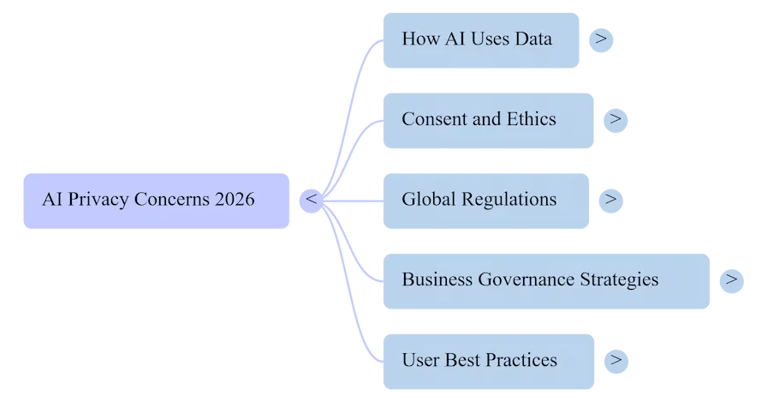
This mind map gives you a quick overview of the concepts covered below.
How AI Systems Use Your Data (And Why That’s Concerning)


AI systems learn from massive datasets. These often include emails, photos, voice samples, browsing history, medical records, financial patterns, and social media activity. This is where the biggest AI privacy concerns in 2026 begin.
Recent research has shown that some large AI models can unintentionally reproduce sensitive information from their training data. The risk becomes even more serious with black box AI systems, where even developers struggle to explain how decisions are made. This creates both privacy risks and accountability gaps.
Another growing issue is profiling. When AI predicts behaviour, it can infer deeply personal details—sometimes revealing more than users ever intended to share.
AI Consent and Ethics: Did You Really Agree?


Most people click “Accept” on privacy policies without reading them. But in 2026, AI consent and ethics are under global debate.
Do users truly understand that their data may be used to train AI models?
Questions like:
Does AI share my data with advertisers?
Who owns the data used in AI training?
are now part of legal discussions worldwide.
A real case in Europe exposed how an AI recruitment platform collected candidate data from public profiles without explicit consent. There was no hacking involved—just silent data harvesting. The aftermath forced companies to introduce strict consent notices, data minimisation policies, and independent privacy audits.
If you are wondering how to protect your data from AI tools, start with simple steps: check privacy dashboards, disable unnecessary data sharing, and use browser privacy controls. These small actions are becoming essential digital habits.
GDPR and AI Privacy Compliance in 2026

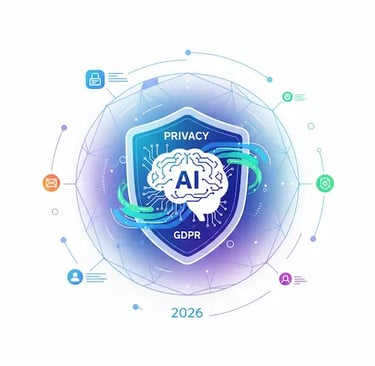
Europe’s GDPR has evolved to directly address AI-driven decisions. Companies must now explain automated outcomes and follow strict AI privacy compliance practices.
Understanding how GDPR affects AI privacy in 2026 is crucial for both businesses and users. Organisations are required to conduct AI privacy risk assessments before deploying AI tools.
This trend is global. Australia, several Asian countries, US states, and Russia have introduced AI-specific privacy rules and data localisation laws to control how citizen data is used in AI training.
These regulations aim to answer a key question: Who really owns the data used to train AI? The user, the platform, or the developer?
How Businesses Are Strengthening AI Data Governance
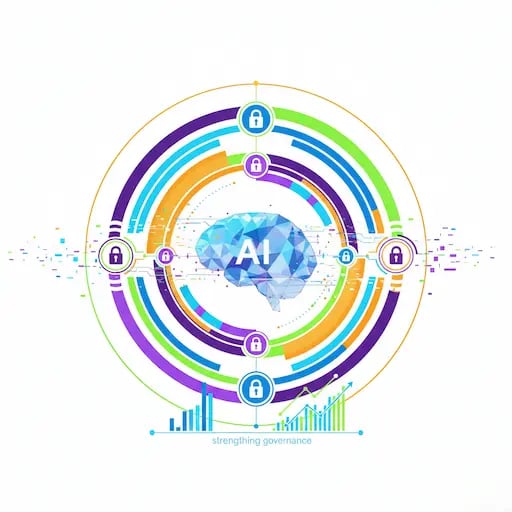
Forward-thinking companies are adopting strong AI data governance strategies that include:
Advanced data anonymisation techniques
Transparent data usage logs
Limited data retention policies
Clear AI privacy compliance checklists
A healthcare AI startup in the US learned this the hard way when anonymised patient records were re-identified due to weak masking methods. The fix required stronger anonymisation, encryption, and third-party audits.
These real examples show why AI privacy cannot be an afterthought.
Practical Privacy Best Practices for Everyday Users


You do not need to be a tech expert to stay safe in the AI era. Simple habits can protect you:
Regularly review app permissions
Use privacy-focused browsers
Avoid uploading sensitive documents to unknown AI tools
Read how platforms handle and store your data
Opt out of behavioural data sharing where possible
These are now essential privacy best practices for AI users in 2026.
The Bigger Picture: Awareness Over Fear


AI is not spying on you intentionally. But it is constantly learning from you.
The real issue is not panic—it is awareness. Understanding AI privacy, data protection, and AI security allows you to make informed digital choices in a world where data has become the new currency.
Related Reading
For deeper understanding, read our previous articles:
And don’t miss our upcoming post:
AI Transparency Problems: Why AI Feels Like a Black Box
Author Bio – Agni
Agni is a passionate technology writer who simplifies complex AI topics for everyday readers. He focuses on AI ethics, privacy, and real-world digital safety without technical jargon. Through The TAS Vibe, Agni connects technology with human values and promotes awareness for a safer digital future.
Disclaimer
This article is for educational and awareness purposes only. Readers should review official privacy policies and legal guidelines applicable in their country.
Follow The TAS Vibe
For more practical guides on AI, ethics, and digital safety, follow The TAS Vibe and stay updated with the latest awareness insights.
Frequently asked questions
Q1: What are the biggest AI privacy concerns in 2026?
Data leakage, lack of informed consent, black box decision-making, and weak anonymisation.
Q2: Does AI share my data with advertisers?
Some platforms use behavioural insights for advertising unless you disable it in settings.
Q3: How can I opt out of AI data collection?
Use privacy controls, revoke permissions, and request data deletion from platforms.
Q4: How does GDPR protect users from AI misuse?
It gives rights to explanation, access, correction, and deletion of personal data.
Q5: Who owns the data used in AI training?
This depends on platform policies and regional laws, which are becoming stricter worldwide.
Connect
Stay updated with us
Follow
Reach
+91 7044641537
Copyright: © 2026 The TAS Vibe. All rights reserved.